Best Equipment Financing Options for Startups
Best Equipment Financing Options for Startups
Equipment financing for startups works best through lenders offering same-day decisions and no financial statements. Crest Capital provides $10,000 to $500,000 with Section 179-qualified financing. VIP Business Credit connects startups to 1,000+ lending options while building EIN-based credit profiles that separate business from personal liability.
Key Takeaways
- Equipment financing uses the purchased asset as collateral, reducing lender risk and enabling approval for startups with thin credit profiles.
- Same-day credit decisions and no financial statements protect working capital while securing necessary machinery.
- Each on-time payment on equipment financing strengthens the company's credit profile, building a foundation for larger funding rounds later.
- Building EIN-based business credit separates company liability from personal assets, allowing lenders to evaluate the business entity rather than the owner's personal credit score.
What equipment financing works for startups?
Startup equipment loans and leases provide the most practical path for new businesses to acquire machinery, vehicles, and technology. Equipment financing for small business startups works by using the equipment itself as collateral, which reduces lender risk and opens doors that traditional bank loans keep shut.
Why do traditional lenders reject startup equipment applications?
Banks view startups as high-risk borrowers. With limited trading history and thin credit files, newer businesses rarely meet conventional underwriting standards. SallyportCF notes that banks become reluctant lenders when companies lack the time in business and credit depth that established firms possess. This reluctance leaves founders scrambling for alternatives while competitors secure the assets they need to operate. Equipment finance solves this mismatch: the financing structure treats the purchased asset as security, giving lenders recourse if payments stop. That collateral backing makes approval possible even when business credit profiles remain thin.
What types of equipment can startups finance?
Equipment financing covers tangible business assets beyond real estate. Common categories include:
- Heavy machinery for manufacturing and construction
- Commercial vehicles such as tow trucks, delivery vans, and service fleets
- Technology equipment including servers, specialized software, and diagnostic tools
- Office furniture and fixtures for new locations
The best equipment financing options for startups preserve working capital while building business credit history. Each on-time payment strengthens the company's credit profile, creating a foundation for larger funding rounds later.
How does EIN-based financing protect startup founders?
VIP Business Credit helps entrepreneurs across Northern Virginia and the Greater Washington, DC region build EIN-based business credit. This approach separates company liability from personal assets. Founders access equipment funding without pledging personal guarantees that put homes and savings at risk, and the company connects startups to lenders who evaluate the business entity rather than the owner's personal credit score. For a deeper look at structuring these arrangements, the guide on equipment financing for small business explains loan and lease structures in detail, and startups that move quickly on equipment financing lock in the tools they need while competitors wait on bank decisions that may never come.
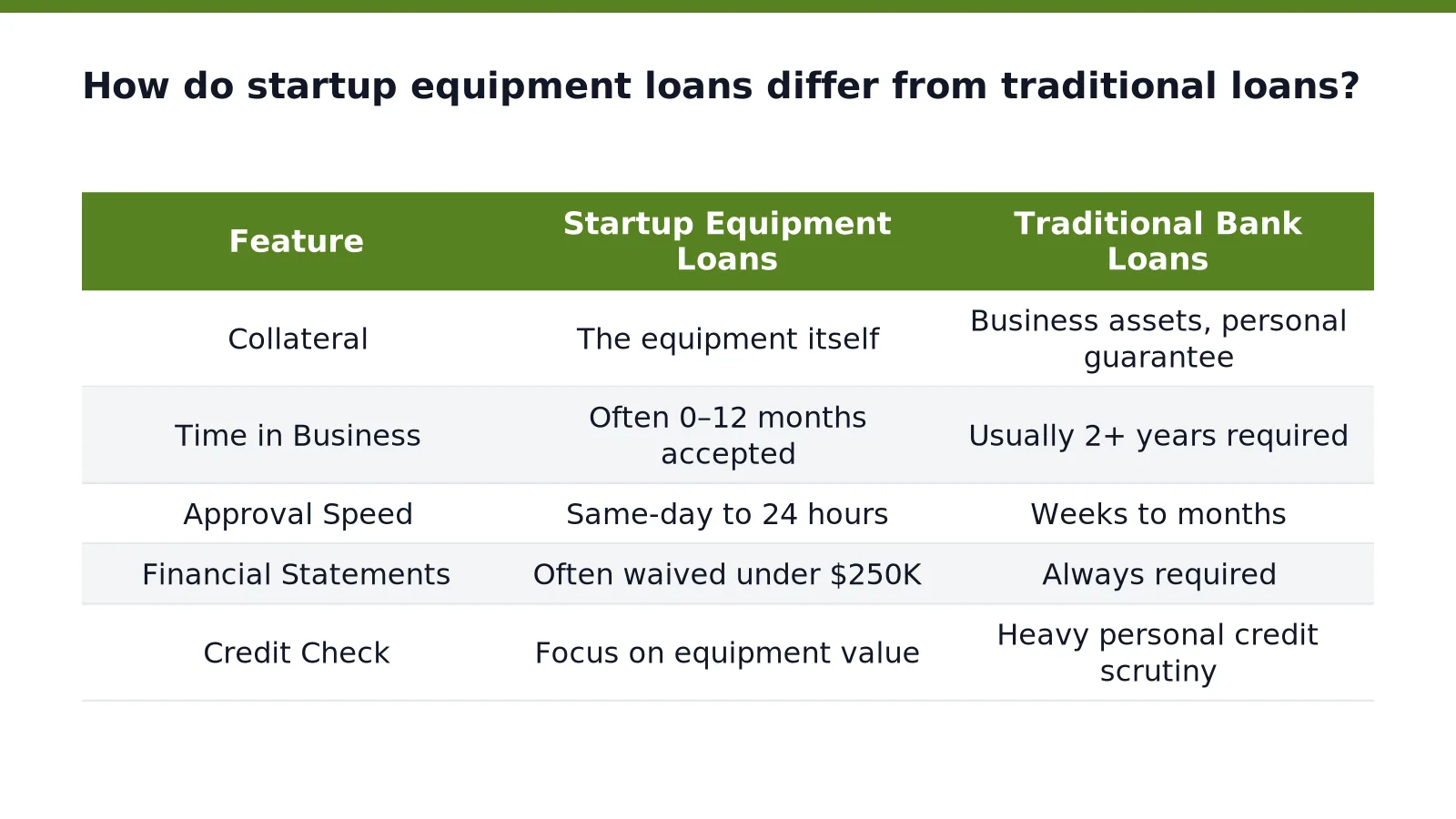
How do startup equipment loans differ from traditional loans?
Small business equipment loans, including those built for startups, use the purchased equipment as collateral, not the owner's personal guarantee. Traditional bank loans typically require years of operating history, strong personal credit, and significant documentation that newer businesses cannot provide.
Speed creates the most dramatic difference. Crest Capital notes that one simple application covers $10,000 to $500,000 with same-day credit decisions, and no financial statements are needed, a structure that protects working capital while putting necessary machinery onto the floor immediately. Beacon Funding reports a similar pattern: 70 percent of businesses receive approval within 24 hours for start-up financing, a pace traditional lenders cannot match, since their underwriting process examines years of tax returns, profit-and-loss statements, and personal credit scores before issuing any decision.
Why does equipment-backed lending reduce risk for the lender?
The equipment holds intrinsic resale value: a tow truck, CNC machine, or commercial oven can be recovered and sold if the borrower defaults, and this tangible security allows specialized lenders to approve startups that banks reject outright. The loan amount typically aligns with the equipment's projected depreciation curve, limiting exposure on both sides.
How does EIN-based credit change the approval landscape?
Building EIN-based business credit enables access to capital at lower rates and better terms. Personal credit scores no longer dictate the entire underwriting outcome. VIP Business Credit connects entrepreneurs to over 1,000 national and local lenders, including options designed for Virginia businesses. The right lender evaluates the business entity and the equipment's utility rather than the founder's personal borrowing history. For founders exploring the full range of business equipment loans, understanding this structural difference opens doors that traditional pathways keep closed.
What are the best equipment financing options for startups?
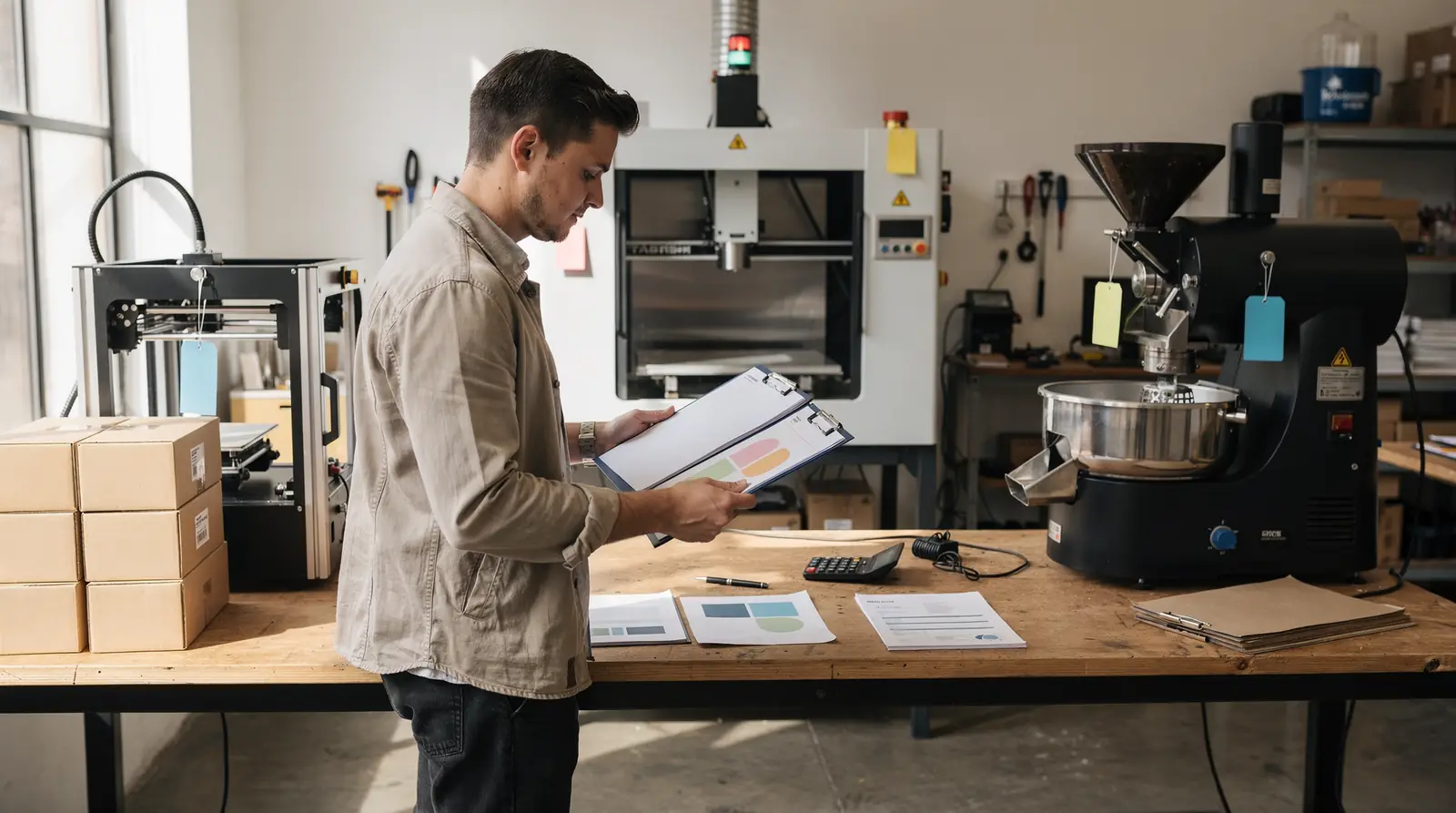
Startups secure equipment through specialized lenders offering high approval rates, fast decisions, and terms structured for businesses with limited operating history. The best equipment financing options for startups include direct lenders with start-up programs, equipment leasing arrangements, and credit-building pathways that separate business liability from personal assets. Without the right financing structure, new ventures drain working capital on depreciating assets and miss growth windows that competitors capture.
How do start-up equipment financing programs work?
Start-up programs evaluate the equipment's value and the business's potential rather than years of tax returns. Beacon Funding reports that 70% of start-up applicants receive approval within 24 hours, including young towing businesses and first-time applicants with thin personal credit. These lenders structure terms for long-term affordability, not just initial approval.
What types of equipment qualify for financing?
Startup equipment loans cover a broad range of tangible business assets. Crest Capital finances equipment, vehicles, and software through a single application covering $10,000 to $500,000. Same-day credit decisions arrive without requiring financial statements. Qualified borrowers also benefit from Section 179 tax treatment, which allows full deduction of equipment costs in the purchase year.
Equipment financing for small business extends beyond heavy machinery. Common categories include:
- Commercial vehicles and fleet additions
- Manufacturing and production machinery
- Office furniture and technology infrastructure
- Specialized software platforms
How can startups improve their approval odds?
Lenders examine more than revenue when evaluating young companies. VIP Business Credit provides a proprietary Capital-Ready Score that reveals how underwriters view a business and uncovers hidden gaps. Building consistent business identity data and establishing trade credit lines strengthens the profile lenders see.
Smart equipment financing solutions preserve cash flow while acquiring essential assets. VIP Business Credit connects founders to over 1,000 national and local lenders, matching each business to options suited for its stage and sector. The approach separates business credit from personal liability, protecting the owner's assets while building a lender-ready profile for future capital needs.
Ready to see which equipment financing options fit your business? VIP Business Credit connects startups to 1,000+ national and local lenders and builds the EIN-based credit profile that unlocks better terms. Explore Commercial Vehicle & Equipment Financing to get started.
How to choose the right equipment financing for small business?

Selecting the right equipment financing for small business requires matching loan structure to the company's stage and credit profile. Lenders evaluate risk differently, and a mismatch between application and underwriter expectations causes unnecessary denials.
What are the equipment financing qualification requirements for newer businesses?
Banks remain reluctant lenders to businesses with limited trading and credit history, and Sallyport Capital notes that finding startup equipment loans becomes complex precisely because newer ventures lack the operating track record traditional institutions demand. Without established revenue patterns or years of filed returns, conventional approval paths narrow quickly, and a founder who has operated for six months with no filed tax return will meet the same underwriting checklist as a company a decade older, one built around history the startup has not had time to accumulate.
The factors below summarize what underwriters weigh most heavily when a newer business applies for equipment financing:
How can a business improve its odds before applying?
A business can shift how lenders see it well before an application ever reaches an underwriter's desk. VIP Business Credit guides clients through building consistent business identity data and establishing trade credit reporting, steps that show a business is operating like an established company rather than a startup still finding its footing. Lenders, card issuers, and vendors treat the business as lower risk when its identity data stays uniform across every registration and bureau.
The company's advisory model serves both ends of the spectrum. Newer ventures receive guidance toward initial approvals while established firms access strategies to scale or secure better-priced capital. This dual focus means the best equipment financing options for startups often combine credit-building work with targeted lender matching rather than a single product recommendation.
Three factors separate strong candidates from marginal ones, and together they explain why a narrow application strategy costs business owners time while broad preparation opens doors across multiple financing channels simultaneously:
- Consistent business identity data across all filings and bureau records
- Active trade lines reporting payment history to commercial credit agencies
- Lender matching aligned to the business's actual stage and sector
Can building corporate credit unlock better startup equipment loans?

Strong business credit for equipment funding separates a business from its owner in the eyes of lenders. Building an EIN-based credit profile enables access to capital at lower rates and better terms. Without this separation, equipment financing decisions hinge on personal credit scores alone, which caps approval amounts and leaves personal assets exposed to business risk.
Startup equipment loans demand evidence of creditworthiness. A strong corporate credit file provides exactly that. Lenders review business-specific data: payment histories with vendors, bureau-reported trade lines, and consistent company identity records. These signals replace the need for years of operating history.
How does corporate credit affect equipment financing approval odds?
Lenders evaluate risk through business credit reports, and a thin or nonexistent file forces underwriters to rely on personal guarantees. Established corporate credit shifts the evaluation to the company's own performance, which often unlocks higher approval amounts and removes personal collateral requirements.
What steps build corporate credit before applying for equipment financing?
The process starts with foundational business identity data. VIP Business Credit's Capital-Ready Scan identifies key credit gaps affecting lender decisions and delivers a step-by-step roadmap, and consistent trade credit lines and strong bureau reporting habits follow. These actions build the Paydex scores and business credit ratings that equipment lenders require.
VIP Business Credit connects business owners to over 1,000 national and local lenders, including options designed for Virginia businesses. The company's proprietary tools and personalized guidance ensure businesses in Northern Virginia and the DC region unlock exclusive access to national and local lenders suited for getting funded fast. For owners exploring the Credit Building FAQs, the path from no file to fundable becomes clear. Equipment financing for small business grows more accessible when corporate credit stands on its own. The best equipment financing options for startups reward this preparation with faster approvals and better structures.
Should a startup lease equipment, buy it outright, or consider an SBA loan?
Weighing equipment leasing vs. buying comes down to how fast the equipment loses value and how much working capital the business can put down upfront. Leasing keeps monthly payments lower and passes obsolescence risk to the lessor, a good fit for technology or vehicles that age out quickly. Buying through an equipment loan builds ownership equity from day one and qualifies for Section 179 depreciation treatment, a better fit for machinery with a long useful life. SBA equipment loans carry competitive rates, but they move far slower than direct equipment lenders, often taking weeks or months to approve, and they usually demand more documentation than a startup with thin credit files can produce. For founders comparing all three paths, SBA loan alternatives built around EIN-based credit often close faster without sacrificing the rate improvements that stronger business credit unlocks.
Get Your Free Business Funding Pre-Qualification Scan
Stop guessing where your business stands with lenders. VIP Business Credit's free pre-qualification scan shows exactly how underwriters view your company and what to fix before you apply for equipment financing. Start Your Scan or call +1 (571) 248-3863 to talk with a funding specialist today.
FAQ
What equipment financing options work best for startups?
Startup equipment loans and leases work best, using the equipment as collateral. Crest Capital offers $10,000 to $500,000 with Section 179-qualified financing, while VIP Business Credit connects startups to 1,000+ lenders.
How does equipment financing build business credit for startups?
Each on-time payment strengthens the company’s credit profile. VIP Business Credit builds EIN-based business credit, separating company liability from personal assets and allowing lenders to evaluate the business entity.
Why do traditional banks reject startup equipment applications?
Banks view startups as high-risk borrowers with limited trading history and thin credit files. Equipment financing reduces lender risk by using the purchased asset as collateral, enabling approval despite thin credit profiles.
Conclusion
The path forward is clear: prepare your business credit profile first, then match your application to lenders who evaluate equipment financing based on the company's own performance rather than personal guarantees. This sequence transforms startup equipment loans from a difficult ask into a structured process with predictable outcomes.
About The Author
Lee Johnson is the Co-Founder and CEO of VIP Business Credit and a Master Certified Professional Coach with over 500 coaching hours and more than 25 years of experience in business funding, credit building, and generational wealth strategies. He holds a Bachelor of Science from Fairleigh Dickinson University and a Master of Business Administration from the University of Phoenix. Since 2005, Lee has built a real estate portfolio exceeding 1,700 units valued at approximately $254 million across multiple U.S. markets.
Lee helps entrepreneurs and small-to-midsize business owners build strong, lender-ready credit profiles, access capital under their company's EIN without personal liability, and grow their finances sustainably.
Contact
- 📞 Phone: +1 (571) 248-3863
- ✉️ Email: [email protected]
- 📅 Consultation: Schedule a Consultation
- 🌐 Website: vipbizfunds.com
- 🎯 FREE Business Funding Pre-Qualification Scan: Start Your Scan
Serving Sterling, VA and the surrounding Greater Washington, D.C. region.
Frequently Asked Questions
What equipment financing options work best for startups?
Startup equipment loans and leases work best, using the equipment as collateral. Crest Capital offers $10,000 to $500,000 with Section 179-qualified financing, while VIP Business Credit connects startups to 1,000+ lenders.
How does equipment financing build business credit for startups?
Each on-time payment strengthens the company's credit profile. VIP Business Credit builds EIN-based business credit, separating company liability from personal assets and allowing lenders to evaluate the business entity.
Why do traditional banks reject startup equipment applications?
Banks view startups as high-risk borrowers with limited trading history and thin credit files. Equipment financing reduces lender risk by using the purchased asset as collateral, enabling approval despite thin credit profiles.
What credit score do I need to qualify for equipment financing?
Equipment financing qualification requirements focus more on the equipment's value and the business's EIN-based credit profile than on a single personal credit score. Lenders in VIP Business Credit's network weigh trade credit lines and business identity data alongside personal credit, so a thin personal file does not automatically disqualify a startup.
Is it better to lease or buy equipment as a startup?
Leasing suits equipment that loses value quickly, like technology or vehicles, since it keeps monthly payments lower and shifts obsolescence risk to the lessor. Buying through an equipment loan builds ownership equity and qualifies for Section 179 depreciation, a better fit for machinery with a long useful life.
Research & Sources
The approval-speed and underwriting figures cited throughout this article draw on public data from equipment finance providers: Crest Capital's published program terms ($10,000 to $500,000, same-day credit decisions, no financial statements required under set thresholds) and Beacon Funding's reported startup approval rate (70 percent of start-up financing applicants approved within 24 hours). Section 179 depreciation treatment is confirmed via the IRS newsroom guidance on equipment expense deductions.


