Virginia Business Credit Building: Building Business Credit
Virginia Business Credit Building: Building Business Credit
By *VIP Business Credit* Editorial Team · Updated 2026-09-03
Virginia business credit building is a comprehensive and strategic process essential for entrepreneurs and business owners aiming to secure funding, protect personal assets, and enable sustainable growth. Building business credit effectively requires navigating a series of detailed steps, including legal registration, EIN acquisition with Virginia's State Corporation Commission (SCC), credit bureau setups, and mastering the corporate credit tier system. VIP Business Credit, based in Sterling, VA, specializes in guiding startups and established businesses through this nuanced financial landscape, ensuring they build corporate credit VA securely and efficiently.
This guide expands deeply on critical concepts such as registering your business’s EIN, establishing a Dun & Bradstreet D-U-N-S number, enrolling with major commercial credit bureaus like Experian Commercial and Equifax Small Business, and complying with SCC regulations to maintain good standing. It provides thorough insights into the four essential tiers of corporate credit building in Virginia, including detailed coverage on Tier 1 Net 30 vendor accounts (featuring key vendors like Quill, Uline, Grainger, The CEO Creative, and Crown Office Supplies), Tier 2 store credit options (including Home Depot Pro, Lowe's Commercial, and Staples Business Credit), Tier 3 revolving commercial credit cards and fleet credit solutions (such as WEX Fleet, Shell Business, and Dell Financial Services), and Tier 4 commercial bank credit products that are unsecured and non-personal guaranty (non-PG).
Additionally, this article discusses the importance of proper virtual office setup tailored specifically for Virginia businesses, the benefit of listing your company in the 411 directory as a strong trust signal, ongoing credit monitoring practices, and expert fundability coaching to maintain and enhance strong business credit profiles. Each element is designed to optimize your fundability, establishing a reliable credit identity that lenders and vendors in Virginia respect and verify. Understanding the fundability score is critical in assessing readiness for credit building and financing opportunities.
Key Takeaways

- Start with a solid legal foundation: SCC registration, an EIN tied to the Virginia SCC, a consistent business address, a 411 directory listing, and a D-U-N-S number.
- Progress through the four corporate credit tiers in order — Tier 1 Net-30 vendors (Uline, Quill, Grainger), Tier 2 store credit (Home Depot Pro, Lowe's Commercial, Staples), Tier 3 fleet and revolving credit (WEX Fleet, Shell Business, Dell Financial Services), and Tier 4 unsecured non-PG bank credit.
- A Paydex score of 80 or higher, built on timely Tier 1 vendor payments, is a key benchmark lenders and vendors use to judge payment reliability.
- Keep business and personal finances fully separate, using your EIN 81-1277064 across every registration and application to protect personal assets and strengthen fundability.
- Enroll with Experian Commercial and Equifax Small Business early, and monitor all three major reporting agencies (D&B, Experian, Equifax) on an ongoing basis.
- Northern Virginia's competitive lending market rewards consistent EIN-based credit structuring, especially for businesses pursuing Fairfax County or Loudoun County financing.
- Working with an experienced guide, such as VIP Business Credit's coaching program, can help avoid common pitfalls and accelerate progress through the credit tiers.
Building an Airtight Fundability Foundation in Virginia
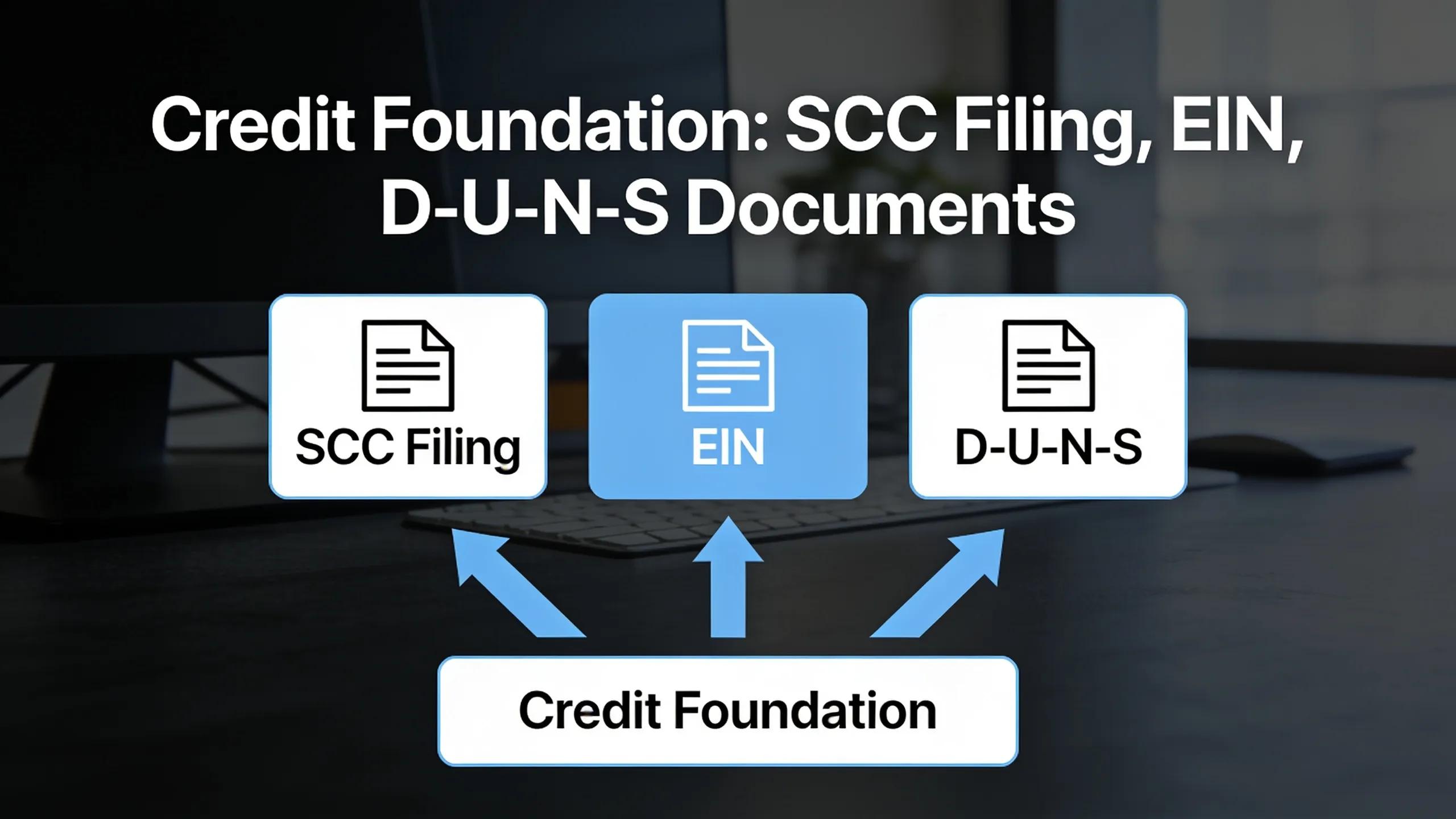
Establishing a strong foundation is the first and most critical step toward successful **Virginia business credit building**. Building fundability means presenting your business as a credible and legitimate entity ready for meaningful credit relationships and lender trust. Here are the pillars of that foundation:
- Virginia State Corporation Commission (SCC) Corporate Filing: Properly register your business as an LLC, corporation, or LLP with Virginia SCC. This registration legally separates your personal assets from your business obligations and is mandatory for regulatory compliance and creditworthiness. Compliance includes submitting timely annual reports and fees to maintain active status.
- Employer Identification Number (EIN): Obtain your EIN from the IRS and register it with the Virginia SCC. This number uniquely identifies your business for tax and credit reporting, paving the way for independent business credit profiles unrelated to your personal Social Security Number. Structuring your EIN-based credit profile is critical for Northern Virginia’s competitive lending market and ein credit northern virginia practices.
- Dedicated Business Address: Set up a physical or virtual office address compliant with Virginia regulations, preferably within your operating county such as Fairfax County or Loudoun County. The address must be stable, legitimate, and used consistently across all registrations and credit applications. Address consistency strongly influences credit bureau verification and fundability.
- 411 Directory Listing: Publicly list your business in the 411 directory to add a layer of verifiable legitimacy and build trust signals that positively impact lender and vendor risk assessments. This listing is a powerful local credibility enhancer, especially in regional financing contexts.
- Dun & Bradstreet D-U-N-S Number Registration: Acquire your D-U-N-S number, the globally recognized unique business identifier, essential for establishing your business credit file with D&B. This identifier is often a prerequisite for government contracting and securing larger-scale commercial financing in Virginia.
These components collectively create an airtight fundability profile that sets the stage for progressive credit building and enable access to substantial financing opportunities across Virginia’s diverse business markets, critical for advancing through the corporate credit tiers Virginia structure.
Tier 1 Net-30 Vendor Accounts: The Cornerstone of Business Credit

Tiers in build corporate credit VA represent stages of creditworthiness and lender confidence. Tier 1 Net-30 vendors provide the initial trade credit lines essential for establishing your business credit file's payment history. These vendors offer net 30-day payment terms and consistently report your payment performance to major credit bureaus, directly affecting your paydex score 80 and other critical credit metrics. Key Tier 1 vendors, chosen for their reliable reporting and broad acceptance, include the following, useful alongside other funding tools such as working capital for day-to-day operational flexibility.
- Uline: Supplies shipping, packaging, and industrial materials suitable for diverse businesses.
- Quill: Office supplies and essentials catering to daily operational needs.
- Grainger: Industrial supplies and equipment critical for maintenance and operations.
- The CEO Creative: Marketing and promotional merchandise supplier reporting trade credit.
- Crown Office Supplies: Office products vendor supporting credit building through timely payments.
Managing Tier 1 accounts involves applying for credit lines, making consistent purchases, and paying invoices within 30 days. This disciplined behavior generates positive trade lines, which factor heavily into business credit scoring models such as the Dun & Bradstreet Paydex score. Achieving and maintaining a Paydex score of 80 or above signals prompt payment and significantly strengthens your business creditworthiness.
Trade line reporting through Tier 1 accounts forms the backbone of your corporate credit profile, making this stage vital for subsequent credit tiers. Consistent reporting to all major bureaus—including Experian and Equifax—at this stage establishes a strong credit presence.
Typical Vendor Credit Limits and Reporting by Tier

Starting limits vary by vendor and business profile, but understanding the general pattern helps set realistic expectations as you apply for your first trade lines.
Tier 2 Store Credit Lines: Expanding Credit Diversity

Once you solidify Tier 1 relationships and establish reliable payment histories, progressing to Tier 2 credit options diversifies your credit portfolio and enhances credit depth and overall payment history quality in major business credit bureau reports. This stage typically opens up three to six months after your first Tier 1 accounts begin reporting consistently, once a business has shown it can manage Net-30 terms without slipping. Moving into Tier 2 also signals to lenders that a business can carry revolving balances responsibly, not just pay fixed invoices on schedule, which is a meaningfully different credit behavior that bureaus track and weigh on its own.
Major store credit lines that actively report to credit bureaus and are well recognized in Virginia's lending ecosystem include:
- Home Depot Pro: Commercial-grade supplies with business revolving accounts, essential for construction, maintenance, and facility operations.
- Lowe's Commercial: Building and maintenance resources offering credit lines ideal for expanding business purchasing power with flexible terms.
- Staples Business Credit: Flexible office supply credit lines featuring revolving credit terms and ongoing reporting to credit bureaus.
Engaging Tier 2 store credit lines signals to lenders that your business can responsibly manage multiple credit sources. Timely payments and balanced credit utilization within this tier are crucial for building a strong Experian and Equifax business credit report and enhancing overall credit diversity metrics.
Tier 3 Fleet & Cash Credit: Specialized Financing for Operations
Tier 3 introduces revolving commercial credit cards and specialized credit accounts supporting fleet management, technology acquisition, and operational expenditures. These products often require stronger business credit profiles and established payment histories from earlier tiers for approval.
Common Tier 3 credit providers include:
- WEX Fleet: Fuel and fleet management cards offering detailed expense tracking and credit reporting, critical for businesses with vehicle fleets.
- Shell Business: Commercial fuel credit cards tailored for businesses managing transportation and logistics.
- Dell Financial Services: Technology financing solutions providing structured payment plans for purchasing IT equipment and services.
Successful credit management at this tier demonstrates your business’s capacity for sustained and diverse credit usage, directly influencing your Experian Intelliscore Plus and Equifax Business Credit Reports. This tier shows lenders your operational agility and credit maturity.
Tier 4 Unsecured Non-Personal Guaranty Commercial Credit Lines

Tier 4 is the top tier of Virginia business credit building: unsecured commercial credit lines and bank loans that require no personal guarantee (non-PG). Lenders at this advanced stage rely heavily on your demonstrated creditworthiness across all prior tiers, fundability, and comprehensive credit bureau reports.
Examples of Tier 4 credit options include:
- Unsecured lines of credit with national and regional banks, built on proven business credit profiles.
- Commercial real estate financing leveraging business credit without personal collateral demands.
- Equipment leasing arrangements structured on a non-PG basis, important for preserving personal asset protection.
- Specialized funding programs targeting **Fairfax County business funding** and **Loudoun County commercial credit** markets, customized to local economic conditions and lender criteria.
Securing Tier 4 credit unlocks significant capital resources without personal asset risk, enabling strategic growth, operational scalability, and investment capacity critical for Virginia businesses ready to expand. Explore options like Loudoun County small business loans for tailored opportunities.
Typical Approval Timeframes and Credit Limit Growth by Tier

Beyond the specific vendors and products in each tier, timing and limit growth follow a fairly consistent pattern across Virginia businesses building credit through this four-tier structure.
Comparison of Major Business Credit Scores and Reports

How the Paydex Score Is Actually Calculated

Understanding the mechanics behind the Dun & Bradstreet Paydex score helps explain why early Tier 1 vendor discipline matters so much. Paydex is not a simple pass/fail on whether invoices get paid — it is a dollar-weighted average of how promptly a business pays each reported trade line, calculated against the specific terms agreed with that vendor.
Key mechanics to understand:
- Dollar-weighting, not account-counting. A large invoice paid late pulls the score down more than a small one, since D&B weights each payment experience by its dollar value relative to total reported trade credit.
- Early accounts carry outsized influence. When a business has only one or two Tier 1 Net-30 vendors reporting, each payment cycle has a proportionally larger effect on the score than it will once more trade lines are reporting.
- 80 is the benchmark, not the ceiling. A Paydex of 80 corresponds to payments made exactly on the agreed terms. Paying early can push the score higher, while even a handful of days late on a reported invoice can meaningfully depress it, especially with a thin trade line history.
- Reporting lag matters. Vendors typically report payment activity to D&B on a monthly cycle, so a business's Paydex score reflects payment behavior from prior weeks, not the current moment. This is one reason consistent, on-time payments from day one — not just eventually — are so important.
- Consistency compounds. As more Tier 1 and Tier 2 accounts report a clean payment history, the score becomes more stable and more resistant to the occasional isolated late payment, which is part of why the tier progression outlined earlier in this guide is sequenced the way it is.
This is why the underwriting checklist and documentation requirements referenced elsewhere in this guide place so much weight on trade payment history: lenders reading a Paydex score are looking at a track record of dollar-weighted, on-time payment behavior built one invoice at a time.
Credit Utilization Best Practices for Virginia Businesses
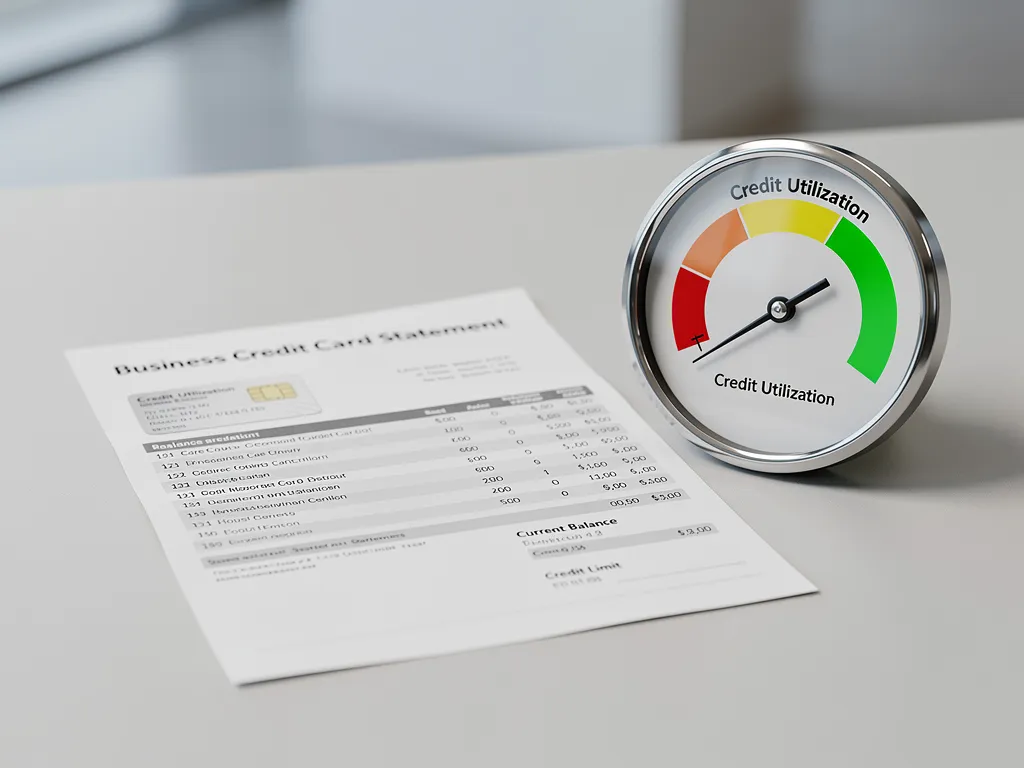
Once a business begins carrying revolving balances through Tier 2 and Tier 3 accounts, how those balances are managed becomes just as important as whether payments are made on time. Credit utilization — the percentage of an available limit actually in use — factors directly into scoring models like Experian Intelliscore Plus and Equifax's risk ratings, and disciplined utilization habits help a business advance more smoothly toward Tier 4 unsecured credit.
- Keep balances well below the limit. Carrying a balance close to a revolving account's ceiling signals strain to credit bureaus, even when payments are made on time. Utilization comfortably under the limit reads as capacity in reserve rather than dependence on borrowed funds.
- Spread spend across multiple tradelines rather than concentrating it on one. A business with several moderately utilized accounts typically presents a stronger profile than one relying heavily on a single card or line, since bureaus assess utilization both per account and across the overall credit file.
- Pay down revolving balances before the statement closing date, not just before the due date. Many issuers report the balance as of the statement date, so a balance paid down after that date but before the due date can still be reported as high utilization for that cycle.
- Request limit increases as trade history matures, rather than letting spend creep upward against a static limit. A higher limit paired with the same spending level naturally lowers utilization and reflects a business proactively managing its credit profile.
- Review utilization alongside the Paydex, Experian, and Equifax reports discussed earlier in this guide, since a business can pay every invoice on time and still see reporting drag if utilization runs consistently high across Tier 2 and Tier 3 accounts.
Treating utilization as a metric to manage — not just an afterthought to timely payment — helps a Virginia business build a credit profile that reads as genuinely low-risk by the time it reaches Tier 4 underwriting.
Underwriting Checklist for Virginia Small Businesses

Preparing for credit underwriting requires meeting specific criteria that Virginia lenders typically evaluate. Having these elements in place increases approval likelihood and credit limits:
- Valid and active Virginia SCC registration with up-to-date annual reports and fees paid, evidencing compliance and legitimacy.
- Registered EIN with consistent legal business name and address used across filings and credit applications.
- Established fundability components, including compliant virtual office or physical address and a 411 directory listing to reinforce legitimacy.
- Active Dun & Bradstreet D-U-N-S number with a credit profile demonstrating timely trade payments and positive payment history.
- Approved Tier 1 Net-30 vendor accounts with verified reporting to all major credit bureaus.
- Tier 2 and Tier 3 credit lines demonstrating diversified credit use patterns and responsible financial management.
- Strong business credit scores: Paydex score 80+, favorable Experian Intelliscore Plus rating, and positive Equifax business credit reports, reflecting sound credit behavior.
- Financial statements or tax returns, if applicable, prepared and available for bank credit applications requiring detailed financial analysis.
- Clear separation of business and personal finances, with dedicated business bank accounts to enhance fundability and reduce risk.
- Full compliance with all regulatory, licensing, and reporting requirements, maintaining good standing status within Virginia’s legal framework.
Meeting this underwriting checklist ensures your Virginia business is positioned well for financing in highly competitive markets such as Fairfax County business funding and **Loudoun County commercial credit** sectors.
Documentation Lenders and Vendors Typically Request by Tier

Requirements sharpen as you climb the tiers — early Tier 1 vendors mainly confirm you're a real, registered business, while Tier 4 bank lenders want a complete financial and credit picture. Here's what to have ready at each stage.
Comprehensive Step-by-Step Guide to Building Virginia Business Credit

- Form Your Legal Business Entity and Register EIN with Virginia SCC: Establish your business legally as an LLC, corporation, or LLP and obtain your EIN recognized by the Virginia SCC. Use a consistent business name and address across all filings and credit applications to ensure cohesive fundability.
- Obtain Your Dun & Bradstreet D-U-N-S Number: Apply online through the Dun & Bradstreet portal, verify your business information meticulously, and await confirmation, which can take up to 30 days. A D-U-N-S number is critical for trade credit and government contract opportunities.
- Set Up Compliant Virtual Office and Obtain a 411 Directory Listing: Secure a stable dedicated Virginia business mailing address, ideally located within your operational county such as Fairfax or Loudoun, and register for a 411 directory listing. This boosts perceived legitimacy and trustworthiness in local and national credit assessments.
- Open Business Bank Accounts: Operate your financial transactions under your EIN to clearly separate personal and business finances, facilitating transparent accounting and building fundability.
- Enroll with Major Business Credit Bureaus: Register and verify your business profiles with Experian Commercial and Equifax Small Business. Provide consistent business data, including EIN, legal business name, address, and contact information to ensure accurate credit bureau files.
- Establish Tier 1 Corporate Credit via Net-30 Vendor Accounts: Apply to reputable vendors like Quill, Uline, Grainger, The CEO Creative, and Crown Office Supplies. Make purchases within your means and pay invoices promptly within 30-day terms to build positive trade lines that are reported to business credit bureaus, setting a strong payment foundation.
- Progress to Tier 2 Store Credit Accounts: After demonstrating stable Tier 1 credit performance, apply for business credit with stores such as Home Depot Pro, Lowe's Commercial, and Staples Business Credit. Responsible usage and timely payments improve credit report depth and payment history quality across Experian and Equifax files.
- Secure Tier 3 Fleet & Cash Credit: Obtain commercial credit cards and fleet cards from providers like WEX Fleet and Shell Business. Incorporate technology financing solutions through Dell Financial Services to diversify credit product types and demonstrate broader credit competence.
- Qualify for Tier 4 Unsecured Non-Personal Guaranty Commercial Credit Lines: Draw on the strength of your accumulated credit profiles and fundability indicators to apply for unsecured bank credit products that require no personal guarantees, thereby expanding capital access while protecting personal assets.
- Engage in Fundability Coaching Program: Enroll in specialized programs like VIP Business Credit's 12-month Fundability coaching. These provide expert guidance, ongoing credit monitoring, dispute resolution assistance, and strategic lender matchmaking to accelerate your credit building journey while safeguarding your corporate credit profile.
- Maintain Ongoing Credit Monitoring and Management: Regularly review trade lines and credit reports from D&B, Experian, and Equifax. Promptly address discrepancies, maintain consistent reporting, and adapt your credit strategy in response to evolving business needs and regional lending climate.
Understanding EIN Credit Northern Virginia and Local Market Nuances

Northern Virginia stands as an economically vibrant hub with a dense concentration of businesses, lenders, and lucrative government contracting opportunities. Fairfax County and Loudoun County alone host a large share of the region's federal contractors, technology firms, and professional service businesses, including the data-center and technology corridor around Ashburn and the professional services base around Reston and Herndon, which means local lenders see a steady flow of applicants and can afford to be selective about the credit profiles they favor. A nuanced understanding of ein credit northern virginia is vital to securing the most favorable credit and financing arrangements in this environment.
Local lenders frequently emphasize the following criteria:
- Strong compliance with Virginia SCC regulations and timely filing of all required reports, which signals a legitimate, well-maintained business entity.
- Strong fundability paired with an established credit profile, including solid Paydex scores and favorable Experian Intelliscore Plus ratings, facilitating positive risk assessments.
- Demonstrated physical or virtual business presence through verified local addresses and public business directory listings.
- Established and prudent credit relationships across multiple credit tiers showing comprehensive and responsible credit management.
- For businesses pursuing federal or state contracting work common in Fairfax and Loudoun Counties, a verified D-U-N-S number and clean SCC standing often matter as much to contracting officers as they do to commercial lenders.
Government contracting activity in particular shapes how Northern Virginia lenders read a credit file: a business with active or pending federal contracts, backed by a properly documented EIN-based credit profile, often qualifies for financing structured around contract receivables rather than relying solely on traditional trade-line history. This makes the tier progression outlined earlier in this guide especially valuable for contractors, since Tier 1 and Tier 2 accounts establish the payment track record that contract-based lenders still want to see before extending larger facilities.
VIP Business Credit draws on extensive regional expertise to connect businesses with tailored funding solutions and lender networks active in Fairfax County business funding and Loudoun County commercial credit markets, unlocking superior capital access while minimizing financial risks. Their coaching mechanisms also navigate nuances around EIN structuring specific to Northern Virginia’s unique funding landscape, including how government contractors and professional service firms should sequence their credit tier progression to align with contract award cycles.
How VIP Business Credit Supports Your Virginia Business Credit Building Journey

VIP Business Credit excels at transforming complex Virginia business credit building challenges into manageable, transparent processes tailored to the local regulatory environment and lender expectations. Their services include:
- Personalized credit readiness assessments specifically aligned with Virginia’s regulatory and lending standards.
- Guided registration support including EIN filing with Virginia SCC and comprehensive Dun & Bradstreet profile setup ensuring accurate credit bureau entries.
- Strategic introductions and progressive credit tier access from Tier 1 through Tier 4 credit providers structured to your business’s current maturity.
- A pre-qualification process that clarifies, upfront, which financing programs a business may already qualify for, which require additional preparation, and the specific steps that expand eligibility over time.
- A proprietary credit-readiness scoring tool that shows how underwriters are likely to view the business and pinpoints the eligibility gaps to close before applying.
- A funding-matching tool that surfaces the best-fit loan and credit programs from a lender network exceeding 1,000 national and regional institutions, rather than a one-size-fits-all product list.
- Comprehensive credit monitoring platforms — including bureau-tracking dashboards covering D&B, Experian, and Equifax data — that proactively safeguard ongoing credit profile health and provide effective dispute resolution frameworks.
- Access to proprietary analytical credit tools designed to enhance borrower profile understanding and accelerate loan and credit approvals.
- Concierge-level guidance from local Business Credit Advisors who work directly with Northern Virginia business owners rather than routing them through a call center.
- Enrollment in the comprehensive 12-month fundability coaching program, which develops business fundability deeply, maximizes lender opportunities, and guides sustainable credit growth.
By combining expert coaching, profound local insights, and broad national lender access, VIP Business Credit empowers entrepreneurs to build corporate credit VA with confidence, efficiency, and protection against personal financial exposure.
Pricing Transparency and Long-Term Partnership Model

VIP Business Credit maintains transparent, no-surprise pricing structures focusing on sustainable business relationships rather than one-time transactions. Rather than charging for a single transaction and moving on, the firm structures its engagement around the full arc of a client's credit-building journey — from initial fundability assessment through Tier 1 vendor accounts to Tier 4 unsecured bank credit. This model means clients know upfront what to expect at each stage, without hidden fees or renegotiated terms as their credit profile matures.
Their commitment aligns client growth trajectories with evolving credit strategies, supporting scalability as companies advance through corporate credit tiers and capitalize on progressively larger financing opportunities. Because credit building is a multi-month process rather than a single event, VIP Business Credit's coaching and advisory relationship is designed to stay in step with a business at every tier — reassessing fundability, adjusting vendor and lender introductions, and recalibrating strategy as new trade lines report and credit scores strengthen. This long-term orientation reflects the reality that durable business credit is built progressively, not purchased outright.
Common Pitfalls in Virginia Business Credit Building and How to Avoid Them

Avoid these prevalent mistakes to protect your credit profile integrity and preserve personal asset protection:
- Failing to legally register your business before applying for credit, which undermines fundability and lender confidence.
- Using inconsistent business information across credit reports, registrations, and applications, causing credit bureau mismatches and reporting errors.
- Mixing personal and business finances, risking personal credit exposure and complicating fundability verification.
- Applying for credit prematurely or submitting multiple applications in a short timeframe, triggering detrimental hard inquiries that damage credit scores.
- Neglecting ongoing credit monitoring and failing to dispute inaccuracies or fraudulent entries over time.
VIP Business Credit’s guided approach mitigates these risks through clear, step-by-step roadmaps, lender compatibility assessments, and proactive credit profile management, setting businesses on a path of sustainable credit growth and enhanced funding access.
Sources

- Virginia State Corporation Commission (SCC): Official filing requirements, annual report obligations, and business registration guidance for LLCs, corporations, and LLPs operating in Virginia. (scc.virginia.gov)
- Internal Revenue Service (IRS): Official Employer Identification Number (EIN) application process and requirements for registering a business tax identity separate from a personal Social Security Number. (irs.gov)
- Dun & Bradstreet: D-U-N-S Number registration process and Paydex scoring methodology, including how trade payment history from Net-30 vendor accounts factors into the 0–100 score range. (dnb.com)
- U.S. Small Business Administration (SBA): General guidance on separating personal and business finances, and how lenders evaluate small business credit for loan underwriting. (sba.gov)
- Experian Business & Equifax Small Business: Commercial credit bureau documentation on Intelliscore Plus and business credit report factors referenced throughout this guide.
FAQ
What is the first step to building business credit in Virginia?
The initial step is registering your business with Virginia SCC as an LLC, corporation, or LLP, followed immediately by obtaining your EIN from the IRS. This EIN uniquely identifies your business for tax and credit purposes, forming the indispensable foundation for all subsequent business credit building activities.
How does VIP Business Credit help entrepreneurs build credit in Virginia?
VIP Business Credit connects entrepreneurs to an expansive lender network exceeding 1,000 national and regional entities while providing proprietary credit-readiness tools and personalized coaching. They expertly guide business founders through EIN registration, D-U-N-S number setup, credit bureau enrollments, and strategic credit tier progression, which is central to effective and sustainable virginia business credit building.
Why is building corporate credit important for businesses in Northern Virginia?
Building corporate credit VA allows businesses to unlock a broad range of local and regional financing programs, shield personal assets from business liabilities, and qualify for significantly higher and more favorable credit limits. Strong EIN-based credit is particularly critical in Northern Virginia's competitive and diverse lending environment, enabling access to specialized loan programs and bank products tailored to regional business dynamics.
How long does it take to build strong business credit in Virginia?
Timelines vary, but most businesses can establish an initial credit file within 30 to 60 days after registering with Virginia SCC, obtaining an EIN, and securing a D-U-N-S number. Progressing through Tier 1 Net-30 vendor accounts to a strong Paydex score typically takes three to six months of consistent, on-time payments, with advancement to Tier 2 and Tier 3 credit following as payment history matures.
What is the difference between Tier 1 and Tier 2 business credit?
Tier 1 consists of Net-30 vendor accounts, such as Uline, Quill, and Grainger, that extend initial trade credit and report payment history to build your business's core credit file. Tier 2 builds on that foundation with store credit lines from retailers like Home Depot Pro, Lowe's Commercial, and Staples Business Credit, which typically require an established Tier 1 payment history and add depth and diversity to your credit profile.
Conclusion

In summary, mastering Virginia business credit building involves carefully structured legal registration with Virginia SCC, strategic credit bureau registrations, and disciplined progression through the four corporate credit tiers. By establishing a verified EIN, a Dun & Bradstreet D-U-N-S number, and reliable reporting relationships with Experian Commercial and Equifax Small Business, your company crafts an autonomous and trusted credit identity that lenders and vendors firmly respect.
Implementing these steps in partnership with VIP Business Credit, which combines local Northern Virginia expertise with a vast lending network, ensures you build corporate credit VA with confidence, security, and efficiency. This solid foundation lowers personal financial risk while unlocking superior financing and growth opportunities crucial for sustained business success. Begin now, maintain vigilant monitoring, and strengthen your business credit profile to access the capital your Virginia company rightly deserves.
Get in Touch with VIP Business Credit

Contact VIP Business Credit, serving Sterling, VA and surrounding areas, for expert guidance and personalized consultation on building your Virginia business credit profile and fundability.
- 📞 Phone: (571) 248-3863
- ✉️ Email: [email protected]
- 📅 Consultation: Schedule A Business Financial Health Strategy Call
- 🌐 Website: vipbizfunds.com
- 🎯 FREE Business Funding Pre-Qualification Scan: Start Your Free Scan
About The Author

Lee Johnson, Co-Founder & CEO of VIP Business Credit | Master Certified Professional Coach
Lee Johnson brings over 25 years of experience in business funding, credit building, and generational wealth strategies. He holds a Bachelor of Science from Fairleigh Dickinson University and an MBA from the University of Phoenix. As a Master Certified Professional Coach with over 500 coaching hours, Lee specializes in empowering entrepreneurs to establish strong business credit profiles tied to their EIN, separating personal liability and unlocking long-term funding. In addition to his advisory work, Lee is a seasoned real estate investor managing a portfolio of over 1,700 units valued at approximately $254M across multiple U.S. markets.
Typical Costs and Rate Structures by Credit Tier

Alongside qualification timelines and documentation, the cost of capital varies meaningfully by tier. Understanding these general patterns helps set realistic expectations for what each stage of the credit-building journey actually costs a business.


