Unsecured Credit Lines: Access Capital Without Collateral
Unsecured Credit Lines: Access Capital Without Collateral

By VIP Business Credit Editorial Team · Updated 2026-08-05
An unsecured business line of credit gives owners business credit-based working capital without pledging company or personal assets. Approval relies on revenue and creditworthiness rather than collateral. BusinessLine® options come with rates as low as Prime plus 1.75%, though credit limits vary by applicant and lender. VIP Business Credit connects owners to 1,000+ lenders offering this revolving business credit as an EIN-based financing solution.
Key Takeaways
Unsecured business lines of credit vary in size by lender and applicant, with rates as low as Prime + 1.75%.
Lenders typically require a personal FICO score above 700, two years in business, and a meaningful level of annual revenue.
VIP Business Credit connects entrepreneurs to over 1,000 national and local lenders across Northern Virginia and Greater Washington, DC.
BusinessLine® waives annual fees the first year, then charges $95 to $175 depending on credit limit size.
What Will You Accomplish and What Do You Need?
Success with a no collateral line of credit means securing working capital without pledging real estate, equipment, or inventory as backup. Owners lose flexibility fast when every dollar of funding gets chained to a physical asset. An unsecured credit line breaks that chain, giving business owners access to cash based on creditworthiness rather than what they can put up as security. That distinction shapes everything about the preparation process ahead.
What makes an unsecured line different from a secured loan?
An unsecured line carries no lien on property, machinery, or stock. Lenders evaluate the business and its ownership on financial strength alone, not on collateral value. That means startup founders without warehouses full of inventory or paid-off equipment still have a path to unsecured funding for startups.
What should business owners gather before applying?
Preparation determines outcomes. Owners headquartered in Sterling, Virginia, and across the region work with VIP Business Credit to organize the paperwork and credit history lenders expect to see before extending an unsecured offer. The process generally requires:
Verify business identity records — confirm the EIN, business name, and address match across all registrations.
Review personal and business credit reports — identify gaps before a lender does.
Document revenue and time in business — lenders weigh both heavily for unsecured approvals.
Match the business to the right lender — VIP Business Credit connects owners to more than 1,000 national and local lenders, widening the pool of options to compare.
Entrepreneurs across Northern Virginia and the Greater Washington, DC region also work toward business credit tied to the company's EIN instead of a personal Social Security number. Building that separation protects personal assets while making the business itself more fundable. Speed and flexibility remain the real prize: a well-prepared unsecured application moves faster and opens more doors than owners expect.
How Do You Check Your Business Credit Position?
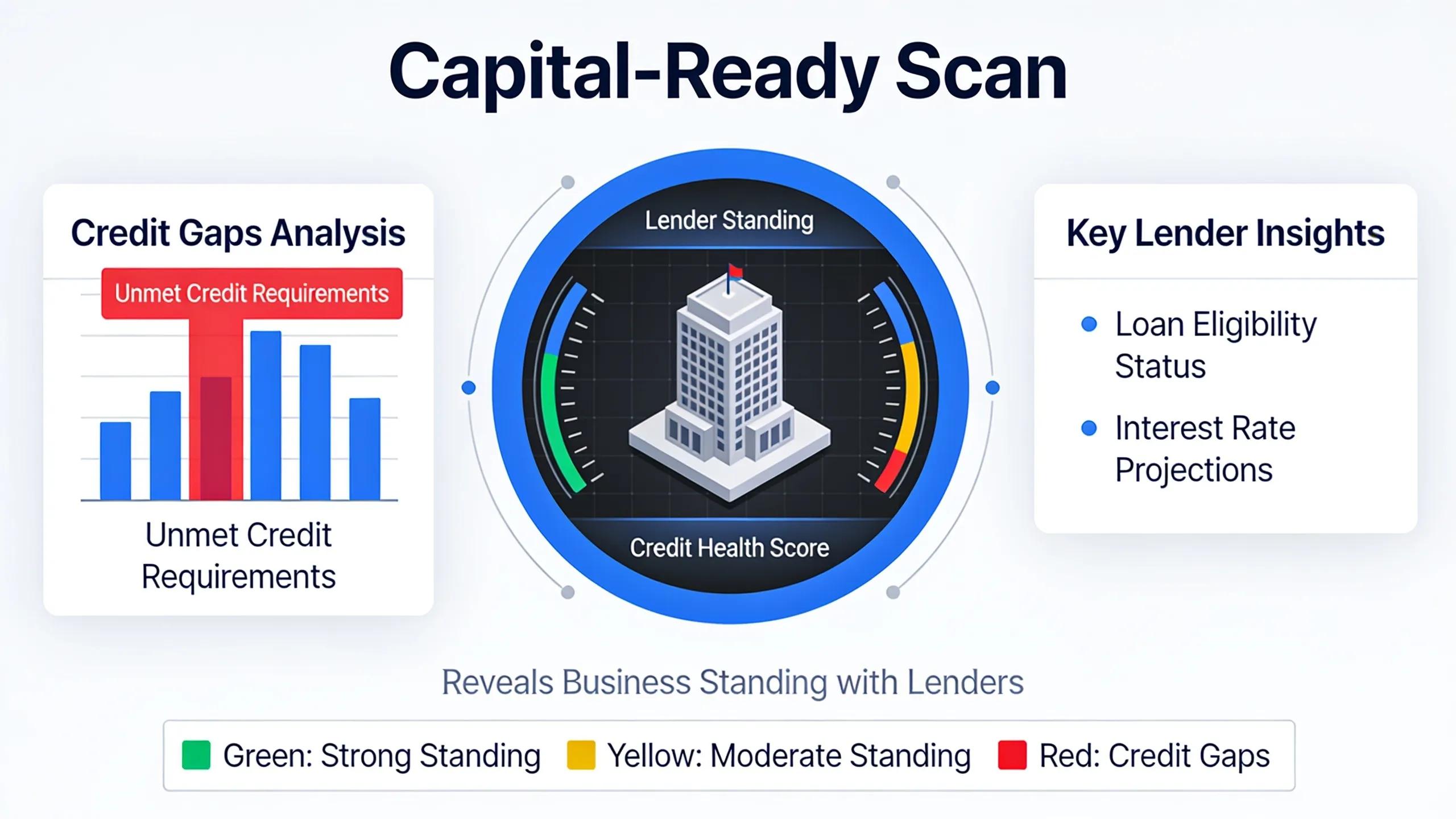
A Capital-Ready Scan reveals exactly where a company stands with lenders before an owner ever submits an application. That single step exposes credit gaps that would otherwise surface only after a denial, costing weeks of lost time and stalled growth plans. Business owners who skip this check often apply blind, discovering weaknesses only when a lender rejects the request.
The review examines two core elements together. First, it maps the company's current business credit profile against what underwriters actually check. Second, it confirms the status of the business's DUNS number, the identifier Dun & Bradstreet assigns to track a company's payment history. Missing or inaccurate DUNS data quietly disqualifies otherwise strong applicants, so verifying it early prevents wasted effort down the line.
Why Does D&B Reporting Accuracy Matter?
Trade accounts must report correctly to Dun & Bradstreet, or the credit profile lenders see will not match reality. A vendor account that pays on time but never reports to D&B contributes nothing to the business's file. Any reporting errors need rapid escalation, since a single miscoded account can drag down an otherwise healthy score.
What Do Lenders Require Before Approving a Line?
Two thresholds show up repeatedly across unsecured programs. Personal credit typically needs to sit at 600 or above. The business generally must have operated for at least three to six months. Owners preparing for an unsecured credit line or a no collateral line of credit should treat these as starting benchmarks, not guarantees. Individual lenders layer on additional revenue and documentation requirements.
To check standing methodically, an owner should:
Pull the current business credit report and note any gaps.
Confirm the DUNS number is active and accurate.
Verify trade accounts report to D&B and fix errors immediately.
Check personal credit score against the 600+ benchmark.
Confirm time in business meets the three-to-six-month minimum.

How Do You Choose Unsecured Over Collateral-Backed Credit?
Asset exposure decides the choice. Owners who need working capital without risking equipment, real estate, or inventory typically favor an unsecured credit line. It does not require pledging specific business assets the way a secured line does. Business owners who already carry equipment loans or hold few hard assets often find this structure the more practical route to funding.
Skipping collateral does not mean skipping accountability. Most unsecured lines still require a personal guarantee from owners holding significant ownership stakes, even when no property or equipment is pledged. That guarantee makes the owner personally responsible for the debt. If the business cannot repay, the lender can pursue personal assets to recover its losses. Understanding this trade-off matters before signing any agreement.
Does a No Collateral Line of Credit Still Put Personal Assets at Risk?
Yes, in most cases. A no collateral line of credit removes the requirement to pledge business property. The personal guarantee attached to it still ties repayment to the owner's personal finances. Founders should treat that guarantee as a real liability, not a formality.
VIP Business Credit structures financing around the company's EIN rather than the owner's Social Security number, which helps limit how much personal exposure a business owner carries. This approach separates business obligations from personal credit history as much as current lending standards allow.
How Does Business Credit History Change the Equation Over Time?
Stronger business credit reduces dependence on personal guarantees as a company matures. A progressive credit-building plan increases available credit limits. Expands vendor diversity, giving owners more unsecured options that lean less on personal backing.
FactorUnsecured LineCollateral-Backed LineAsset pledge requiredNoYesPersonal guaranteeTypically requiredOften requiredPersonal asset riskPresent via guaranteePresent via guarantee and collateral
What Do Lenders Require to Qualify?
Business line of credit qualification standards vary by institution: lenders evaluate an unsecured credit line using different yardsticks depending on the lender. Traditional banks tend to set the highest bar. Alternative lenders in a broader network often work with businesses that fall short of bank standards.
Bank programs typically require a personal credit score above 700, at least two years of operating history, and a meaningful level of annual revenue. These thresholds exist because a no collateral line of credit carries more risk for the lender. Without equipment, real estate, or inventory pledged as security, the lender leans harder on the owner's credit profile and the company's track record. Newer businesses or owners with lower scores rarely clear this bar at a traditional bank. That does not mean financing is out of reach elsewhere.
Why Do Requirements Vary So Much Between Lenders?
Requirements shift because each lender sets its own risk tolerance and underwriting model. Access to more than 1,000 national and local lenders means qualification standards range from strict bank criteria to more flexible alternative programs. A business rejected in one place may qualify in another.
How Can a Business Owner Know What They Qualify For Before Applying?
A pre-qualification workflow reviews a company's current standing and sorts financing programs into three categories. Some programs may already be within reach; others require additional preparation first. The process also identifies specific, concrete actions that expand eligibility over time, rather than leaving owners guessing.
Beyond meeting a lender's minimum numbers, the underlying strategy matters. Structuring financing around the company's EIN, instead of the owner's Social Security number, builds independent business credit and separates personal liability from company debt. That separation protects personal assets even as the business takes on more capital to grow.
How Do You Compare Lenders and Loan Terms?
Comparing lenders requires matching rate structures, fees, and collateral rules side by side before signing anything. Business owners who skip this step often accept terms priced for a riskier borrower, paying more than their revenue history justifies. A structured comparison protects both cash flow and personal assets.
Follow these steps to evaluate offers accurately.
Pull a fundability snapshot first. VIP Business Credit's Funding Explorer and Funding Manager tools show which products fit a company's current profile, so comparisons start with realistic options rather than guesswork.
Widen the lender pool. Access to more than 1,000 national and local lenders means owners can weigh traditional banks against alternative finance providers and specialized programs, rather than settling for the first quote received.
Check the rate structure. Some bank-issued unsecured lines advertise pricing as low as Prime plus 1.75%, while other lenders price well above that benchmark. Rate spreads this wide can shift monthly payments substantially over a line's life.
Review fee timing. Annual fees on certain unsecured lines are waived for the first year, then scale up based on the credit limit selected. Factor that second-year cost into any long-term comparison.
Confirm collateral and guarantee terms. An unsecured credit line avoids pledging equipment or property, but most still require a personal guarantee.
Loop in an advisor before deciding. Local Business Credit Advisors review the numbers side by side and flag terms that look favorable but carry hidden restrictions.
Is a no collateral line of credit always cheaper than a secured loan?
Not necessarily. Like many no collateral business loans, a no collateral line of credit often carries a higher rate than secured financing because the lender takes on more risk without an asset backing the loan.
Does comparing lenders affect business credit standing?
Applying through a guided network limits unnecessary credit pulls. Building strong business credit tied to the company profile, rather than repeated personal inquiries, keeps future comparisons cleaner.
How Do You Apply Without Risking Personal Assets?
Applying safely starts with structuring credit around the company's EIN rather than the owner's Social Security number. Skipping this step forces lenders to lean on personal credit history. Personal assets as their main safety net, raising exposure with every dollar borrowed. The process below outlines a safer path for founders and controllers who want capital without gambling the house — sometimes literally.
Confirm the business carries an active EIN and separate banking history before submitting any application.
Review whether the product is a true no collateral line of credit or simply an unsecured line that still requires a personal guarantee.
Read the guarantee language line by line — a personal guarantee lets a lender pursue personal assets if the business can't repay, even when no collateral was pledged upfront.
Consult a Business Credit Advisor before signing, so the terms are fully understood in plain language rather than legal shorthand.
Build documented business credit history ahead of applying, since companies without an established track record often struggle to get approved for traditional financing.
Does "Unsecured" Mean No Personal Risk?
No. An unsecured credit line removes the need to pledge equipment, inventory, or real estate as collateral, but it rarely removes personal liability entirely. Most lenders still attach a personal guarantee, which means a missed payment can put personal savings or property on the line.
Why Work With an Advisor Instead of Applying Solo?
Local Business Credit Advisors walk owners through each clause of an agreement before it's signed, translating underwriting language into practical terms. This concierge-style support reflects a broader commitment to acting as a long-term partner rather than a one-time broker chasing a single transaction. That ongoing relationship matters most after approval, when usage habits determine whether credit terms improve or tighten over time.
How Do You Manage the Line Once Approved?
Approval marks the start of a management routine, not the finish line. Business owners who skip ongoing oversight risk stalled credit growth and reporting errors that quietly cap future limits. VIP Business Credit builds a structured process around every approved account. The credit profile strengthens month over month instead of stagnating.
What happens after the credit line is opened?
Advisors monitor whether vendor accounts report correctly and whether payment schedules stay on track. Consistent, on-time reporting is what turns an open account into a documented history lenders trust.
The following steps keep a newly approved line working in the owner's favor:
Confirm reporting accuracy. Verify that each account reports to Dun & Bradstreet and escalate any reporting error immediately, before it can distort the credit file.
Negotiate vendor terms. Secure Net-30, Net-60, or Net-90 payment terms that match incoming cash flow, so repayment never outpaces revenue.
Place strategic vendor accounts. Work with pre-qualified vendors in the client's industry that report to major bureaus, adding documented payment history over time.
Track credit profile progress. Review the growing base of reporting accounts and vendor diversity, since this activity is what allows limits to expand as the business matures.
Reassess quarterly. Revisit the plan as revenue changes and adjust vendor mix accordingly.
Why does ongoing management matter more than the initial approval?
An unsecured credit line only builds value if it reports consistently and stays free of errors. A single missed report or misclassified account can undercut months of progress. Owners who treat approval as the end of the process, rather than the start of active management, often see their business credit growth plateau far below what their revenue could support.
What Common Mistakes Should You Avoid?
Five recurring errors derail business owners seeking working capital without pledging assets. Each mistake costs time, damages credit standing, or triggers avoidable declines. Understanding these pitfalls in advance saves owners from repeating them.
Skipping pre-qualification tops the list. Owners who apply blindly, without first checking which programs match their profile, often get declined for products they were never eligible for in the first place. A structured pre-qualification step shows which programs are ready now, which need more preparation, and what actions close the gap.
Why Does Ignoring Credit Monitoring Cause Problems?
Reporting errors compound quietly. Owners who never review their bureau data miss mistakes until a lender flags them mid-application. Ongoing monitoring of business credit files catches inaccuracies early, before they weaken a fundability profile that took months to build.
Another common mistake: assuming an unsecured credit line removes all personal risk. Lenders still typically require a personal guarantee or a UCC lien, even when no physical collateral secures the loan. A no collateral line of credit protects business assets, not personal liability entirely.
Revenue timing trips up many founders too. Applying before hitting benchmarks lenders expect, such as a minimum annual revenue threshold for some bank-issued lines, results in predictable rejections. Waiting until the business meets realistic thresholds saves an application from becoming a hard-inquiry mistake.
Finally, owners sometimes choose a one-time broker over a lasting advisory relationship. Once funding closes, that broker disappears, leaving no one to help manage renewals or growing needs. A long-term partner model, paired with transparent pricing, keeps guidance available well past the first approval.
Avoiding these five mistakes strengthens business credit outcomes and protects both time and reputation with lenders.
Unsecured business credit lines represent a meaningful pathway to capital when collateral isn't available—and securing them starts with understanding how lenders evaluate your business's fundability. By building a strong EIN-based credit profile, separating personal liability from business operations, and demonstrating consistent financial credibility, you position your company as a lower-risk borrower. The journey requires intentional steps. The payoff—accessing growth capital on better terms—makes the effort worthwhile for entrepreneurs ready to scale responsibly.
FAQ
What is an unsecured business credit line?
An unsecured business credit line provides working capital without pledging company or personal assets like real estate, equipment, or inventory. Approval relies on revenue and creditworthiness rather than collateral, giving owners flexible, revolving, EIN-based financing.
What qualifications do lenders require for approval?
Lenders typically require a personal FICO score above 700, two years in business, and a meaningful level of annual revenue. Meeting these benchmarks strengthens an owner's chances of securing an unsecured credit line.
How does VIP Business Credit help entrepreneurs secure funding?
VIP Business Credit connects entrepreneurs in Northern Virginia. The Greater Washington, DC region to over 1,000 national and local lenders. This widens the pool of unsecured credit line options available for comparison.
Facts
VIP Business Credit is located in Sterling, VA, US.
VIP Business Credit has 3 employees.
VIP Business Credit helps entrepreneurs in Northern Virginia and the Greater Washington, DC region build EIN-based business credit.
VIP Business Credit connects to over 1,000 national and local lenders.
VIP Business Credit offers a proprietary tool called Fundability Score.
VIP Business Credit's office is located at 21000 Southbank St Ste 106-380, Sterling VA 20165.
About the Author
Lee Johnson is the Co-Founder and CEO of VIP Business Credit, bringing over 25 years of experience in business funding, credit building, and generational wealth strategies. He holds a Bachelor of Science from Fairleigh Dickinson University and a Master of Business Administration from the University of Phoenix, and he is a Certified Professional Coach with more than 500 coaching hours. Since 2005, Lee has built a personal real estate investment portfolio exceeding 1,700 units valued at approximately $254 million across multiple U.S. markets.
Lee's mission is to help small business owners — including those in home services, trucking, and real estate — establish strong, EIN-based business credit before accessing the highest loan amounts at the best terms available. He and the VIP Business Credit team guide entrepreneurs through that process every day.
For personalized guidance, contact VIP Business Credit at (571) 248-3863 or [email protected]. Book a consultation at https://vipbizfunds.com/consultation.


