How to Improve Your Fundability Score to Maximize Funding Chances
How to Improve Your Fundability Score to Maximize Funding Chances

Understanding how to improve your fundability score is essential to securing business finance. A fundability score shows how likely a lender is to approve your loan or credit request. This guide explains the score’s components, the main factors that affect it, and clear, practical steps you can take to strengthen your profile and increase funding chances.
What Is a Fundability Score and Why Does It Matter for Business Funding?
A fundability score is a metric lenders use to judge a business’s creditworthiness. It draws on credit history, financial stability and the overall business profile. A higher score usually means better loan terms and more funding options, so understanding it helps you make targeted improvements.
Small businesses drive most economies, but information gaps and high transaction costs often make it harder for them to secure finance.
Smart Precision Finance for Small Business Funding Small businesses are central to economies, but their risk and opacity often deter banks and other investors. High transaction costs make lending unattractive. Recent digitalisation and data analytics have reduced those costs by enabling automated systems to analyse varied data on a borrower’s solvency and stability. Large service providers’ ownership of data can concentrate borrowers within the biggest networks. This paper outlines the parameters for ‘smart precision financing’—legal and technological innovations that could simplify lending, reduce information asymmetry and transaction costs, limit agency risk, and support eventual growth toward venture capital investment. Smart Precision Finance for Small Businesses Funding: DC Donald, DC Donald, 2020
How Does a Fundability Score Affect Small Business Loans Qualification?
The fundability score directly affects loan qualification. Lenders use it when evaluating applications, looking at credit history, payment patterns and financial stability. A strong score increases the chance of favourable terms; a weak score limits options and often raises borrowing costs.
Research shows credit scoring is widely used in small business lending and often relies on owners’ consumer credit scores, which is linked to increased lending activity.
Credit Scoring in Small Business Lending and Its Impact Literature links credit scoring to greater small business credit, but earlier work depended on a single 1998 survey of the largest U.S. banks. This paper uses new survey data from community banks and finds scoring is common and often based on owners’ consumer credit scores rather than firm-level business scores. The analysis suggests credit scoring is associated with an initial rise in lending that moderates over time, with no long-term change in loan quality, and a short-term negative impact on community bank profitability that eases later.The surprising use of credit scoring in small business lending by community banks and the attendant effects on credit availability, risk, and profitability, AN Berger, 2011
What Are the Key Components of a Business Credit Score?
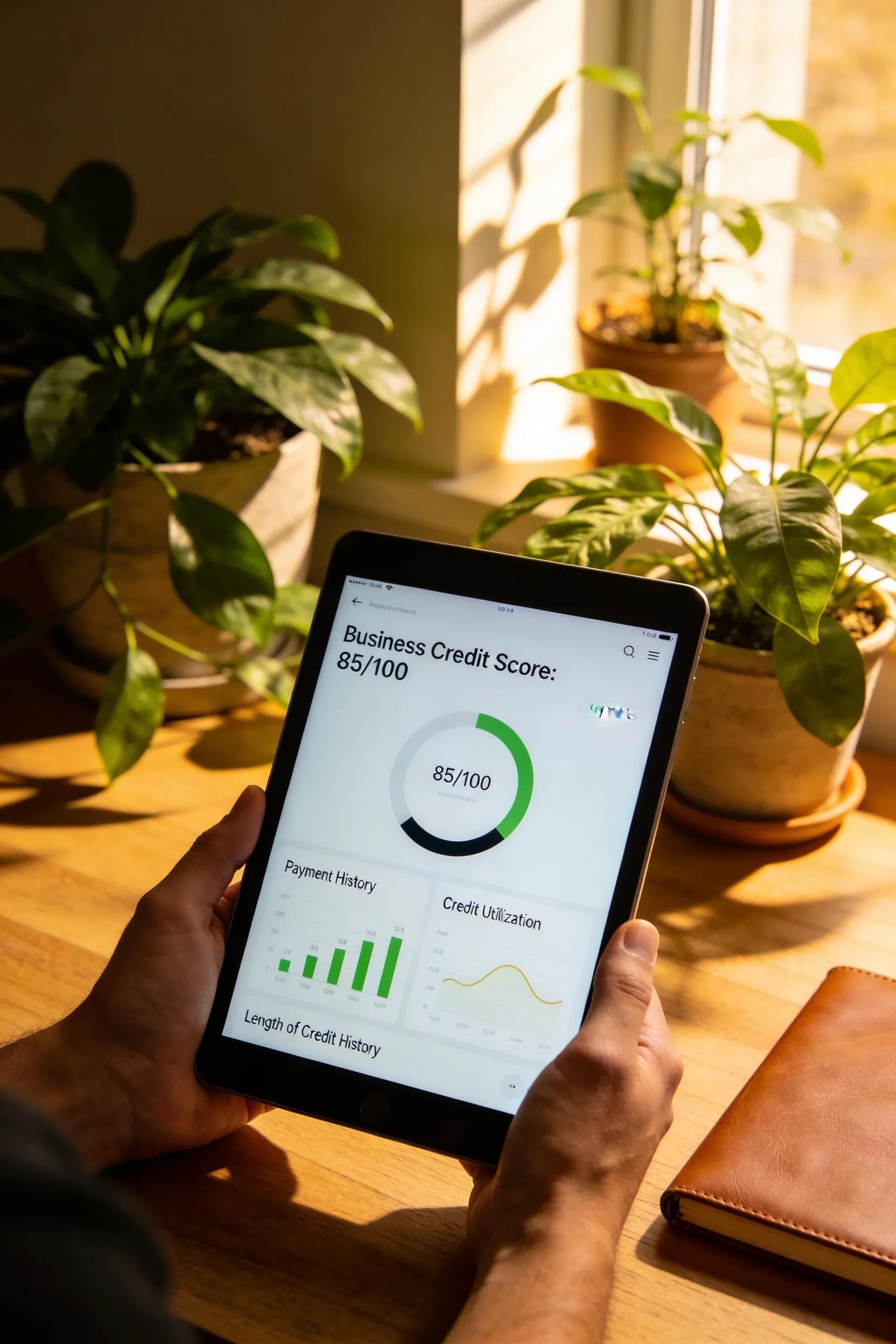
A business credit score rests on a few key components:
Payment History: Lenders closely examine whether payments are made on time, as delinquencies negatively impact the score.
Credit Utilization: The ratio of debt to credit limits is evaluated. A lower utilization rate suggests better financial management and can enhance the score.
Time in Business: The longevity of the business can reflect stability, often improving score metrics.
Knowing these parts helps business owners manage and improve their fundability scores.
Which Factors Most Influence Your Fundability Score?
Several factors shape your fundability score and how lenders judge your creditworthiness.
Credit Utilization: Maintaining a low credit utilization ratio is essential to a strong fundability score. It indicates that a business manages existing credit responsibly, which reassures lenders.
Business Age: Older businesses typically demonstrate stability, increasing trust among lenders, thus contributing positively to the fundability score.
Financial Stability: Strong financial statements reflecting consistent revenue can bolster a business’s fundability score.
How Do Business Credit Utilization and Payment History Impact Fundability?
Credit utilization and payment history are central to fundability. Aim for utilization under 30% and make payments on time; together they show responsible borrowing and improve approval odds. Think of utilization like desk space—keeping most of it clear helps you work more effectively.
Small businesses benefit from deliberate funding strategies to sustain operations and support growth.
Funding Strategies for Small Business Sustainability ABSTRACT: Iyanda, Ayokunle O. Walden University, ProQuest Dissertations & Theses, 2021.Funding Strategies for Small Business Sustainability, 2021
What Role Does Business Age and Financial Stability Play in Funding Eligibility?
Business age and financial stability signal risk to lenders. A longer operating history suggests reliability, while steady revenue, cash flow and healthy profits improve eligibility and can lead to better borrowing terms.
What Practical Steps Can You Take to Improve Your Business Fundability Score?
Improving your fundability score requires concrete actions that strengthen credit profiles and financial practices.
Credit Monitoring: Regularly monitoring your business credit reports helps identify areas in need of improvement. This allows you to correct inaccuracies and understand your current standing.
Building Strong Business Credit Profiles: Establishing solid business credit through timely payments, maintaining low credit utilization, and diversifying credit lines can dramatically enhance your score.
Maintaining Good Payment History: Keeping payment histories positive by ensuring debts are settled on time plays a critical role in improving your fundability.
How Can Building Strong Business Credit Profiles Boost Your Fundability?

A strong business credit profile starts with accounts in the business name and consistent, timely payments. Build vendor relationships and merchant accounts so positive activity is reported. Small, regular borrowings that are repaid on time can also demonstrate creditworthiness and open better funding options.
Why Is Monitoring Your Fundability Score Regularly Important?
Check your fundability score regularly so you know where you stand and can fix issues early. Use monitoring tools for alerts and score access, enabling you to act before problems affect loan applications.
How Does Business Coaching Enhance Your Chances of Funding Approval?
Business coaching offers practical guidance to refine funding strategies and align your business profile with lender expectations.
What Types of Credit Coaching Services Does VIP Biz Funds Offer?
VIP Biz Funds helps small business owners improve their fundability scores. They provide business credit building and coaching services tailored to each business, from developing a strong credit profile to strategic financial planning aligned with business goals.
How Can Expert Guidance Simplify Loan Qualification Processes?
Coaches clarify documentation requirements, help prepare stronger applications and refine your business narrative. This breaks complex steps into manageable tasks and improves your chance of approval.
How Can You Access Business Loans After Improving Your Fundability Score?
With an improved fundability score, accessing business loans becomes easier. Knowing lender criteria helps ensure a smoother application process.
What Loan Qualification Criteria Should You Understand Before Applying?
Before applying, learn the main lender criteria that shape business loan qualification. These usually include:
Credit Score: A minimum credit score requirement that reflects creditworthiness.
Financial Statements: Recent statements showcasing business profitability and cash flow.
Personal Guarantees: Some lenders may require personal guarantees that show the owner’s commitment and responsibility.
Knowing these requirements improves your preparedness and confidence when approaching lenders.
How Does VIP Biz Funds’ Funding Access Service Support Your Loan Applications?
VIP Biz Funds’ funding access service helps businesses navigate loan applications. They offer tailored support to meet lender criteria and organise documentation, increasing approval chances and helping secure more favourable loan terms.
What Are Common FAQs About Fundability Scores and Small Business Funding?
Answering common questions clears up misconceptions and builds a clearer understanding of fundability.
How Quickly Can You Improve Your Fundability Score?
Improving fundability takes time; notable gains often appear in 2–6 months depending on the steps you take. Consistent practices—optimising payment history and monitoring reports—create steady, lasting improvement.
What Is the Difference Between Personal and Business Credit in Fundability?
Personal credit applies to individuals; business credit applies to the business entity. Keeping them separate protects personal assets and helps the business access better funding options.
Frequently Asked Questions
What strategies can I implement to monitor my fundability score effectively?
Use business credit monitoring services for regular updates and alerts. Review reports from major bureaus at least annually to spot errors. Track key metrics—payment history and credit utilisation—so you can correct issues and support steady improvement.
Can my business fundability score fluctuate, and what causes these changes?
Yes. Payment history, credit utilisation and financial statements can change your score. Late payments or sudden debt spikes lower it; on-time payments and lower balances raise it. Policy shifts or new data reporting can also affect your score, so regular checks keep you informed.
What types of funding options can I access with a high fundability score?
A high fundability score expands options: lower-interest loans, lines of credit and improved terms. Lenders may offer higher limits and fewer fees, and you may qualify for unsecured loans that otherwise have stricter requirements. Overall, a higher score strengthens your credibility with funders.
How often should I assess my business's financial stability?
Assess financial stability at least quarterly to monitor cash flow, profitability and overall health. Quarterly reviews reveal trends, let you adjust strategy and help maintain or improve your fundability. Significant business changes should prompt an immediate review.
What common misconceptions exist about improving a fundability score?
A common misconception is that more credit alone improves your score. In reality, responsible credit use and timely payments matter most. Quick fixes like taking multiple loans rarely help; steady monitoring and sound financial habits produce lasting results.
Are there specific industries that struggle more with fundability?
Yes. High-risk sectors—such as restaurants, construction and some volatile startups—often face greater challenges because of variable revenues and closer lender scrutiny. These businesses should demonstrate strong financial practices, stability and diverse funding sources to improve fundability.
Conclusion
Raising your fundability score opens access to better funding and more favourable terms, positioning your business for growth. By learning what affects the score and applying these steps consistently, you can improve creditworthiness and overall stability. Start with small, steady actions today and track how they expand your financing options over time.
About The Author
Lee Johnson is the Co-Founder and CEO of VIP Business Credit — a seasoned Real Estate Investor, Business Growth Strategist, and Master Certified Professional Coach with more than 500 coaching hours. With over 25 years of experience in business funding, credit building, and real estate investing, Lee holds a Bachelor of Science from Fairleigh Dickinson University and a Master of Business Administration from the University of Phoenix. Since 2005, he has built a real estate investment portfolio exceeding 1,700 units valued at approximately $254 million across multiple U.S. markets.
Lee's mission is to help small business owners — including those in home services, trucking, and real estate — achieve financial freedom by first establishing strong, EIN-based business credit, then accessing the highest loan amounts at the best terms available. He and the VIP Business Credit team guide entrepreneurs through that process every day.
For personalized guidance, contact VIP Business Credit at (571) 248-3863 or [email protected], or book a consultation.


