SBA Microloan Funding for Startup Growth
SBA Microloan Funding for Startup Growth
By *VIP Business Credit* Editorial Team · Updated 2026-08-26
SBA microloans provide working capital for startups and growing small businesses, with loan amounts that vary based on the lender and program, funded through nonprofit intermediary lenders. These loans suit entrepreneurs needing smaller amounts for equipment, inventory, or supplies. VIP Business Credit's credit-gap review identifies weaknesses first, building a stronger foundation before pursuing microloans or larger financing options.
Key Takeaways
- SBA microloans provide funding for startups and small businesses, with loan amounts that vary by lender and program.
- Microloan programs support small business startups and expansions through nonprofit intermediary lenders nationwide.
- SBA-guaranteed loans feature competitive rates, flexible down payments, and no collateral requirements for qualified borrowers.
- Borrowers receive ongoing counseling and technical assistance to help launch and operate their businesses successfully.
What Is an SBA Microloan, Exactly?
An SBA microloan delivers federal-backed financing designed to help small businesses start up and expand, with loan amounts that vary by lender and program. Small business owners without a lending history often overlook this program. It fills the exact gap traditional banks refuse to touch. Loans this small rarely make a bank profitable to underwrite, which pushes many founders toward high-interest credit cards or personal savings instead. That gap is precisely what this program was built to close.
The way this program works in practice reveals its real purpose. Microloans tend to be smaller than a typical bank term loan, sized to cover early-stage costs like inventory, equipment, or working capital rather than large-scale expansion.
How does a microloan compare to other startup financing?
Microloans occupy a specific niche in the broader funding landscape. Founders exploring startup funding should understand where this option fits relative to other paths:
Where can business owners find microloan lenders?
Finding the right lender takes more effort than a simple search. VIP Business Credit connects to over 1,000 national and local lenders, spanning traditional banks, alternative finance providers, and specialized programs. That range matters for small business capital seekers because eligibility rules and terms shift dramatically from one lender to the next. Working within a broad network means a mismatch with one lender doesn't end the search. It points toward the next better-fit option.

Who Can Qualify for a Microloan?
Small business owners qualify for an SBA microloan by running an operating, for-profit company based in the United States that meets SBA size standards. Eligibility does not hinge on flawless credit or years in business. It hinges on the fundamentals of the company itself.
Lenders evaluate three core factors before approving any loan tied to startup funding goals:
- What the business does to generate income (its industry and revenue model)
- Who owns and controls it (the character of ownership)
- Where it operates (physical location within the U.S.)
These three factors shape almost every SBA-backed lending decision, not just microloans. A company selling handmade goods from a Loudoun County storefront and a home-based consulting firm face the same basic screening, even though their loan needs look different. You can find more details about SBA loans in our resources.
How can a founder tell which programs they actually qualify for?
A pre-qualification review answers that question before an application ever reaches a lender's desk. This step sorts programs into two buckets: those available right now, and those that require more groundwork first, such as stronger revenue history or cleaner business records. Founders walk away knowing exactly what stands between them and approved small business capital.
Does a business owner have to figure this out alone?
No. Local Business Credit Advisors provide one-on-one, concierge-level guidance built around each company's specific situation. Rather than guessing what an underwriter wants to see, owners get a clear explanation of lender requirements and a realistic path toward meeting them. That guidance turns a confusing qualification process into a manageable checklist, one a founder can act on immediately.
How Do SBA Microloan Intermediaries Work?
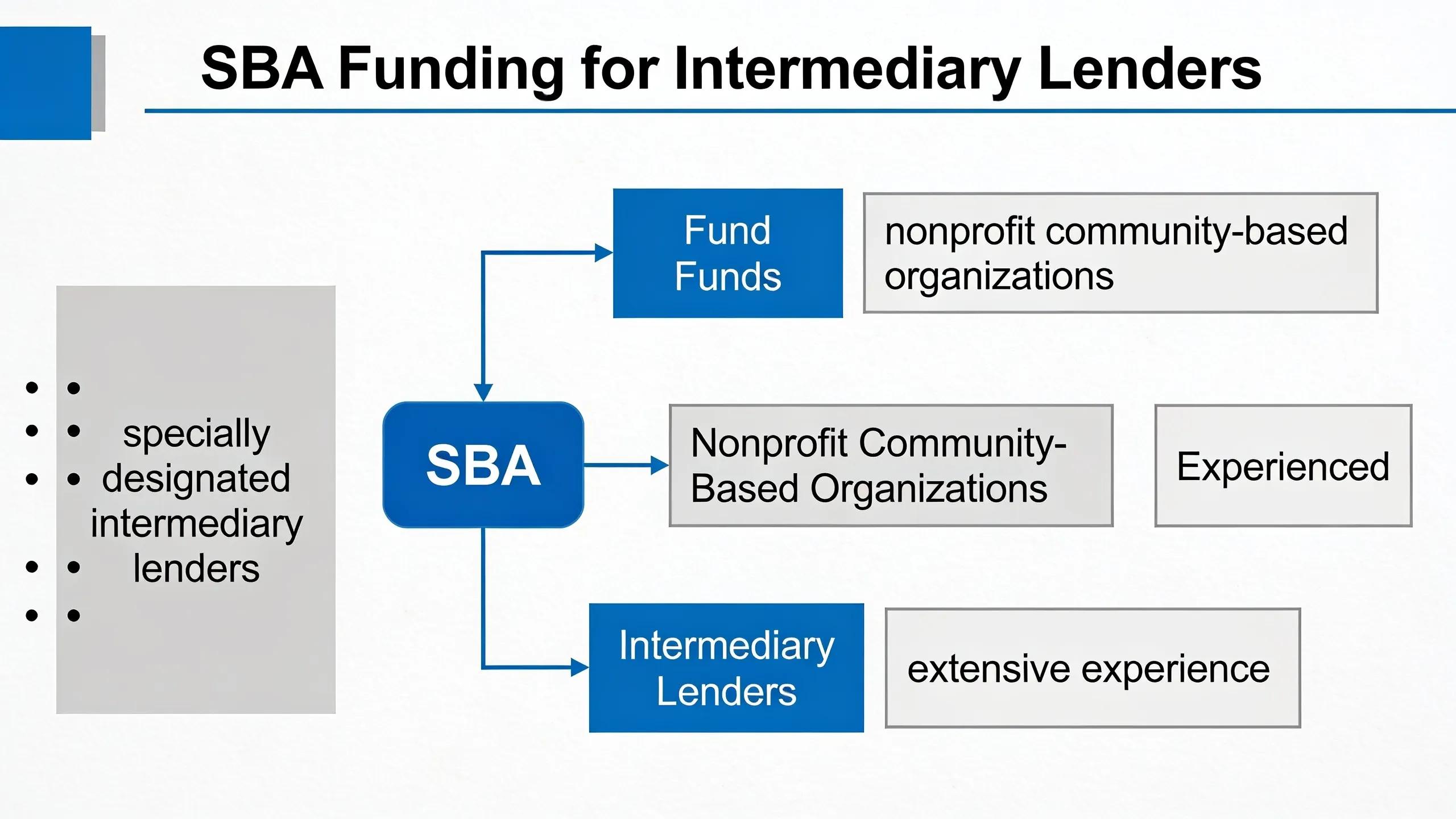
Nonprofit community lenders, not the federal government, hand out SBA microloan funds directly to small business owners. The Small Business Administration channels capital to specially designated intermediary lenders — community-based nonprofit organizations with deep experience in lending, management coaching, and technical support. This structure means a founder applying for a microloan works with a local nonprofit partner, not a federal office.
These intermediaries administer the entire microloan program for eligible borrowers. They review applications, disburse funds, and set repayment terms tailored to a business's cash flow. Because each intermediary operates independently, terms and application processes vary by lender and by region.
Why does the SBA use intermediaries instead of lending directly?
Community lenders understand local markets better than a centralized agency ever could. They pair small-dollar loans with hands-on coaching, helping founders avoid early missteps that derail startup funding. This localized approach also speeds up decision-making for entrepreneurs who need capital quickly.
What should founders look for in a microloan intermediary?
Look for a lender with clear terms, responsive communication, and no hidden fees layered onto the loan. VIP Business Credit reflects that same standard, emphasizing transparent, no-surprise pricing rather than one-time broker transactions. The firm's core focus stays on connecting clients with small business capital structured to build credit under the company's EIN, separating personal liability from business debt.
A few traits separate strong intermediary partners from weak ones:
- Clear, published rates and repayment schedules
- Willingness to explain underwriting decisions
- Ongoing coaching, not just a one-time check disbursement
- Track record with businesses of similar size and stage
Choosing the right intermediary shapes how smoothly the entire borrowing experience unfolds.
What Can You Actually Use a Microloan For?
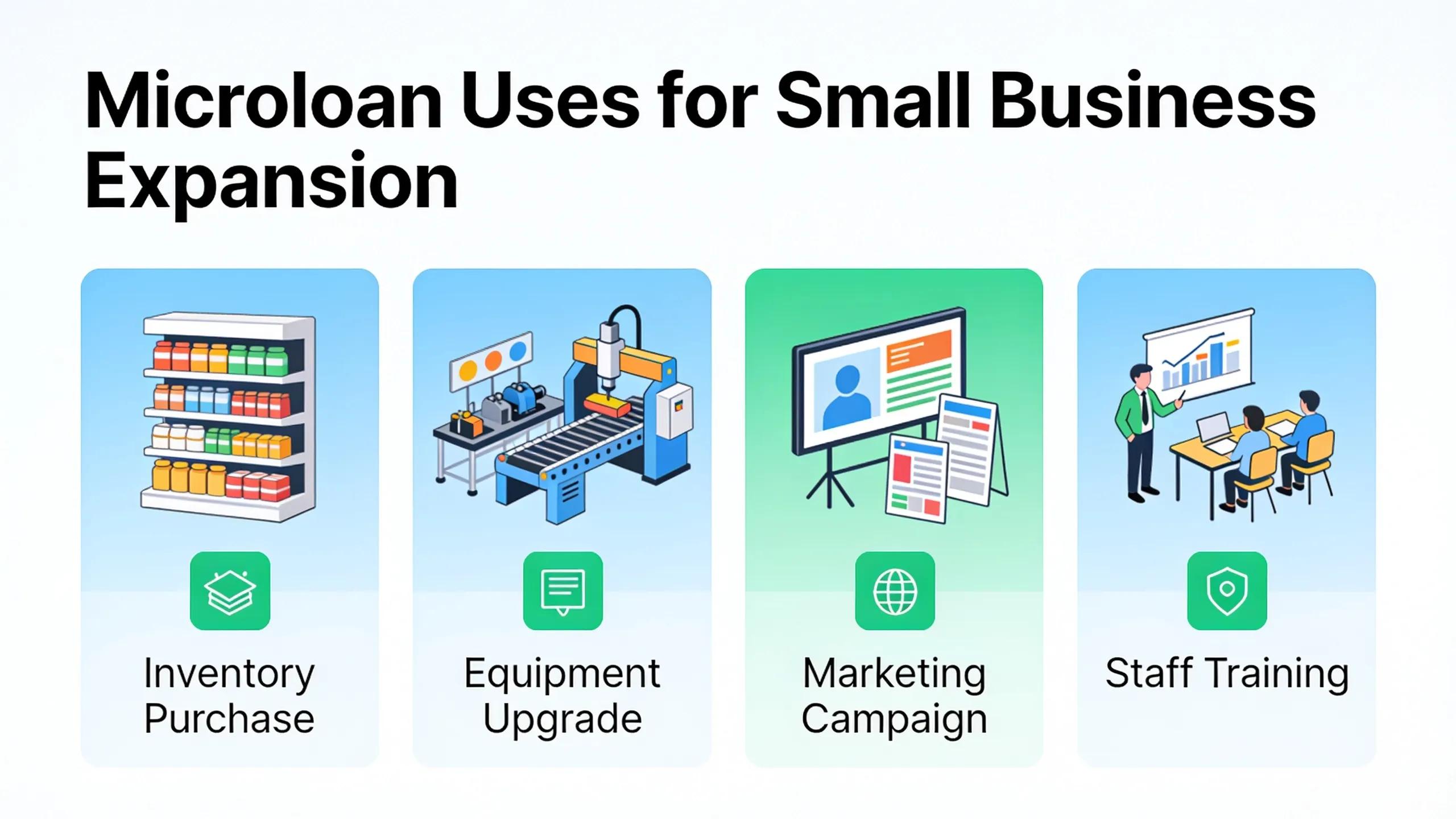
Flexibility defines this type of financing. A small business capital infusion of this kind covers inventory purchases, supplies, working capital, and other costs tied to daily operations. Small business owners often assume loans of this size come with narrow restrictions. The opposite is true: microloans exist to support a wide range of needs that help a company expand, from stocking shelves to covering payroll gaps during a slow month.
Spending the funds wisely, though, matters as much as securing them. Owners who direct microloan dollars toward vendor accounts that report payment activity to major credit bureaus build a track record lenders can verify later. Placing capital strategically with pre-qualified vendors in a given industry establishes that history, which strengthens a company's profile for future startup funding requests.
Can a microloan help with equipment purchases?
Yes. Equipment credit lines let a business acquire needed machinery or tools right away, rather than waiting to save up. Payments made on that equipment often qualify as deductible business expenses. Consistent on-time payments build credit at the same time.
What other funding options exist beyond a microloan?
Microloans work best as a starting point, not a ceiling. Once a business establishes payment history and stronger credit, larger tools become available:
- Traditional business loans for expansion or major purchases
- Revolving lines of credit for ongoing cash flow needs
- A structured credit-building program that combines both
This layered approach lets a young company start small, prove reliability, and graduate into larger financing without overextending in the early stages.
Why Skip Credit Cards for Startup Funding?
Credit cards charge compounding interest that turns a manageable expense into a long-term debt trap. Speed makes plastic tempting for founders chasing startup funding, but that convenience carries a steep price. High finance charges stack quickly. An equipment purchase with pricing that varies can balloon into years of minimum payments that barely touch the principal.
An sba microloan solves this problem differently. Loans issued through this program come with tailored repayment schedules and set interest rates, so payments stay predictable from month one through payoff. There's no balloon payment waiting at the end to blindside a growing business, unlike many revolving credit lines that reset terms without warning.
Does a microloan actually protect cash flow better than a card?
Yes — predictable repayment structure is the core advantage. Credit cards demand minimum payments that fluctuate with balance and rate changes, making budgeting difficult for a business still finding its footing. A fixed-schedule microloan lets an owner forecast expenses months in advance instead of guessing.
Cash flow control matters more than most founders realize during the first two years of operation. Strategies built around steady small business capital access, rather than emergency card swipes, ensure working capital sits ready when payroll or inventory needs hit. Not after a crisis has already started.
What else helps beyond choosing the right loan type?
Vendor relationships play a bigger role than many founders assume. Negotiating Net-30, Net-60, or Net-90 payment terms with suppliers eases short-term pressure without touching a credit line at all.
Consider the trade-offs side by side:
How Does a Full SBA Loan Compare?
Full SBA microloan programs sit alongside larger, fully guaranteed SBA loans, and the two serve very different stages of a business's growth. Standard SBA-guaranteed loans typically carry rates and fees comparable to non-guaranteed financing, which sets them apart from many higher-cost alternatives entrepreneurs encounter early on. That competitive pricing makes larger SBA loans attractive once a business has enough history and documentation to qualify.
For a founder chasing startup funding early on, a full SBA loan often asks for more than a young business can offer. Extensive financials, collateral, and time-in-business requirements can shut the door before an application even gets reviewed.
Is a microloan easier to qualify for than a full SBA loan?
Generally, yes. Microloans are built for smaller borrowing needs and earlier-stage companies. Full SBA loans favor businesses with stronger financial track records. The right fit depends on how much small business capital the business needs right now and how prepared its credit profile is.
A structured, step-by-step process helps businesses qualify for better terms, higher limits, and lower rates as they mature. VIP Business Credit's approach supports newer ventures seeking first approvals and established firms looking to scale or expand. Beyond arranging financing, the firm strengthens credibility signals so lenders and vendors view the business as lower risk, positioning owners to graduate from smaller loans into stronger, better-priced capital over time.
How Can You Build Lender Readiness Before Applying?
Lender readiness starts with an honest audit of where a business already stands. Skipping this step wastes applications and invites unnecessary declines. Each hard inquiry and mismatched application chips away at a company's standing with future lenders. A clear picture upfront turns guesswork into a plan.
That audit needs to go deeper than a quick credit check. A full review of the business's credit profile, including its DUNS number status, uncovers gaps before a lender ever does. Catching a missing trade line or an outdated business record early means fixing it on the owner's timeline, not scrambling after a denial letter arrives.
What Does a Credit-Building Plan Actually Involve?
A progressive plan is built to grow alongside the business. Early on, it might focus on a few reporting vendor accounts. Over time, it expands available credit limits and diversifies the mix of vendors reporting payment history. This staged approach mirrors how lenders evaluate risk — they want to see consistent, growing credit behavior over time, not a single large credit line opened overnight.
About The Author
Lee Johnson is the Co-Founder and CEO of VIP Business Credit, a Master Certified Professional Coach, and a seasoned Real Estate Investor and Business Growth Strategist with over 25 years of professional experience in business funding and real estate. He holds a Bachelor of Science from Fairleigh Dickinson University and a Master of Business Administration from the University of Phoenix, along with credentials as a Certified Professional Coach backed by more than 500 coaching hours. Since 2005, Lee has built a real estate investment portfolio exceeding 1,700 units valued at approximately $254 million across multiple U.S. markets. His mission is to help small business owners — including those in home services, trucking, and real estate — achieve financial freedom by first building a strong business credit profile, then securing the highest loan amounts at the best available terms.
Connect with Lee and VIP Business Credit:
- Phone: (571) 248-3863
- Email: [email protected]
- Book a consultation: Schedule here


