SBA 7(a) Loans: Fuel Your Small Business Growth
SBA 7(a) Loans: Fuel Your Small Business Growth
By VIP [Business Credit](https://www.vipbizfunds.com/) Editorial Team — Updated *2026-08-26*
SBA 7(a) loans provide government-guaranteed financing through approved lenders, covering real estate purchases, equipment installation, working capital, and debt refinancing. This program is SBA's primary vehicle for small business capital access. VIP Business Credit's credit assessment tools identify gaps beforehand, giving owners a clear roadmap for qualifying and structuring growth-focused financing strategies.
Key Takeaways
- SBA 7(a) loans provide guaranteed financing to small businesses through over 1,000 national and local lenders nationwide.
- 7(a) loans cover a wide range of loan amounts for acquiring, refinancing, or improving business assets.
- VIP Business Credit connects Northern Virginia entrepreneurs to SBA lenders using their proprietary scoring tool.
- SBA lenders originate and service 7(a) loans through the Capital Access Financial System (CAFS) electronic platform.
What Is an SBA 7(a) Loan?
An SBA 7a loan is the Small Business Administration's primary program for delivering financial assistance to small businesses. Skipping this option costs owners access to guaranteed lending terms that many conventional banks won't match on their own. Structured as a partial government guarantee rather than a direct government loan, the program reduces risk for participating lenders, which opens the door for companies that might otherwise struggle to qualify.
What can a 7(a) loan actually pay for?
The list of approved uses runs longer than most owners expect. This flexibility is what separates a [small business loan](https://vipbizfunds.com/post/get-funded-explore-sba-loans-for-small-businesses) through this program from narrower financing products tied to a single purpose.
- Acquiring, refinancing, or improving commercial real estate
- Covering short-term and long-term working capital needs
- Refinancing existing business debt
- Purchasing machinery, equipment, furniture, or fixtures
- Financing a full or partial change of business ownership
Is this considered a general-purpose loan?
Yes. Because the funds stretch across so many categories, the program works as an SBA general purpose financing tool rather than a specialty product. A single approval can cover a real estate purchase one year and Equipment upgrades the next, without owners needing to reapply under a different program. Navigating eligibility rules and lender preferences still takes patience, since no two banks evaluate a 7(a) application the same way. VIP Business Credit connects business owners to a lender network exceeding 1,000 national and local options, including programs structured around this SBA framework, and that access matters, since matching the right lender to the right business often determines whether an application gets approved or stalls in underwriting.

What Can You Use SBA General Purpose Funds For?
Real estate, working capital, equipment, and even AI adoption costs all qualify for funding through the SBA general purpose loan category. Business owners who skip this financing option often pay higher rates elsewhere or drain cash reserves that should stay in the business. The flexibility built into this program covers three major expense categories most growing companies face. working capital
Property is the first. Funds acquire, refinance, or improve real estate and business buildings, giving owners a path to own their space instead of renting indefinitely, a shift that alone can stabilize monthly overhead for years. Cash flow is the second: the program is also one of the more accessible working capital loans available to small businesses, letting owners cover payroll, inventory, and day-to-day expenses without scrambling for a bridge loan every quarter, so capital access stays steady even when revenue timing gets unpredictable.
Equipment and technology round out the list. Funds purchase and install machinery, and the SBA now recognizes AI-related business expenses as eligible costs too, a notable update for owners modernizing operations with automation or data tools.
What Types of Purchases Qualify Under an SBA 7(a) Loan?
Qualifying purchases span real estate, refinancing, working capital, equipment, and AI-related upgrades. A **small business loan** through this channel isn't limited to one narrow use case; it flexes across the categories above.
How Does Equipment Financing Fit Into This Picture?
Equipment purchases don't have to wait on a full loan approval cycle. VIP Business Credit's equipment credit line service gets owners the machinery they need right away. Payments build business credit and count as deductible expenses. That combination — immediate access plus credit-building plus tax efficiency — makes equipment financing a practical complement to broader SBA-backed strategies, especially for companies scaling operations or replacing aging assets before a busy season begins.

How Much Can You Borrow With a 7(a) Loan?
Loan amounts under the SBA 7(a) program scale up significantly, making it one of the largest guaranteed lending options available to small business owners. That range matters for entrepreneurs eyeing a real estate purchase, a major equipment upgrade, or a full debt refinance rather than a small working-capital gap. Falling short of the right loan size stalls expansion plans and forces owners back to the drawing board months later.
Loan amounts under this program span a wide range, giving business owners flexibility depending on project size. A company acquiring a competitor needs a different loan size than one buying a delivery van. This range is exactly why the program works for both growing startups and established firms scaling operations.
What Determines How Much a Business Qualifies For?
SBA 7(a) loan eligibility depends heavily on credit history, income source, and where the business operates. Lenders also weigh how prepared a company's financial profile looks before underwriting even begins. Strengthening that profile in advance often opens the door to larger approved amounts and better pricing.
Can a Business Owner Know Their Loan Range Before Applying?
A pre-qualification process reveals which loan programs a business owner can access immediately versus which ones require more groundwork first. This step also identifies specific actions that expand borrowing options over time, rather than leaving owners guessing. VIP Business Credit's step-by-step process is designed to strengthen a company's credit standing so it qualifies for better terms, higher limits, and lower rates — turning a vague loan estimate into a clear, actionable number.
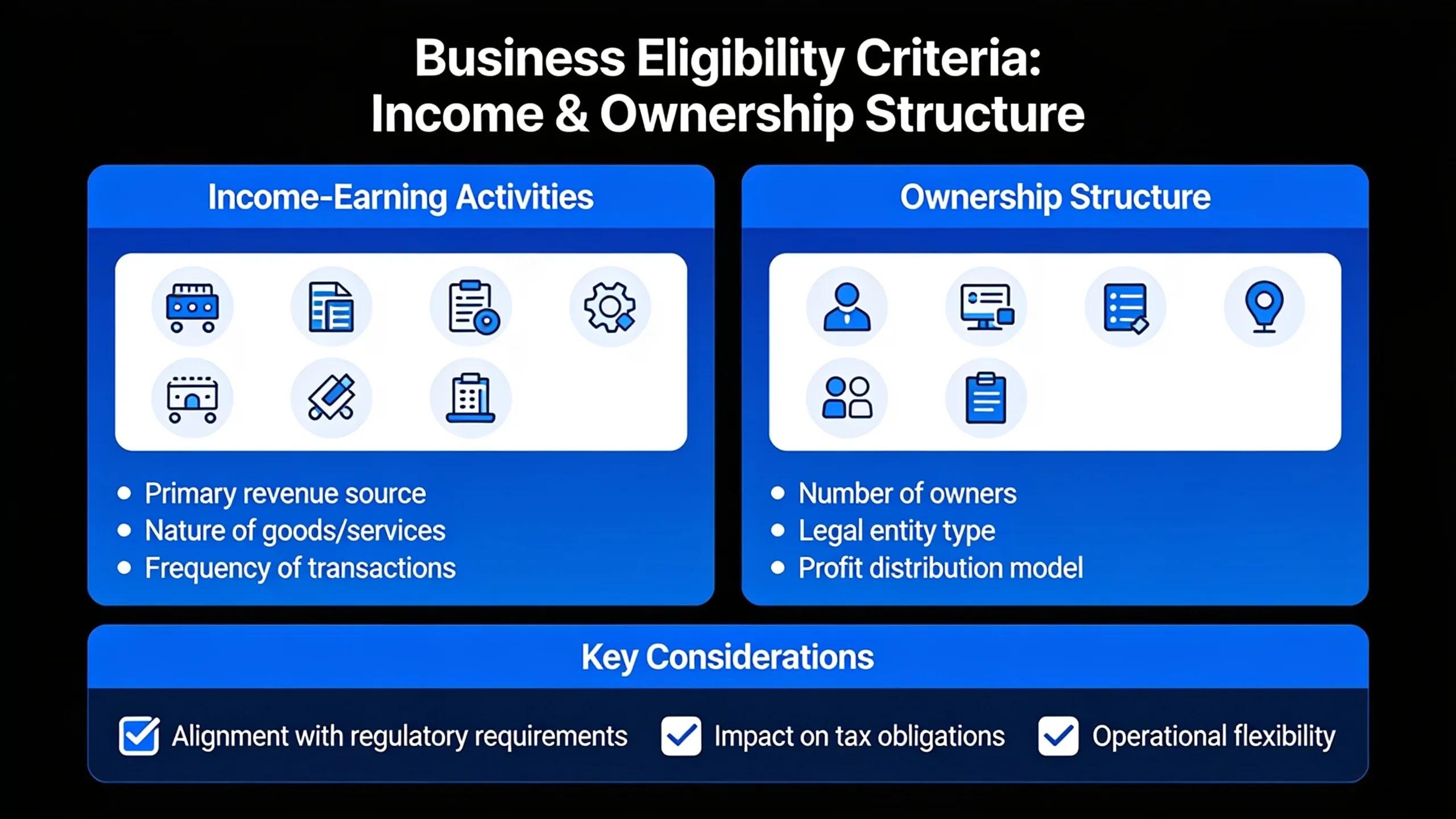
Who Qualifies for a Small Business Loan?

Three factors determine eligibility for a small business loan: how the business earns its income, who owns it, and where it operates. Lenders weigh these factors before looking at anything else. Skip this groundwork, and even a strong balance sheet won't move an application forward.
Beyond those three basics, most programs layer on additional standards. A company generally needs to fall within SBA size limits, show clear ability to repay, and operate with a legitimate business purpose. Bad credit doesn't automatically disqualify a founder, either — startup funding remains possible for owners working to rebuild their profile.
What does a lender look for in an SBA 7(a) loan applicant?
A SBA 7a loan applicant needs to satisfy the same core standards: right-sized business, sound ownership, and a repayment plan that holds up under scrutiny. Lenders also want to see that borrowed funds serve a genuine operating need. This is where SBA general purpose financing options become useful. They cover working capital, equipment, and refinancing needs without forcing owners into a narrow-use loan structure.
Does bad personal credit rule out approval?
Not necessarily. Owners with credit challenges may still qualify for startup funding, particularly when the business shows repayment capacity through revenue or projections.
Qualifying gets easier when a business builds credit under its own EIN instead of leaning on an owner's Social Security number. That structure protects personal assets while giving lenders a clearer risk picture. VIP Business Credit guides entrepreneurs across Northern Virginia, including Ashburn, Tysons, and the Greater Washington, DC region, through exactly that process, helping business owners:
- Separate personal and business liability through EIN-based credit
- Strengthen the credibility signals lenders check first
- Identify gaps before they become denial reasons
Building that foundation early turns a shaky application into a fundable one.
How Do SBA Lenders Process Your Application?

Behind every SBA loan decision sits a single digital backbone: the Capital Access Financial System, or CAFS. SBA lenders rely on this system as the primary platform for originating and servicing loans across every SBA program, including the **SBA 504 loans**. Without it, guaranty requests, updates, and reporting would move through disconnected channels, slowing approvals and creating room for error.
CAFS is not one tool but a collection of them. Lenders and other program participants use several linked applications to submit and manage loans, each handling a distinct part of the process.
- Submitting new loan guaranty requests
- Updating or editing existing loan files
- Viewing and exporting portfolio data
- Managing reporting and secondary market functions
- Accessing lender information records
What Happens After a Lender Submits the Application?
Once submitted through the appropriate CAFS application, the request enters a review queue tied to SBA's guaranty standards. Processing speed depends on documentation completeness, the lender's internal underwriting, and how the file matches program requirements for a small business loan or SBA general purpose use case.
Why Does Working With the Right Lender Matter?
Not every lender fits every business. VIP Business Credit's network spans lending options built to match a company's stage, sector, and risk profile, rather than forcing every applicant into one narrow box.
Navigating CAFS-driven underwriting alone often feels opaque to business owners who have never applied for guaranteed financing before. Local Business Credit Advisors step into that gap, offering personalized, concierge-level guidance from application through funding. That support turns a bureaucratic process into a manageable, well-paced path toward capital.
Why Do SBA Terms Beat Conventional Small Business Loans?
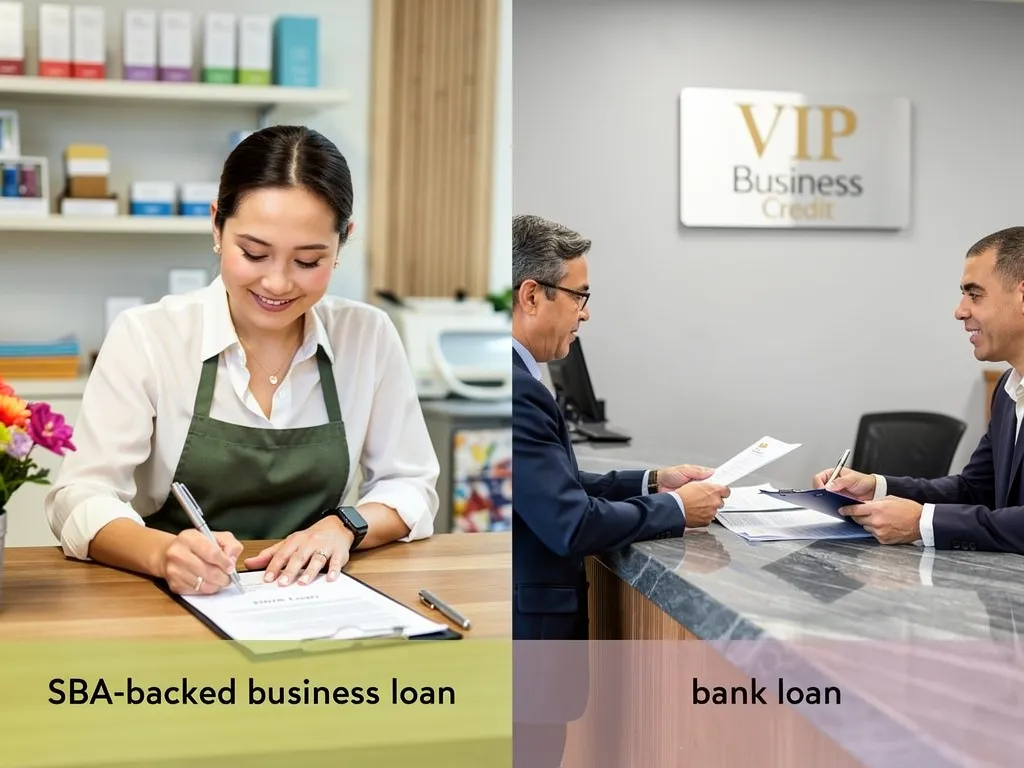
Government backing changes the math for lenders, and that changes the deal offered to borrowers. An SBA 7a loan carries a federal guarantee. Lenders take on less risk than they would with a standard bank product. That guarantee generally keeps rates and fees comparable to non-guaranteed loans. It opens doors that conventional underwriting keeps closed for many growing companies.
The real advantage shows up in structure, not just price. A small business loan backed by the SBA often comes with lower down payments than a conventional loan requires. Overhead requirements tend to be more flexible, too. Some programs skip collateral entirely, which matters enormously for a business owner who needs capital but doesn't want to pledge a building or equipment against it.
What Makes SBA General Purpose Loans Different From a Bank Loan?
An SBA general purpose loan gives owners room to use funds across multiple needs, real estate, equipment, working capital, or debt refinancing, rather than locking capital to one narrow use case. A conventional bank loan often restricts use far more tightly and demands stronger collateral upfront.
Navigating these programs alone gets confusing fast, given the number of lenders and requirements involved. VIP Business Credit works as a long-term partner rather than a one-time broker, guiding clients through pricing with full transparency and no hidden surprises. Beyond loan placement, the firm's offerings include lines of credit and a full credit-building program, complete with coaching that helps owners understand exactly what underwriters look for before they apply.
How Does VIP Business Credit Prepare You to Qualify?

Preparation starts with data, not guesswork. Lender readiness begins with VIP Business Credit's proprietary scoring tool, which shows exactly how underwriters view a business before an application ever reaches a lender's desk. Without that visibility, business owners apply blind and risk denials that quietly damage their credit file. Knowing the score first changes the entire approach to financing.
That scoring process feeds directly into a broader credit scan. This scan reveals where a company currently stands with lenders and flags specific gaps holding back approval. Instead of vague advice, owners receive a clear roadmap outlining what to fix and in what order. For an entrepreneur eyeing a small business loan to acquire equipment or refinance debt, this roadmap turns a confusing process into a sequence of concrete steps.
What role does cash flow play in qualifying for funding?
Lenders look for stability, and cash flow is where that stability shows up first. VIP Business Credit's cash flow management services help owners keep working capital on hand before a shortage forces a scramble. Waiting until money runs short is often too late to negotiate favorable terms.
Does credit monitoring matter after the loan is approved?
Qualifying is not a one-time event. Ongoing account monitoring confirms that credit accounts report correctly and payment schedules stay on track, month after month. This steady maintenance strengthens the credit profile over time, which matters for any owner planning a future SBA general purpose request or a larger draw against an existing line.
Together, these four pillars — scoring, scanning, cash flow discipline, and monitoring — build the kind of business credit profile lenders trust. That trust is exactly what separates a fast approval from a frustrating rejection, especially when the goal involves an SBA 7a loan requiring documented financial consistency.
What's Your Next Step Toward SBA Funding?
Next steps start with a conversation, not a stack of paperwork. Small business owners exploring a small business loan gain the most ground by talking through their specific numbers and timeline before submitting anything to a lender. VIP Business Credit (vipbizfunds.com), based in Sterling, Virginia, works as a small, focused firm rather than a high-volume brokerage, which means each business gets individual attention instead of a form letter.
The firm's office sits at 21000 Southbank Street, Suite 106-380, in Sterling, Virginia — a physical anchor for a team that also operates well beyond that zip code. Clients connect with advisors digitally from anywhere, while the firm's lender relationships stretch across the country. That combination matters for an entrepreneur comparing a general-purpose credit facility against an SBA-backed program: reach and personal guidance rarely come packaged together, but here they do.
Is this approach only for brand-new businesses?
No. Newer ventures chasing a first approval and established companies looking to scale, consolidate costs, or refinance with better-priced capital both fit the model. A five-year-old company refinancing existing debt has different needs than a startup building credit from scratch, and the process flexes accordingly.
Before reaching out, owners benefit from organizing a few basics:
- Recent business bank statements and a clear picture of monthly cash flow.
- A short summary of how funds will be used — equipment, real estate, working capital, or debt refinancing.
- Current business credit standing, including any known gaps or open trade lines.
What happens after the first conversation?
An advisor reviews the business's profile against available lending programs, including SBA general purpose options and other financing paths suited to the company's stage. From there, the business owner receives a clear next step rather than a vague promise, keeping the process moving instead of stalling in uncertainty.
FAQ
What can SBA 7(a) loan funds be used for?
Approved uses include acquiring, refinancing, or improving commercial real estate, covering working capital needs, refinancing existing business debt, purchasing equipment or fixtures, and financing changes in business ownership.
Is an SBA 7(a) loan a direct loan from the government?
No, it's structured as a partial government guarantee rather than a direct loan, which reduces risk for participating lenders and helps more businesses qualify.
How does VIP Business Credit help Northern Virginia entrepreneurs access SBA 7(a) financing?
VIP Business Credit uses its proprietary scoring tool to identify credit gaps. Connects business owners to a network of over 1,000 national and local lenders.
About the Author
Lee Johnson
Lee Johnson is a seasoned real estate investor, business growth strategist, and Master Certified Professional Coach with more than 500 coaching hours. He has built a personal real estate investment portfolio of over 1,700 units valued at approximately $254 million across multiple U.S. markets. Lee's mission is to help small business owners — including those in home services, trucking, and real estate — achieve financial freedom by first establishing a strong business credit profile, then accessing the highest loan amounts at the best terms available. He and his team at VIP Business Credit serve business owners nationwide through the firm's signature 12-month business credit coaching program.
Connect with Lee and VIP Business Credit:
- 📍 Location: Sterling, VA and surrounding areas
- 📞 Phone: (571) 248-3863
- ✉️ Email: [email protected]
- 📅 Consultation: Schedule a Consultation
- 🌐 Website: vipbizfunds.com
- 🎯 FREE Business Funding Pre-Qualification Scan: Get Started
For transparent rates and program details, review our SBA advisory pricing to get started.
Conclusion
In closing, an SBA 7(a) loan gives your business a structured path to growth capital, but qualifying takes preparation and the right lender match. Building a strong EIN-based credit profile before you apply strengthens your position at the negotiating table and protects your personal assets along the way. VIP Business Credit connects entrepreneurs to a broad lender network and uses the Fundability Score to clarify where a business stands, turning a complex process into a confident, well-guided step toward sustainable growth.


