How a Revolving Business Line of Credit Works
How a Revolving Business Line of Credit Works
A business line of credit works as revolving financing: lenders approve a maximum limit, and business owners draw funds as needed, repaying only what gets used. Interest applies solely to outstanding balances, not the full limit. Once repaid, funds become available again. VIP Business Credit's scoring tools help owners assess eligibility before applying, factoring credit history, revenue, and financial records. Understanding how business credit lines work helps maximize business line of credit benefits for ongoing cash flow management and operational flexibility.
Key Takeaways
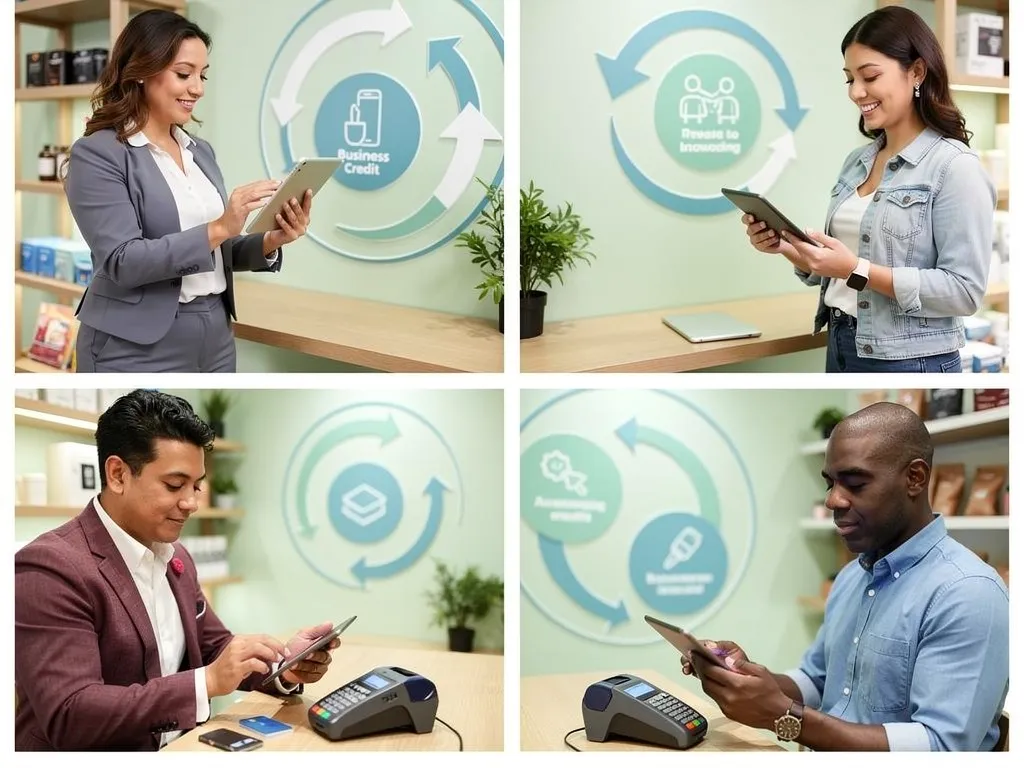
Business lines of credit offer revolving access to funds that entrepreneurs repay and reborrow as needed, illustrating how [business credit](https://www.vipbizfunds.com/) lines work in practice.
Lenders evaluate business credit scores, revenue, and financial records to determine eligibility and credit limits.
Interest charges apply only to the amount borrowed, not the entire available credit line balance, highlighting key business line of credit benefits.
VIP Business Credit connects entrepreneurs to over 1,000 national and local lenders offering flexible credit solutions tailored to a revolving business line of credit structure.
What Is a Business Line of Credit?
A revolving [business line of credit](https://vipbizfunds.com/post/secured-credit-line-secured-business-line-of-credit) gives a company reusable access to capital, drawn whenever cash is needed rather than borrowed once and repaid on a fixed schedule. That reusability separates it from a term loan, which delivers a single lump sum and starts an immediate repayment clock. Finding the right funding path feels overwhelming for many owners, given the sheer range of loan types, lenders, and investor arrangements competing for attention.
A line of credit occupies the middle ground between two familiar tools. Picture a spectrum: a term loan hands over a big chunk of cash meant for growth projects. A credit card handles small, recurring purchases. A credit line sits between them — flexible like a card, but capable of funding larger needs like a term loan, with the added benefit of speed when cash flow gets tight. This balance underscores the key business line of credit benefits that guide many entrepreneurs toward revolving credit solutions.
Small business owners aren't alone in reaching for this structure. According to the 2024 Small Business Credit Survey, business lines of credit ranked as the most popular funding product applied for, with 37 percent of surveyed businesses seeking one. More than any other financing type.
How does a credit line differ from a regular business loan?
A standard loan disburses one lump sum, and repayment begins immediately on the full amount. A credit line, by contrast, opens a pool of available funds that a business draws from as needs arise, repaying and redrawing as cash flow allows. That structure makes how business credit lines work fundamentally different from installment borrowing. The debt only exists once the money is actually used, making the revolving nature of this financing a distinct advantage.

How Does a Revolving Credit Line Actually Work?
A revolving business line of credit functions like a reusable pool of capital: funds get borrowed, repaid, and borrowed again without reapplying each time. This structure sets it apart from a term loan. The business receives one lump sum and pays it down on a fixed schedule. For a small business managing uneven revenue, that reusability becomes the real advantage and one of the primary business line of credit benefits.
Here's the mechanism in practice. A lender approves a business credit limit — say, a maximum draw amount — and the business taps into that limit whenever cash is needed. Once repaid, the available credit resets, ready for the next draw. This cycle repeats indefinitely as long as the account stays in good standing, which is exactly what makes the facility useful for smoothing out cash flow gaps and covering unexpected costs like equipment repairs or a slow-paying client.
What makes a credit line "revolving"?
The revolving feature means the credit doesn't disappear after one use. A business can draw funds, repay it over a few weeks, then draw again the following month without submitting a new application. That flexibility is central to how business credit lines work. Why they suit recurring or seasonal expenses better than a single-disbursement loan.
Does interest apply to the full credit limit?
No. Interest accrues only on the amount actually drawn, not on the total limit sitting unused. A business with a credit limit that draws funds pays interest solely on that amount drawn. This cost structure is one of the clearest business line of credit benefits, since unused credit costs nothing while it waits in reserve.
That timing matters. VIP Business Credit's cash flow strategies, outlined at vipbizfunds.com, are built around ensuring working capital sits ready before a shortfall hits. Not scrambled together after the damage is already done.

How Do Lenders Decide If You Qualify?
Three factors drive most approval decisions: credit scores, revenue, and financial records. Lenders review each one to gauge whether a business can handle a revolving business line of credit responsibly, then set terms accordingly.
Credit history tells part of the story, not the whole picture. Revenue trends show whether a company generates enough cash to cover repayments, and bank statements or tax records confirm the numbers hold up. A thin credit file doesn't automatically mean rejection — steady revenue and clean records carry real weight.
Is a Line of Credit Harder to Get Than a Loan?
Generally, no. Eligibility standards for a credit line tend to run more lenient than those for term loans or equipment financing, which makes this product one of the more accessible financing tools available to small business owners. That flexibility matters most for companies still building a credit profile or recovering from a slow season.
What Can Business Owners Do to Improve Their Odds?
Preparation beats guesswork. Before applying, owners benefit from understanding exactly where their business stands in the eyes of underwriters. A clear picture surfaces credit gaps long before those gaps show up as a declined application.
Access to lenders matters just as much as preparation. A network spanning more than 1,000 national and local lenders widens the pool of possible approvals. Each lender weighs credit scores, revenue, and time in business differently. What gets rejected by one lender might sail through with another.
Underwriting factor | What Lenders Check --- | --- Credit history | Personal and business credit scores Revenue | Consistent income and cash flow patterns Financial records | Bank statements, tax filings, and reporting accuracy Lender fit | Which of 1,000+ lenders match the business profile
Understanding how business credit lines work — and where a business currently stands — turns a vague application into a targeted, confident one.
Secured or Unsecured: Which Credit Line Fits?

Collateral makes the difference. Small businesses choose between secured credit lines, which require assets like equipment or receivables to back the funds, and unsecured lines, which need no collateral at all. Each path carries its own trade-offs. The right fit depends on what a business owns, how much risk it can absorb, and what the capital will actually fund.
A revolving business line of credit works the same way regardless of which type a business selects: draw funds, repay them, and borrow again as needs arise. What changes is the risk sitting behind the credit.
Is a secured or unsecured line easier to qualify for?
Secured lines tend to open doors faster because collateral lowers the lender's risk. Unsecured lines often demand stronger revenue history and credit standing since nothing backs the loan if payments stop. Business owners with limited credit history sometimes find secured options more attainable while they build a stronger profile.
Certain financing structures blend both worlds. Equipment credit lines let a business acquire needed machinery or tools immediately, build credit through consistent use, and deduct the payments as a business expense. Fleet credit lines follow a similar model, financing multiple vehicles at once while strengthening the business credit file and locking in tax deductions along the way. Fleet financing specialists typically structure these deals specifically for trucks, vans, and cars, matching terms to how the vehicles get used.
Matching the structure to the asset — not just the interest rate — determines how well the credit line supports long-term growth and highlights the practical business line of credit benefits derived from a well-chosen revolving business line of credit.
What Business Line of Credit Benefits Matter Most?

Flexibility ranks as the single greatest advantage of this financing tool. A revolving business line of credit lets a company borrow, repay, and borrow again without reapplying each time, which makes it a strong match for businesses facing recurring or unpredictable expenses rather than a one-time purchase. This dynamic is central to how business credit lines work, demonstrating the ongoing business line of credit benefits available.
That repeat-use design is what separates a credit line from a standard term loan. Funds sit available until needed, and once repaid, that same capacity opens back up. This structure solves a specific problem for entrepreneurs: unexpected costs rarely announce themselves in advance, and a revolving credit line covers gaps in payroll, inventory, or repairs without forcing a new loan application under time pressure.
How does a credit line support day-to-day cash flow?
Cash flow strategy works best when it's proactive, not reactive. Business owners who monitor working capital before a shortfall hits stay in a stronger negotiating position than those scrambling after the fact. A revolving credit line acts as a buffer, giving a company access to funds exactly when timing gaps between expenses and incoming revenue create strain. This practical insight into how business credit lines work highlights the ongoing business line of credit benefits of maintaining access to flexible capital.
Why do lenders and business owners call it adaptable?
Few financing products flex to fit as many situations as a credit line does. It works for seasonal inventory buildup, emergency equipment repair, or bridging a slow month between client payments. That adaptability explains why lines of credit rank among the most versatile tools in a company's financial tool kit, according to a 2025 report from How a business line of credit works.
The core benefits break down into three practical points:
Reusability — capacity returns as balances get repaid
Cost control — interest applies only to outstanding funds, not the full limit
Flexibility — one facility covers many types of recurring or unpredictable expenses
For businesses building a lender-ready profile, this combination of reuse and control matters more than the credit limit itself.
How Is a Credit Line Different From a Loan?

A term loan hands a business one lump sum of cash upfront, meant to fuel a specific growth push like a new location or major equipment purchase. A credit card, by contrast, handles small purchases that repeat month after month. Neither option fits every situation a growing company faces.
Gaps appear between those two extremes. A business might need capital that behaves differently: flexible, reusable, and available fast, without reapplying every time a need arises. That gap is exactly where a revolving business line of credit fits in. Funds sit ready until a business actually needs them, and repayment frees up that same credit for future use.
Is a Line of Credit the Same as a Business Loan?
No. A term loan delivers funds once. Repayment follows a fixed schedule regardless of whether the business still needs the money. A line of credit stays open, letting a business draw funds, repay them, and draw again as circumstances change.
How business credit lines work comes down to this repeat-access structure, which suits ongoing needs like payroll gaps or inventory restocking better than a single disbursement ever could.
Choosing between these tools should never happen in isolation. Loan types, lenders, and financing terms each carry trade-offs that shape a company's growth trajectory, so matching the structure to the actual cash-flow pattern matters more than chasing the lowest rate alone.
What Should You Prepare Before You Apply?

Preparation determines whether a credit application moves quickly or stalls in underwriting. Three categories shape every financing decision: debt, alternative funding, and equity. Business owners weighing a revolving business line of credit are working within the debt category, alongside term loans and credit cards. Each category carries its own rules for control, repayment, and cash flow impact, so matching the right one to a business's timeline matters more than chasing the lowest advertised rate.
Before submitting paperwork, owners should review three things: eligibility standards, funding paths for newer companies, and the steps for building strong business credit. Skipping this review often means rejected applications or weaker terms than the business actually qualifies for.
What documents does a lender typically want to see?
Lenders generally request financial statements, tax returns, and proof of business formation before reviewing a credit line request. Revenue history and time in business also factor into the decision. Gathering these documents ahead of time — rather than scrambling after a lender asks — shortens the approval timeline considerably.
How does the financing category affect the application?
Debt financing, including a line of credit, usually requires credit history and revenue documentation. Alternative funding sources, such as crowdfunding or grants, follow different criteria entirely. Equity financing shifts the conversation toward ownership stakes rather than repayment terms.
A short prep checklist helps owners stay organized:
Confirm the financing category — debt, alternative funding, or equity — that fits current goals
Pull recent financial statements and tax filings
Review personal and business credit standing
Identify how much control and repayment flexibility the business can sustain
A Sterling, Virginia-based advisory firm works directly with owners through this preparation stage, helping match the right financing path before an application ever gets submitted.
How Do You Build a Lender-Ready Profile?

Lenders judge consistency before they judge revenue. A business that keeps its legal name, address, and tax ID uniform across every application signals stability to underwriters. That consistency is the starting point for building business credit, and it begins long before a funding request goes out the door.
VIP Business Credit works with entrepreneurs across Northern Virginia and the Greater Washington, DC region to build credit tied to the company's EIN rather than the owner's Social Security number. Separating business credit from personal credit protects household finances while giving the company its own track record with lenders. Guidance is available online at vipbizfunds.com and through the firm's Sterling, Virginia office at 21000 Southbank St Ste 106-380, which serves local clients directly while coordinating with lenders nationwide.
Why does lender access matter for a lender-ready profile?
A business connected to more than 1,000 national and local lenders can match its financing strategy to its actual stage, industry, and risk profile. Settling for a single bank rarely produces that fit. Credit products differ sharply. A revolving business line of credit behaves nothing like a fixed-term loan. A lender reviewing a five-year-old company applies different standards than one evaluating a startup.
What should a business understand before applying for credit?
Knowing the differences between financing categories — loans, credit lines, and alternative funding — helps a business match the right product to its growth plan before submitting a single application. Skipping this step wastes time. It can also trigger credit inquiries the business never needed.
Building a lender-ready profile means combining three fundamentals:
Consistent business identity data across every filing and application
EIN-based credit history kept separate from personal credit
A financing strategy matched to the business's actual stage, not a generic template
Together, these pieces of how business credit lines work turn a shaky application into a bankable one, setting the foundation before any lender conversation even begins.
FAQ
How does a business line of credit differ from a term loan?
A term loan delivers one lump sum with immediate fixed repayment, while a credit line gives reusable access to funds. Businesses draw, repay, and redraw as cash flow needs arise, without reapplying each time. This dynamic exemplifies how business credit lines work.
When does interest start accruing on a credit line?
Interest applies only to the outstanding balance a business actually draws, not the full approved limit. Once repaid, funds become available again without additional interest owed on the unused portion, one of the central business line of credit benefits.
How does VIP Business Credit help determine eligibility for a credit line?
VIP Business Credit's scoring tools evaluate credit history, revenue, and financial records before applying. The company also connects entrepreneurs to over 1,000 national and local lenders offering flexible credit solutions, enabling access to the best revolving business line of credit options.
Conclusion

In closing, building and maintaining a business credit line requires understanding how lenders evaluate your company's financial health and repayment reliability. By establishing credit tied to your EIN rather than your personal credit, you create a clear separation between business and personal liability while demonstrating to lenders that your company operates as a legitimate, creditworthy entity. This foundation opens doors to better financing options, higher credit limits, and improved terms as your business grows. Taking control of your business credit profile today positions your company for sustainable success tomorrow. Integrating knowledge of how business credit lines work enables you to fully use the business line of credit benefits for long-term growth.
Contact Us

Ready to explore your options and improve your business's financial health? Contact VIP Business Credit today for personalized guidance and connect with lenders who understand your needs.
📞 Phone: (571) 248-3863
✉️ Email: [email protected]
About The Author

Lee Johnson is the Co-Founder & CEO of VIP Business Credit and a Master Certified Professional Coach with over 500+ coaching hours and 25+ years of experience in business funding, credit building, and generational wealth strategies. Holding a BS from Fairleigh Dickinson University and an MBA from the University of Phoenix, Lee has built a real estate portfolio exceeding 1,700 units valued at over $254 million. He is dedicated to empowering entrepreneurs and small-to-midsize business owners to build strong, lender-ready credit profiles, access capital under company EINs without personal liability, and achieve sustainable financial growth.
Business Line of Credit at a Glance

Before diving into the details, here's a quick side-by-side view of how these financing options compare:


