Healthcare Loans: Financing Medical Practices
Healthcare Loans: Financing Medical Practices
Healthcare business loans provide medical practices with vital working capital, medical equipment financing, and expansion funds while preserving cash reserves. VIP Business Credit connects physicians, dentists, and healthcare administrators to over 1,000 national and local lenders, using its advanced business credit scanning tool to match practices with pre-qualified medical practice funding options in minutes, all while building credit under the practice's EIN.
Key Takeaways on Healthcare Practice Financing
Medical practices gain access to financing solutions tailored for healthcare providers' unique operational requirements.
VIP Business Credit offers connections to a vast network of over 1,000 national and local lenders across the U.S.
Healthcare loans and medical practice loans cover acquisition, expansion, construction, refinancing, and working capital needs.
Why Do Medical Practices Need Specialized Healthcare Loans?
Medical practices face financial challenges that conventional small-business loans do not fully address. Shrinking reimbursement margins and the ongoing threat of hospital buyouts complicate independent growth. Medical practice loans and healthcare loans exist as dedicated financing options designed to align with the cash flow and operational realities unique to the medical industry.
Declining reimbursements squeeze cash flow well before reflecting on paper. Practices may commit to leases, staff hires, or equipment purchases based on expected income only to experience reduced insurer payments months later. The pressure from hospital acquisitions further challenges the autonomy of independent practices, making tailored healthcare practice financing essential.
What Are Common Uses of Medical Equipment Financing and Practice Loans?
Physicians, dentists, and other licensed professionals use targeted healthcare loans primarily to fuel growth, not just to cover operational shortfalls. Typical uses include:
Purchasing diagnostic or medical equipment through dedicated medical equipment financing
Opening additional locations or expanding existing office space
Hiring additional clinical and administrative staff
Smoothing cash flow between reimbursement cycles
Renovating facilities to meet updated HIPAA compliance and other regulatory standards
This financing approach applies to both new and established practices, as continual reinvestment is critical for growth and sustainability.
How Does Practice Type Influence Healthcare Practice Financing Needs?
Varied medical practices have distinct financing demands. For example, dental offices often require substantial medical equipment financing for specialized imaging technology and procedural chairs, differing from general physician offices. Tailoring healthcare loans to specific practice types prevents owners from obtaining loan terms incompatible with their revenue patterns.
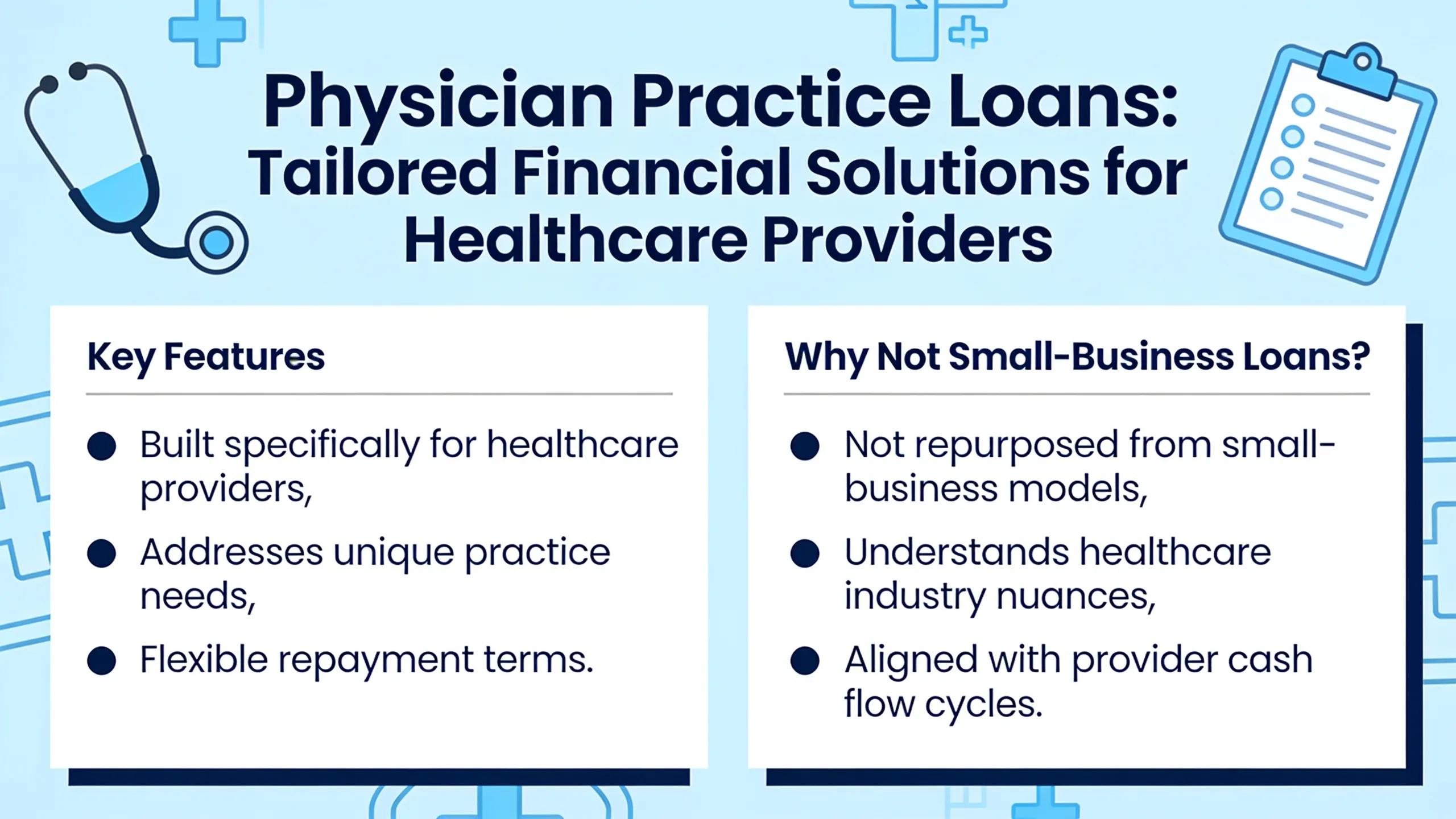
What Are Physician Practice Loans and Healthcare Loans?
Physician practice loans represent a category of financial products specifically designed for healthcare providers, distinct from generic small-business credit. Unlike other industries, medical practices have unique cost structures, cash flow patterns, and regulatory complexities that these loans address. Healthcare loans offered by specialized lenders are structured around clinical revenue flows, licensing timelines, and medical equipment financing needs.
These loans support physicians, dentists, and healthcare professionals in launching new practices, expanding existing ones, or maintaining smooth operations during periods of slow revenue cycles.
Why Are Traditional Business Loans Often Inadequate for Medical Practices?
Standard business loans typically fail to accommodate the specific cash flow challenges medical practices face, especially delayed reimbursement from insurers, sometimes lagging weeks or months. Medical equipment financing requires loan structures that factor in depreciation schedules aligned with clinical use, which general loans often overlook.
This industry-specific financing category—medical practice loans—tailors lending terms, collateral requirements, and repayment schedules to healthcare providers' operational realities.
What Expenses Do Healthcare Practice Loans Typically Cover?
Healthcare loans encompass a broad spectrum of medical practice needs, including:
Opening new medical or dental offices
Expanding existing space or adding treatment rooms
Purchasing or upgrading clinical and HIPAA-compliant technology equipment
Covering payroll and overhead during reimbursement delays
Supporting dental office financing needs for chairs, imaging tools, and sterilization systems
These loans provide the financial foundation necessary for sustained healthcare service delivery and growth.

Healthcare Practice Financing Options for Growth
Practice owners can use healthcare loans across six main spending categories: acquisition, expansion, construction, commercial real estate, refinancing, and working capital. Proactive capital planning is critical to maintain a strong negotiating position and avoid cash crises.
Dedicated healthcare practice financing solutions are accessible nationwide—including rural and suburban providers—since underwriting focuses on the business fundamentals rather than its geographic location.
Which Specific Practice Expenses Qualify for Medical Practice Loans?
Typical qualifying expenses include:
Acquisition — purchasing an existing practice or partner buyouts
Expansion and Construction — new locations, renovations, or adding treatment capabilities
Commercial Real Estate — buying clinical facilities
Refinancing — consolidating debt to improve cash flow
Working Capital — managing payroll and operational costs during slow periods
Are Financing Needs Different for New Practices Versus Established Ones?
Yes. New practices often require startup capital combined with acquisition or medical equipment financing to launch successfully. Established practices typically focus more on expansion or refinancing options. Each stage requires distinct healthcare practice financing strategies to ensure sustainable growth.
How Do Dentists and Specialists Use Healthcare Practice Financing?
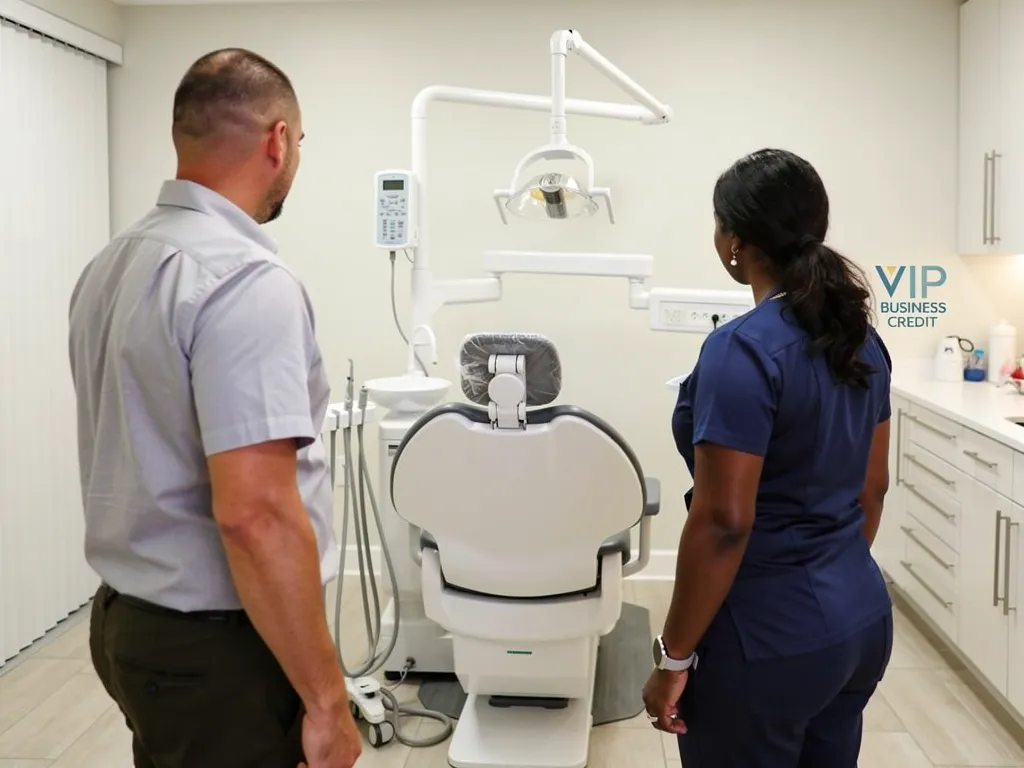
Dental practices and other specialists like optometrists and ambulatory surgery centers finance office expansion and equipment acquisition through specialized healthcare loans. These loans often address acquisition, construction, commercial real estate, refinancing, and working capital needs.
Due to the diversity of expenses—such as new dental chairs, imaging equipment, and expanded office space—dedicated dental office financing and related healthcare practice financing options are structured to fund each expense appropriately without overextending a single loan.
Why Does Industry-Specific Lending Matter for Dental and Specialist Practices?
Lenders specialized in medical and dental financing understand the costs of industry-specific equipment and facility requirements. This knowledge expedites underwriting and reduces documentation burdens, permitting faster access to funds critical for operational continuity and growth.
What Expansion and Equipment Costs Do These Financing Options Cover?
Healthcare practice financing designed for dental and specialist practices typically covers:
Real Estate and Construction — buying or building out clinical space
Equipment Upgrades — chairs, imaging systems, HIPAA-compliant technology, sterilization tools
Acquisition — purchasing existing practices or merging facilities
Working Capital — covering payroll and supplies during transition or expansion phases
Matching funding type to specific costs safeguards cash flow and ensures continued high-quality patient care.
Who Qualifies for Medical Practice Loans and Healthcare Loans?

Healthcare loans require physicians, dentists, and practice owners to demonstrate consistent revenues, a stable credit profile, and a clear, documented plan for fund utilization. Without these, approvals may be slower, and rates higher. While qualification standards vary among lenders, most emphasize these key fundamentals.
These financing programs recognize the unique financial rhythms of medical careers, including licensing periods, residency, and delayed income commencement, distinguishing them from typical business loans.
What Do Lenders Evaluate in Medical Practice Loan Applications?
Lenders assess practice cash flow, operation history, and intended use of funds collectively. Equipment financing and dental office financing requests present more defined risk profiles due to collateralized assets, whereas general working capital loans require careful underwriting.
Applicants should review:
Loan Types — including term loans, lines of credit, and medical equipment financing, each with distinct criteria
Qualification Standards — revenue trends, credit scores, and practice longevity
Trade-Offs — faster funding options may cost more; traditional loans often involve more documentation but better terms
Does Prior Experience with Medical Practice Lending Affect Approval?
Lenders with extensive medical finance portfolios can better align products to practice needs and prevent costly errors. Their experience reduces the learning curve for new applicants and facilitates smoother approvals.
How VIP Business Credit Supports Healthcare Practices

VIP Business Credit tailors financing strategies to each practice's growth stage and risk appetite, connecting clients to over 1,000 lending partners nationwide. Whether a solo dental office or a multi-location medical group, VIP provides targeted healthcare loans and medical practice loans optimized for diverse operational profiles.
The proprietary scoring tool offers transparent insights into underwriting perspectives before applications are submitted, flagging eligibility issues early and turning rejection risks into actionable steps.
How Does VIP Business Credit Help Separate Personal and Business Finances?
Building credit under the practice's EIN rather than the owner's Social Security number shields personal assets from business liabilities. VIP Business Credit guides entrepreneurs in Northern Virginia and the Greater Washington, DC region through this process, establishing independent, lender-ready credit identities.
Is VIP Business Credit's Support Limited by Location?
Although based in Sterling, VA, VIP Business Credit operates digitally, serving healthcare practices nationwide. Dental offices and medical practices throughout the U.S. benefit from coordinated access to healthcare loans, medical practice loans, and dental office financing without geographic restrictions.
Steps to Apply for Healthcare Practice Financing
A clear, organized approach reduces delays and application errors. Healthcare practices benefit from treating the application process like patient intake—methodical and sequential.
Define the funding purpose. Identify whether funds are for new equipment, staff, office expansion, or working capital.
Gather financial documentation. Includes revenue history, existing debts, and cash flow statements.
Compare loan types. Understand differences among healthcare loans, medical equipment financing, term loans, and lines of credit.
Match financing to practice type. Consider dental office financing needs versus general medical or multi-specialty group requirements.
Submit applications promptly and respond swiftly. Timely communication expedites underwriting.
Practices with well-defined financing strategies typically experience faster approval cycles than those applying broadly without specific goals.
What Documentation Is Required for Medical Practice Loan Applications?
Lenders commonly request recent tax returns, bank statements, profit-and-loss reports, a detailed breakdown of existing debts, and a clear explanation of how funds will be used. Preparing these documents in advance streamlines the review process.
Why Is Understanding Loan Options Critical for Growing Practices?
Comprehending how healthcare practice financing works enables practice owners to align loan structures with growth objectives, avoiding mismatched payments and cash flow stresses. Informed choices foster steady growth and long-term financial stability.
Conclusion: Strategic Healthcare Loans for Practice Success
Access to appropriate capital determines whether a medical practice thrives on schedule or struggles with cash constraints. Offering reliable funding options tailored to HIPAA-compliant technology, medical equipment financing, and working capital ensures that physicians, dentists, and administrators can manage operations and pursue growth confidently.
VIP Business Credit bridges healthcare providers to a nationwide lending network, offering specialized guidance and financing access regardless of practice location. By prioritizing loan alignment with growth phases, credit separation, and competitive term comparison, practices build a strong financial foundation that supports sustainable expansion.
About The Author
Lee Johnson is a Real Estate Investor, Business Growth Strategist, and Master Certified Professional Coach with over 25 years of experience in business finance, credit strategy, and entrepreneurial development. As the founder of VIP Business Credit, he guides entrepreneurs and small business owners in establishing lender-ready corporate credit profiles tied to their EIN rather than personal SSN to access capital and protect personal assets.
Contact VIP Business Credit
📞 Phone: (571) 248-3863
✉️ Email: [email protected]
📅 Consultation: Schedule A Business Financial Health Strategy Call
🌐 Website: https://vipbizfunds.com
🎯 FREE Business Success Scan: FREE Business Success Scan
📍 Service Area: Sterling, VA and surrounding areas (Service Area Business)
FAQ
What can medical practices use healthcare business loans for?
Healthcare loans fund diagnostic and treatment equipment purchases, new location openings, staffing expansion, cash flow smoothing between reimbursements, and facility renovations ensuring HIPAA compliance.
How does VIP Business Credit assist physicians in securing financing?
VIP Business Credit quickly connects physicians to pre-qualified healthcare loans and medical practice loans from a vast network of lenders, supporting funding acquisition with a proprietary credit analysis tool that streamlines approvals.
Why do dental practices need different financing than general medical practices?
Dental practices require specialized equipment and buildout financing focused on imaging technology, chairside equipment, and procedural spaces, necessitating customized dental office financing that aligns with their unique cash flow patterns.


