Fairfax County Business Financing: Unlock VIP Funding & Build Stellar Business Credit Lines
Fairfax County Business Financing: Unlock VIP Funding & Build Stellar Business Credit Lines
Many Fairfax County entrepreneurs encounter obstacles securing financing that closely aligns with local market dynamics and their specific credit-building aspirations. This in-depth guide unveils the most pertinent loan options, agile business credit line strategies including unsecured business lines of credit, accelerated credit-building techniques, county-specific support systems, essential application best practices, and smart cash-flow integration methods designed to secure VIP financing and significantly enhance your business credit. Whether you are exploring business loans or other Fairfax-centered financial products, this guide provides the critical insights you need. You'll discover:
- Tailored business loan categories specifically for Fairfax County enterprises
- Effective approaches to accessing and managing revolving business credit lines
- Proven methods to rapidly establish and strengthen your business credit standing
- Local microloan initiatives, grant opportunities, and key institutional resources
- A clear, step-by-step breakdown of application requirements and preparatory actions
- Strategic ways to seamlessly integrate financing into your seasonal and working capital needs
A firm grasp of these elements will empower your business to secure more competitive rates, boost your liquidity, and fortify your business creditworthiness, all while capitalizing on Fairfax County's distinctive supportive ecosystem. For more information on building strong business credit, visit VIP Business Credit
Key Takeaways
- Fairfax County businesses can choose among SBA loans, secured/unsecured term loans, and equipment financing, each suited to different capital needs and credit-building goals.
- Business lines of credit provide revolving working capital and typically require two years in business, over $100,000 in annual revenue, and a business credit score of 600 or higher.
- Building business credit without a personal guarantee starts with incorporating, securing an EIN, and opening vendor trade lines that report to Experian, Dun & Bradstreet, and Equifax.
- Local programs such as Fairfax County microloans, PIVOT grants, the Community Business Partnership, and the FCEDA can supplement conventional bank and credit union financing.
- A well-prepared application, with tax returns, bank statements, and collateral documentation ready in advance, speeds underwriting and improves approval odds.
- Using a line of credit strategically to cover seasonal cash-flow gaps helps preserve vendor relationships and avoid costly emergency borrowing.
What Business Loan Options Are Available for Fairfax County Businesses?
Business loans represent lump-sum funding provided by financial institutions like banks, credit unions, or online lenders, based on your credit profile and any required collateral. These loans are designed to fuel growth initiatives, facilitate equipment acquisitions, or cover operational expenditures. These financing products are the foundation of VIP service levels, which typically combine personalized underwriting with expedited approvals, giving businesses easier access to capital and a stronger credit standing over time. Exploring the core loan categories will illuminate the distinct attributes and ideal applications of each option.
Understanding SBA Loans in Fairfax County and Their Advantages

SBA loans are government-backed credit facilities offered through participating lenders, designed to mitigate lending risk, thereby offering reduced interest rates and extended repayment terms for eligible small businesses. These programs champion broader access to affordable capital by sharing potential default risks with the Small Business Administration, which significantly improves approval probabilities and helps preserve crucial cash flow for ongoing growth.
Using an SBA loan strategically, and paying it on time, builds your business credit profile and positions you for future VIP-tier financing.
Key Benefits of SBA Loans for Small Businesses
SBA loans, fortified by government backing, present distinct advantages such as reduced lending risk for financial institutions, which can translate into more favorable interest rates and longer repayment periods for qualifying small businesses. These versatile loans can be applied to a wide array of needs, including working capital, business expansion, and equipment purchases, all of which contribute to improving a business's credit profile through consistent, punctual payments. Backed by the U.S. Small Business Administration's guarantee programs, this combination of benefits is why SBA loans remain such a practical option for businesses operating within Fairfax County.
Distinguishing Between Unsecured and Secured Business Loans in Fairfax County
Unsecured business loans primarily rely on your business's creditworthiness and cash-flow analysis, whereas secured loans necessitate collateral, such as real estate, equipment, or accounts receivable, to back the debt. Secured financing typically offers more attractive interest rates and higher borrowing limits, while unsecured options generally provide faster approvals with fewer asset-related requirements.
The decision between secured and unsecured loans involves carefully weighing potential cost savings against the availability of collateral and the time required for underwriting, leading directly into the selection of appropriate term-specific financing solutions.
Exploring Term Loans and Equipment Financing for Local Businesses
Term loans provide a fixed sum of capital repaid over a specified duration with either fixed or variable interest rates, facilitating predictable budgeting. Equipment financing, conversely, uses the purchased asset itself as collateral to fund machinery, vehicles, or technology upgrades. These credit instruments are invaluable for acquiring capital assets without depleting essential operational reserves.
- Term loan repayment schedules are structured for consistent monthly payments, simplifying cash-flow forecasting.
- Equipment financing arrangements are designed to align repayment terms with the asset's expected useful lifespan.
- Both types of financing contribute positively to your business credit score when payments are made punctually.
Understanding these fundamental differences is crucial for effectively comparing lender proposals and rate structures to make informed borrowing decisions.
How to Effectively Compare Interest Rates and Terms from Fairfax Lenders
Comparing interest rates, origination fees, and repayment terms from both local and national financial institutions requires a thorough evaluation of the effective annual percentage rates (APRs), any potential prepayment penalties, and the expected approval timelines. Local community banks might offer relationship-based discounts, while online lenders often provide quicker funding but may come with higher variable rates.
Conducting a side-by-side assessment of these attributes ensures you select the most cost-effective financing solution that aligns perfectly with your business cycle and credit objectives.
Documentation expectations also shift depending on which lender category you approach. Traditional banks and SBA lenders typically request more paperwork upfront, tax returns and detailed financial statements included, while online and alternative lenders often start underwriting with a lighter file. Newer businesses without a long track record frequently find faster traction with alternative lenders first, then move toward bank-level financing once a stronger credit profile is in place. For additional funding options, explore VIPBizFunds Funding Solutions.
How Can Fairfax County Businesses Access Flexible Business Lines of Credit?
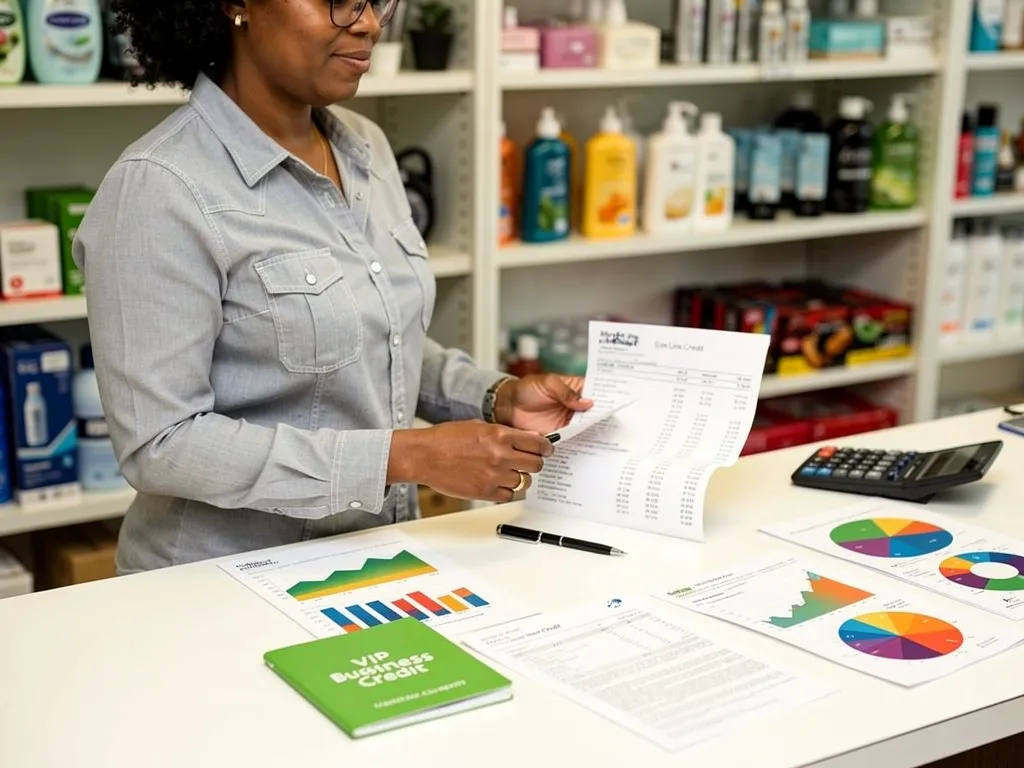
A business line of credit offers revolving access to funds up to a predetermined limit, which is replenished as you repay the outstanding balance. This flexible funding mechanism is ideal for managing ongoing working capital needs and addressing unexpected expenses. It significantly enhances liquidity management and complements term loans by effectively smoothing out cash-flow fluctuations. Business credit lines are essential tools for maintaining operational flexibility and strengthening your business credit profile.
Key Differences Between Secured and Unsecured Business Lines of Credit
Secured lines of credit require collateral, such as inventory or accounts receivable, which typically results in lower interest rates and higher credit limits. Unsecured lines, on the other hand, are based on your credit scores and business history, offering quicker access but usually at higher interest rates.
- Secured lines enable larger borrowing capacities by using pledged assets.
- Unsecured lines simplify the application process, often requiring less documentation.
- Secured credit lines typically feature variable APRs ranging from 6% to 15%.
- Unsecured options commonly range from 18% to 30% APR, often for shorter terms.
- Many unsecured lines still weigh the owner's personal credit heavily, with a FICO score of 700 or higher frequently required for the best terms, even when the business itself shows strong revenue.
Balancing the need for speed against the associated costs, your overall borrowing capacity, and your personal credit standing will guide you in choosing the most suitable credit line structure for your business.
How Revolving Credit Lines Support Small Business Cash Flow
Revolving credit lines allow businesses to draw funds as needed and incur interest charges only on the outstanding balance. This provides adaptive funding, particularly useful when receivables are delayed or inventory purchases surge unexpectedly. This mechanism strengthens supplier relationships and effectively prevents operational disruptions.
- Access funds rapidly to cover payroll or inventory shortages.
- Repay funds when revenue streams stabilize, minimizing interest costs.
- Maintain continuous access to capital without the need for repeated applications.
Optimizing your draw and repayment cycles ensures that your line of credit functions as a dynamic cash-flow safeguard rather than a long-term debt obligation, further enhancing your business credit standing.
Typical Eligibility Requirements for Business Lines of Credit in Fairfax
Common eligibility criteria include being in business for at least two years, achieving annual revenues exceeding $100,000, maintaining a business credit score of 600 or higher, and demonstrating consistent cash flow through bank statements.
- Proper business entity registration and an Employer Identification Number (EIN).
- Two years of filed tax returns or certified financial statements.
- Credit reports from major bureaus like Experian, Dun & Bradstreet, or Equifax.
- Bank statements clearly illustrating positive cash-flow trends.
Meeting these prerequisites improves your approval odds and helps your business qualify for favorable VIP credit terms, strengthening your credit profile over time.
How to Build and Elevate Business Credit Rapidly in Fairfax County?

Enhancing your business credit is a strategic, proactive endeavor that involves formal business registration, establishing vendor trade lines, opening dedicated financial accounts, and adhering to disciplined payment practices to strengthen your credit scores with major reporting agencies. Accelerating your credit-building process ensures access to more favorable financing rates and builds greater trust with suppliers and partners. Building strong business credit lines is a critical component of this strategy.
Factors Influencing Your Business Credit Score with Experian, Dun & Bradstreet, and Equifax
Credit bureaus evaluate payment history, credit utilization ratios, the duration of your credit history, public records, and the frequency of credit inquiries when calculating business credit scores.
- Payment history typically accounts for approximately 35% of your score.
- Maintaining credit utilization above 30% can significantly decrease your scores.
- The age of your credit accounts provides insights into your stability and longevity.
- Public filings, such as liens or judgments, significantly impact risk assessments.
- Recent credit inquiries can temporarily suppress your score values.
Key Factors Influencing Business Credit Scores
Business credit scores are shaped by several critical factors, including your payment history, credit utilization rates, the length of your credit history, any public records, and the number of credit inquiries made. Your payment history represents a substantial portion of your score, and keeping your credit utilization low is paramount for achieving a strong score. Public records, like liens or judgments, can negatively affect risk assessments; these are the same factors Experian highlights in its guidance on understanding business credit scores. Understanding these influencing factors empowers you to take targeted actions that efficiently improve your credit profile.
How Fairfax Businesses Can Establish Business Credit Without a Personal Guarantee
Formally incorporating your business, obtaining an EIN, establishing vendor accounts that report to credit bureaus, and securing net-30 credit terms with suppliers are key steps to building a credit history independent of personal guarantees.
- File Articles of Organization or Incorporation with the relevant State authority.
- Secure an Employer Identification Number (EIN) from the IRS.
- Cultivate trade-credit relationships with vendors who report to credit bureaus.
- Open a dedicated business checking account solely for business transactions.
- Apply for a secured business credit card that reports your payment activity.
This strategic approach builds strong institutional credit strength without direct reliance on your personal assets. Tying credit to the company's EIN rather than the owner's Social Security number is what makes this separation hold up with lenders: it keeps a business downturn from showing up on the owner's personal credit file, and it gives the business its own track record that card issuers, vendors, and future lenders can evaluate on its own merits.
Best Practices for Improving Business Credit to Enhance Loan Approval Chances
Consistent on-time payments, maintaining low credit utilization ratios, periodically reviewing your credit reports, and diversifying your credit mix are effective strategies to accelerate credit score improvement.
- Ensure all invoices and lines of credit are paid at least five days before the due date.
- Keep your credit utilization below 30% of your total available credit limits.
- Monitor your Experian Intelliscore, Dun & Bradstreet PAYDEX, and Equifax reports quarterly.
- Establish multiple trade accounts with smaller vendors and consistently settle balances promptly.
Implementing these disciplined practices demonstrates creditworthiness that lenders recognize and reward with more favorable loan terms.
How to Analyze and Understand Your Business Credit Report
Business credit reports provide detailed information on payment performance, outstanding credit obligations, public filings, and risk scores. Analyzing each section thoroughly will reveal necessary corrective actions and potential growth opportunities.
- Carefully review payment history entries for any instances of late or missed payments.
- Identify accounts with high utilization and develop a strategic plan for debt repayment.
- Scrutinize reports for any inaccuracies in public records and promptly file disputes.
- Compare credit score trends across different bureaus to prioritize areas for improvement.
A systematic review of your credit reports uncovers critical opportunities to strengthen your credit standing effectively before applying for new financing.
What Local Fairfax County Resources Support Business Financing and Credit Building?

Local resources available to Fairfax County businesses include county-funded microloan and grant programs, invaluable nonprofit advisory services, and community banks that offer specialized financial products designed to complement conventional lending solutions. Tapping into these valuable channels can significantly enhance your access to capital and provide expert credit-building guidance.
How Fairfax County Microloan Programs and Grants Benefit Small Businesses
Fairfax County's microloan programs offer access to up to $50,000 in low-interest capital, often accompanied by essential technical assistance. Additionally, PIVOT grants provide non-repayable funds specifically aimed at supporting business recovery and expansion initiatives.
- The Community Business Partnership (CBP) expertly administers SBA microloans, providing crucial training support.
- PIVOT grants offer direct funding for critical equipment purchases and workforce development programs.
- County-hosted grant workshops offer invaluable guidance to applicants on documentation and submission processes.
Combining accessible loan capital with expert advisory services can significantly accelerate your business growth and the development of a strong business credit profile.
Financing Options Offered by Local Banks and Credit Unions in Fairfax
Regional banks and credit unions operating within Fairfax County provide the distinct advantage of relationship banking perks, such as preferential interest rates for long-standing clients and customized credit line packages tailored to specific business needs.
- Community banks may offer reduced interest rates for clients maintaining significant deposit balances.
- Credit unions often provide more flexible underwriting criteria for local businesses with strong community ties.
- Small Business Administration (SBA) branches frequently collaborate with local financial institutions to facilitate SBA-backed lending programs.
These localized financial options foster deeper collaboration and provide enhanced credit opportunities for member businesses.
How the Community Business Partnership (CBP) Assists with SBA Microloan Programs
The Community Business Partnership plays a vital role in coordinating essential training, providing application support, and facilitating lender matchmaking to streamline the process of accessing SBA microloans for eligible small businesses.
- Attend CBP's complimentary microloan orientation sessions for foundational knowledge.
- Complete comprehensive financial literacy workshops and benefit from one-on-one counseling.
- Submit your loan application with dedicated assistance from CBP for accurate documentation.
- Get expertly matched with SBA-certified lenders for a more expedited underwriting process.
This integrated support system effectively reduces common barriers and significantly improves the likelihood of microloan funding approval.
Available Economic Development Resources for Fairfax Businesses
The Fairfax County Economic Development Authority (FCEDA) and the Virginia Small Business Development Center (SBDC) offer a range of valuable resources, including grants, recruitment incentives, and export assistance programs designed to strengthen local businesses.
- FCEDA regularly publishes information on industry-specific grant opportunities and hosts valuable networking events.
- SBDC advisors provide complimentary consulting services focused on financing strategies and credit building.
- County economic forums serve as crucial platforms connecting businesses with potential investors and lenders.
Using these extensive networks, which also connect naturally to broader business funding dc metro resources, can enhance your business's financial resilience and bolster its business credit reputation.
Pairing these county and regional programs with prequalification tools adds another layer of efficiency: advanced screening software can flag eligibility gaps, inconsistent business data, or missing documentation before you submit a formal application, so you apply only where you already qualify instead of risking multiple inquiries that can temporarily dent your credit score.
Understanding the Business Loan and Credit Line Application Process in Fairfax County

Successfully completing the application process involves meticulously assembling all required eligibility documentation, preparing accurate financial statements, undergoing thorough credit assessments, and meeting specific collateral requirements to maximize approval speed and secure favorable terms.
Step-by-Step Requirements for Applying for a Business Loan
Securing a business loan typically involves completing these essential steps:
- Confirm your legal entity formation and obtain your EIN.
- Gather two years of filed tax returns or certified financial statements.
- Prepare recent bank statements demonstrating positive cash flow for at least six months.
- Provide detailed documentation for any collateral you intend to pledge.
- Compile a comprehensive business plan or a clear summary of your intended use of funds.
- Submit recent credit reports from Experian, Dun & Bradstreet, and Equifax.
Strictly adhering to these requirements will streamline the underwriting process and significantly improve your chances of approval.
Preparing for Credit Checks and Collateral Assessments
Credit checks are designed to analyze your payment history and existing debt ratios, while collateral assessments evaluate the value of pledged assets to ensure adequate security for the lender.
- Obtain recent copies of your business and personal credit reports to identify any potential issues.
- Compile professional equipment valuations or real estate appraisals for your collateral.
- Consistently maintain debt service coverage ratios that exceed lender benchmarks.
- Consider offering additional guarantees or securing relevant insurance coverage when necessary.
Thorough preparation in these areas builds lender confidence and expedites the decision-making timeline.
Common Questions Asked During Loan and Credit Line Applications
Lenders typically inquire about revenue projections, your capacity for debt servicing, available collateral sources, explanations for any credit history issues, and your specific plans for using the funds to assess overall risk and repayment feasibility.
Anticipating these common queries and preparing concise, well-reasoned responses will position you for smoother interviews and faster approvals.
How Business Loans and Credit Lines Impact Cash Flow Management for Fairfax Businesses

Integrating term loans and revolving business credit lines into your cash-flow planning strategy helps balance payables against receivables, enabling your business to cover seasonal expenses, invest strategically in growth, and maintain positive liquidity without compromising valuable vendor relationships.
Strategies for Using Business Credit to Stabilize Cash Flow
- Schedule loan drawdowns to precisely align with your inventory purchase cycles.
- Utilize lines of credit to manage short-term obligations like payroll or rent payments.
- Explore refinancing long-term obligations to extend maturities and reduce monthly payments.
- Consider consolidating high-interest debt into more affordable term loans.
Consistent application of these strategies effectively reduces cash-flow gaps and helps preserve essential vendor trust.
How Invoice Management and Receivable Optimization Enhance Financing Options
Accelerating receivable collections and strategically using invoice factoring or discounting services can significantly reduce your Days Sales Outstanding (DSO), thereby improving debt service ratios and expanding your available business credit line capacity.
- Implement automated invoicing systems to shorten your billing cycles.
- Offer early payment discounts to incentivize customers to pay in advance.
- Utilize factoring services to convert outstanding invoices into immediate cash.
- Continuously monitor DSO trends and adjust your credit terms accordingly.
Improving your cash conversion cycle strengthens lender perceptions and can lead to increased funding limits.
The Role of a Business Line of Credit in Addressing Seasonal Cash Flow Challenges
A revolving line of credit provides crucial on-demand funding to effectively manage predictable seasonal dips and surges in revenue, thereby smoothing out liquidity without necessitating new underwriting processes.
Using a credit line as a seasonal buffer helps maintain operational continuity and prevents the need for costly emergency borrowing, a strategy just as valuable for businesses navigating business credit reston va or working capital arlington va market conditions.
Frequently Asked Questions About Business Loans and Credit Lines in Fairfax County
Fairfax County businesses frequently seek clarification on eligibility criteria, solutions for obtaining financing with bad credit, the fundamental differences between various financing types, and the availability of grant programs. Addressing these common concerns enhances understanding and builds confidence in decision-making.
Eligibility Requirements for Business Loans and Credit Lines in Fairfax
Typical criteria include operating for at least two years, generating annual revenues exceeding $100,000, maintaining a minimum business credit score of 600, and demonstrating consistent cash flow through bank statements. Lenders also evaluate collateral, personal guarantees, and industry-specific risk profiles to determine approval and terms.
How Businesses with Bad Credit Can Secure Financing in Fairfax County
Companies facing credit challenges can improve their financing prospects by offering stronger collateral, securing short-term asset-backed lines, partnering with community lenders who prioritize local economic impact, and enrolling in credit rehabilitation programs offered by county nonprofits. Demonstrating stable revenue streams and participating in vendor trade-credit programs can further enhance their opportunities.
The Distinction Between a Business Loan and a Line of Credit
A business loan provides a fixed lump sum of capital that is repaid over a predetermined period with set interest rates, making it ideal for one-time capital investments. A line of credit, conversely, offers revolving, on-demand access to funds up to a specified limit, making it perfect for ongoing cash-flow management and flexible operating expenses.
Availability of Grants for Small Businesses in Fairfax County
Fairfax County offers PIVOT grants and various economic development awards that provide non-repayable funds specifically for equipment purchases, workforce training initiatives, and technology upgrades. Grant workshops and advisory services provided by the Economic Development Authority and the Community Business Partnership offer guidance on eligibility and application processes.
Effectively managing the financing landscape in Fairfax County requires a strategic, coordinated approach that integrates tailored loan products, flexible business credit lines, diligent credit-building practices, and the utilization of local support resources. By combining VIP financing services with proactive credit management, businesses can secure more competitive terms, optimize their cash flow, and cultivate strong business credit profiles. Consistent execution of these strategies is key to achieving sustainable growth and building greater resilience against economic fluctuations. We encourage you to engage with local advisors and use county programs to explore personalized funding solutions and raise your business credit to VIP standards.
About the Author

Lee Johnson is the Co-Founder and CEO of VIP Business Credit, with over 25 years of professional experience in business funding, real estate, and generational wealth building. Armed with a Bachelor of Science from Fairleigh Dickinson University, a Master of Business Administration from University of Phoenix, and credentials as a Certified Professional Coach with 500+ coaching hours, Lee combines elite education with real-world execution. Since 2005, he has built a formidable real estate portfolio spanning multifamily, private lending, and residential rehab - now exceeding 1,700 units valued at approximately $254 million across multiple US markets. Lee's guiding philosophy, being an investor first, means he only shares and recommends opportunities he personally invests in, making him a trusted authority for entrepreneurs ready to use business credit, alternative investments, and real estate for compounding, generational wealth.
Access Premier Credit Lines in Fairfax County & Tysons
Unlock revolving capital for your enterprise. Apply for high-limit unsecured business lines of credit and connect with our Tysons VA business financing specialists through our Tysons VA commercial loans team, or explore Ashburn VA business loans if your operations extend further west.
Contact Us

Ready to explore VIP financing for your Fairfax County business? Reach out through any of the channels below.
- 📞 Phone: +1 (571) 248-3863
- ✉️ Email: [email protected]
- 📅 Consultation: Book a Consultation
- 🌐 Website: vipbizfunds.com
- 🎯 FREE Business Funding Pre-Qualification Scan: Get Started
As a Service Area Business, VIP Business Credit serves clients throughout business credit sterling va and the surrounding areas without a public storefront address, connect with us directly using the details above.
Research & Sources
Research & Sources
The guidance in this article draws on established lending and credit-scoring frameworks that Fairfax County businesses can verify directly:
- U.S. Small Business Administration. SBA-guaranteed loan programs, including the 7(a), 504, and Microloan products, share default risk with participating lenders, which is why they often come with lower rates and longer terms than conventional financing. See the SBA's official loan program guidance for current eligibility and program details.
- Experian Business. Payment history, credit utilization, length of credit history, public records, and credit inquiries are the core factors behind a business credit score. Experian's own explainer on understanding business credit scores breaks down how each factor is weighted.
- Major credit bureaus (Experian, Dun & Bradstreet, Equifax). These three bureaus independently score business creditworthiness, which is why reviewing reports across all three, rather than just one, gives a more accurate picture before applying for financing.
Reviewing these primary sources alongside this guide can help confirm current rates, program limits, and scoring criteria before you apply.


