Funding Manager: Streamline Business Applications
Funding Manager: Streamline Business Applications

By VIP Business Credit Editorial Team · Updated 2026-08-31
VIP Business Credit's Funding Manager tool centralizes business capital applications by pairing its proprietary credit-scoring tool with access to 1,000+ national and local lenders. Owners track eligibility gaps, monitor bureau data, and match applications to best-fit products through one dashboard, replacing scattered paperwork with a single, organized funding workflow. This business loan management system simplifies the business funding application process by consolidating all documents and communication into an intuitive platform built for business loan application management, designed to streamline business applications and increase funding success.
Key Takeaways
- VIP Business Credit connects entrepreneurs to over 1,000 national and local lenders for streamlined funding access through an advanced commercial loan application platform.
- A proprietary scoring tool evaluates business credit eligibility across private companies, universities, and non-profits to simplify credit-readiness assessments.
- The Discover-Evaluate-Apply platform consolidates funding search, opportunity assessment, and application building into a single, user-friendly interface.
- Sterling, VA-based firm serves Northern Virginia and Greater Washington, DC region with EIN-based business credit solutions tailored to diverse industries.
What Slows Down Business Funding Applications?
Scattered paperwork and disconnected spreadsheets create most of the friction in a business capital search. Staying organized and compliant becomes far harder when critical documents live in five different places instead of a centralized funding manager system. Many owners apply without knowing precisely where their business stands with lenders, which leads to wasted applications and unnecessary rejections. Both problems share the same root cause: a lack of centralized, structured oversight and effective business credit documentation management.
Why does not knowing lender criteria slow the process down?
Business owners frequently submit applications before understanding their credit gaps. Without a clear picture of how a lender views the company, an owner cannot tell which products fit and which will lead to a denial. A structured review of credit position before applying — a core part of solid business credit profile preparation — reveals those gaps early and maps out a realistic path forward, minimizing underwriting friction and accelerating approvals.
Does using one financing type instead of several slow growth?
Yes. Relying on a single loan product limits flexibility when business needs shift. Modern businesses require a diverse mix of financing solutions, not just a term loan. Cash flow needs, equipment purchases, and expansion costs each demand different structures that a versatile funding manager can help organize.
A well-run capital search benefits from centralized tools rather than manual tracking. Consider what typically causes delays:
- Paper files and spreadsheets that fall out of date between updates
- No single view of application status across multiple lenders
- Missing documentation discovered only after submission
- Uncertainty about which financing category fits the business's stage
A funding manager solves much of this by consolidating documents, deadlines, and lender communications in one place. Pairing that with a loan application tracker gives owners visibility into where each submission stands, rather than relying on memory or scattered email threads. Together, these tools form the backbone of sound business loan management system, turning a chaotic search into an organized, trackable process. VIP Business Credit, a Sterling, Virginia–based finance enablement firm, built its process around this exact problem: replacing guesswork with a clear, monitored path toward lender-ready credit profiles and comprehensive business credit documentation management.

Why Do Businesses Need a Funding Manager?
Business owners need a funding manager because scattered spreadsheets and disconnected lender portals cost time and money. A centralized system lets owners discover opportunities, evaluate options, and build applications within a single platform. By consolidating critical business documents—such as tax returns, balance sheets, profit & loss statements, debt schedules, bank feeds, and entity documentation—into one place, owners minimize errors, cut down on underwriting delays, and accelerate loan approval times. Without that structure, promising financing windows close before an application ever gets submitted.
Manual, siloed workflows create the biggest drag on approval speed. Loan documents sit in one folder, lender correspondence in an inbox, and deadlines on a sticky note. That fragmentation causes missed follow-ups and duplicated effort, leaving owners guessing which lender actually responded last and increasing the risk of incomplete submissions.
VIP Business Credit solves this by connecting business owners to more than 1,000 national and local lenders through one coordinated network. Instead of researching each lender independently, owners get a matched set of options based on their business stage and industry. This turns a scattered search into an organized shortlist supported by a commercial loan application platform for end-to-end document and application management.
How does a loan application tracker save time?
A loan application tracker consolidates every submission, document, and lender response in one visible dashboard. Owners no longer chase paperwork across email threads or wonder which lender still needs a bank statement or a debt schedule. Status updates happen in real time, so decision-makers can act the moment a lender requests more information. This transparency reduces underwriting friction significantly.
What role does an advisor play in business loan management?
Business loan management system works best when paired with human guidance, not software alone. Local Business Credit Advisors deliver personalized, concierge-level support throughout the application process, reviewing terms and flagging risks before a signature happens. That combination of structured technology and hands-on advisory support gives owners confidence at every stage.
Together, these tools replace guesswork with a repeatable process:
- Centralized document storage instead of scattered files—encompassing tax returns, financial statements, and legal entity documents
- Real-time status visibility across multiple lenders and applications
- Advisor review before final submission to catch any gaps in credit documentation
The result is fewer missed deadlines and stronger, better-organized applications that lenders appreciate for clarity and completeness.
How Does a Loan Application Tracker Help?
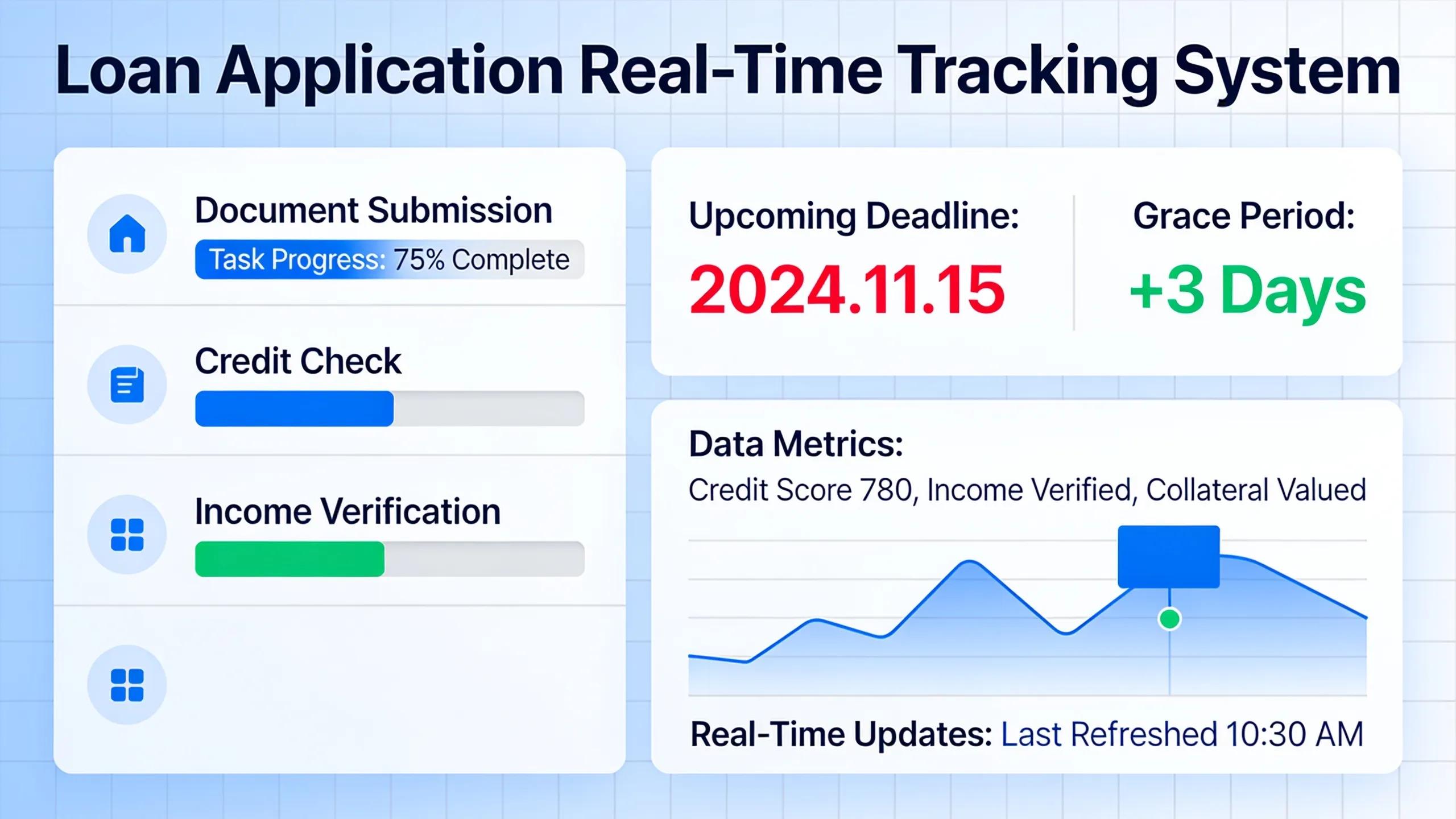
A loan application tracker keeps every task, deadline, and document moving instead of sitting untouched in an inbox. Real-time visibility into each step of the process stops applications from stalling between submission and lender review.
Business owners juggling multiple financing requests often lose track of which documents a lender still needs—especially important financials like P&L statements, bank feeds, and debt schedules. Configurable workflows and reporting features solve that problem by showing exactly what remains outstanding and who owns the next step.
VIP Business Credit builds this kind of tracking into a broader business loan management system through two connected tools. The Funding Explorer surfaces lending programs matched to a business's profile. The Funding Manager monitors accounts and the bureau data lenders rely on to make decisions. Together, these tools work like a dashboard for business credit. No single piece operates alone, and the full picture updates as new data arrives.
What does a pre-qualification workflow actually show?
A pre-qualification workflow sorts financing options into three groups: available now, available with more preparation, and available only after specific credit-building steps. This structure gives business owners a clear sequence of actions instead of a guessing game. Knowing which programs are realistic today prevents wasted applications and unnecessary credit inquiries.
Does tracking reduce wasted effort on funding searches?
Yes. Searching for funding opportunities inside one dedicated tool keeps every prospect organized and on target, rather than scattered across spreadsheets, emails, and browser tabs. Centralizing that search cuts duplicated effort and reduces missed deadlines. For a growing business managing several financing relationships at once, that level of organization often determines whether an application closes on schedule or quietly stalls out.

What Is Involved in Business Loan Management?
Four practical pieces make up business loan management system: separating credit from personal liability, keeping identity data consistent, managing cash flow proactively, and coaching on credit use after funding closes. Skipping any one of these creates gaps that lenders notice and price into higher rates or outright denials. A funding manager brings these pieces together so business owners aren't juggling them alone.
The foundation starts with structure. Establishing credit under the company's EIN, rather than the owner's Social Security number, keeps business debt off a personal credit report. This separation protects personal assets if the business hits a rough stretch. It builds a credit history the company actually owns.
Why does consistent business information matter to lenders?
Lenders and vendors check whether a business's name, address, and phone number match across every listing and filing. Inconsistent data reads as a red flag during underwriting, even when the business is financially sound. Clean, matching records build trade credit reporting history that lenders trust and reference when setting terms.
Cash flow oversight rounds out the picture. Strong management means capital is available before a shortfall hits, not scrambled together after payroll is due. A loan application tracker supports this by giving owners visibility into pending applications, funded accounts, and upcoming obligations in one place, rather than scattered across emails and spreadsheets.
Ongoing loan management includes:
- Structuring credit under the business EIN to shield personal liability
- Auditing and correcting business identity data across directories and filings
- Monitoring cash flow so working capital is ready before it's needed
- Coaching on underwriting criteria and healthy usage after funding closes
That last point matters most after the check clears. Guidance doesn't stop at approval — understanding how lenders evaluate ongoing usage helps owners protect the credit lines they worked to secure.
Can Technology Simplify Government and SBA Funding?
Yes — modern funding platforms replace scattered paperwork with a structured discover, evaluate, and apply workflow that moves opportunities forward faster. Business owners chasing SBA loans or government contracts once relied on manual searches and disconnected spreadsheets. That approach costs time small and midsize companies rarely have. Digital tools now organize the entire search-to-submission process into one continuous path, leveraging comprehensive business credit documentation management to accelerate approvals.
A funding manager plays a central role in this shift. Rather than tracking every lead by hand, business owners use this tool to organize opportunities, monitor deadlines, and see which programs match their company's profile. Paired with a loan application tracker, the process becomes visible from start to finish. No guessing which application sits with which lender.
How does data security factor into government funding platforms?
Security matters most when sensitive financial and business data moves through digital systems. Platforms carrying SOC 2 Type II and III certification demonstrate strong, independently verified data protection standards. Business owners submitting tax records, revenue statements, and ownership details benefit from that verified layer of trust.
What makes these platforms different from traditional bank applications?
Traditional banking relies heavily on credit scores and collateral. A streamlined, accessible financing process instead evaluates real business performance — cash flow, revenue trends, and operational history — rather than banking metrics alone. That shift opens doors for companies that look strong operationally but thin on paper.
Effective business loan management system ties these pieces together. Consider what separates outdated methods from modern platforms:
- Manual tracking: scattered emails, missed deadlines, unclear status
- Digital management: centralized dashboards, automated alerts, real-time updates
VIP Business Credit combines broad lender access with purpose-built software, giving owners a clearer, steadier path through a crowded and often confusing funding marketplace.
How Do Lenders Evaluate Your Application?
Lenders judge an application by cross-checking business identity data, credit history, and financial performance against their own risk models. Underwriter-facing tools now let owners see this same picture before submitting anything. These tools reveal how a business appears to lenders and flag eligibility gaps early. Applicants can fix weak points instead of getting a surprise denial.
VIP Business Credit's proprietary scoring tool, the funding manager, gives owners a clear read on where they stand with lenders. Rather than guessing what an underwriter sees, business owners get a documented snapshot of their credit position. That clarity changes how an application gets built — and often changes the outcome.
What Do Underwriters Actually Look For?
Underwriters compare business identity records, trade credit history, and repayment patterns against the requirements of each specific loan product. Gaps in any of these areas signal risk, even when a business generates strong revenue. Closing those gaps before applying improves approval odds and often results in better terms.
Does the Type of Financing Change the Evaluation?
Yes. A traditional term loan gets scrutinized differently than revenue-based financing or an industry-specific program. Because funding options range from conventional business loans to specialized solutions built for particular industries, owners can match their application strategy to the product most likely to approve them.
Equipment credit lines illustrate this well. They let a business acquire needed equipment immediately, build credit through consistent use, and deduct payments as ordinary business expenses. A structure underwriters view favorably because it ties credit to a tangible, income-generating asset.
Strong business loan management system depends on this kind of preparation. Owners who track eligibility gaps, monitor their standing, and use a loan application tracker to organize deadlines and documents submit cleaner applications. And cleaner applications get approved faster.
What Steps Build a Stronger Funding Profile?
Building a stronger funding profile — and improving the odds of small business capital approval — starts with a defined, sequential process rather than scattered applications. Lenders reward businesses that show consistent progress: better terms, higher limits, and lower rates all follow a company that demonstrates clear readiness instead of guesswork.
That process works because it targets specific gaps before an owner ever submits a loan application. Random applications waste time and generate hard inquiries that can lower a credit score without producing results. A structured path, by contrast, prepares a business file so lenders see exactly what they need to approve larger amounts.
How does fleet financing fit into a stronger credit profile?
Fleet credit lines serve trucking and delivery businesses that need multiple vehicles without draining cash reserves. These lines let owners finance trucks, vans, and cars while simultaneously building business credit tied to the company itself. Payments also lock in tax deductions, turning a necessary expense into a strategic credit-building tool. Fleet specialists structure each deal around the vehicle type. Use case, rather than offering one generic package for every business.
Strengthening a funding profile also depends on organized tracking. A dedicated funding manager helps owners see which products they qualify for now and which require more preparation. Pairing that oversight with a loan application tracker keeps every submission, document, and deadline visible in one place, reducing missed steps that stall approvals.
Practical business loan management system ties these pieces together over time:
- Monitor credit utilization across all open accounts.
- Track upcoming payment dates to protect payment history.
- Review lender feedback to refine future applications.
VIP Business Credit delivers this guidance through a small, three-person team, keeping advisory support direct and hands-on rather than routed through layers of call-center staff. That structure lets business owners get personalized answers instead of generic scripts, which matters most when fleet financing, tax timing, and credit strategy all intersect.
How Do You Choose the Right Funding Partner?
Transparent pricing separates a true financing partner from a transactional broker chasing a commission. VIP Business Credit publishes clear, no-surprise pricing and treats each business relationship as an ongoing partnership, not a one-time transaction. That distinction matters more than most owners realize until they're mid-application with a broker who suddenly adds fees.
A strong partner also offers tools that keep the process organized. A dedicated funding manager helps decision-makers track opportunities, compare terms, and stay on top of deadlines instead of juggling scattered emails and spreadsheets. Pairing that with a loan application tracker gives owners visibility into where each submission stands, what documents are outstanding, and which lender is reviewing next. Together, these tools form the backbone of sound business loan management system, reducing the guesswork that often stalls approvals.
What should a business look for in local versus national support?
Local presence combined with national reach gives owners the best of both worlds. VIP Business Credit supports businesses across Loudoun County and the wider Northern Virginia region, while also serving clients digitally nationwide. The firm's office sits at 21000 Southbank St Ste 106-380, Sterling VA 20165, giving Northern Virginia entrepreneurs a physical point of contact alongside remote service options.
Does the right partner change as a business grows?
Yes. The right partner adapts as a company's needs evolve. VIP Business Credit's approach fits newer ventures seeking their first approvals just as well as established firms looking to scale, consolidate costs, or expand with better-priced capital.
Owners evaluating partners should ask themselves:
- Does the firm explain pricing upfront, with no hidden fees?
- Is support available locally and digitally?
- Does the partner offer tools for tracking applications over time?
- Can the relationship grow alongside the business, from startup to expansion?
FAQ
What does VIP Business Credit's Funding Manager do?
It centralizes business capital applications by pairing its proprietary credit-scoring tool with access to over 1,000 national and local lenders, letting owners track eligibility, monitor bureau data, and organize applications in one dashboard. The system integrates comprehensive business credit documentation management—including tax returns, balance sheets, P&L statements, debt schedules, bank feeds, and entity documentation—to accelerate loan approval times and reduce underwriter friction.
Conclusion
In closing, a funding manager streamlines what would otherwise be a fragmented, time-consuming process into a clear, guided path toward capital. By consolidating your application materials such as tax returns, balance sheets, profit & loss statements, debt schedules, bank feeds, and entity documentation into a centralized funding manager system, tracking multiple lender requirements, and organizing your financial narrative in one place, you eliminate confusion and accelerate approval timelines. The result is straightforward: you spend less time managing paperwork and more time running your business. Lenders see an organized, credible applicant. That efficiency transforms funding from a burden into a strategic advantage.
About the Author
Lee Johnson is the Co-Founder and CEO of VIP Business Credit, a seasoned real estate investor, business growth strategist, and a Master Certified Professional Coach. He holds a Bachelor of Science degree from Fairleigh Dickinson University and an MBA from the University of Phoenix. With over 25 years of experience, Lee has built a real estate investment portfolio exceeding 1,700 units valued at approximately $254 million across multiple U.S. markets. His mission is to help small business owners achieve financial freedom by establishing strong business credit and accessing favorable loan terms through VIP Business Credit's 12-month business credit coaching program.
Get in Touch with VIP Business Credit:
- Phone: (571) 248-3863
- Email: [email protected]
- Schedule: Schedule A Business Financial Health Strategy Call
Conclusion
In closing, a Funding Manager transforms business funding applications from a scattered, paperwork-heavy chore into a clear, organized process. When you centralize your documents, track your progress, and understand exactly where each application stands, you approach lenders with confidence instead of guesswork. This structure saves time and reduces errors, but more importantly, it builds the kind of consistent, professional presentation that lenders trust. Take this step-by-step approach, stay organized, and you position your business for stronger funding outcomes today and in the future.


