Funding Explorer: Business Funding Options
Funding Explorer: Business Funding Options

By VIP Business Credit Editorial Team · Updated 2026-08-31
Exploring business funding options can be overwhelming given the vast array of commercial financing products available today. From SBA-guaranteed loans and business lines of credit to alternative lending solutions like equipment leasing and merchant cash advances, each funding type carries unique terms, eligibility criteria, and benefits. VIP Business Credit serves as a comprehensive resource connecting entrepreneurs to more than 1,000 nationwide lending opportunities. Their advanced commercial funding explorer tool and small business loan matching capabilities help founders identify the most suitable financing options by analyzing credit gaps and business profiles, paving a clear path toward stronger, EIN-based credit and competitive loan terms.
Key Takeaways
- SBA-guaranteed loans provide competitive rates, reduced down payments, and lenient overhead requirements for qualified businesses.
- VIP Business Credit links entrepreneurs to over 1,000 national and local lenders, offering a comprehensive funding explorer platform tailored to diverse industries and credit stages.
- A broad spectrum of alternative business financing solutions, including equipment leasing and revenue-based funding, expands access beyond traditional bank products.
- Understanding APR, prepayment penalties, funding timelines, and qualification criteria is essential for selecting optimal commercial financing.
- Free grants and government programs complement loans and credit lines but require strategic navigation to identify applicable opportunities.
Why Does Business Funding Feel So Confusing?
The complexity stems from the multitude of lenders and financing types available, each with distinct underwriting standards, fee structures, and application processes. Entrepreneurs face banks, credit unions, alternative lenders, and specialized finance companies. Without targeted filtering, researching thousands of options quickly becomes unmanageable.
At the heart of the issue lies mismatched information and uncoordinated applications. Business owners often waste weeks applying to lenders unsuited to their revenue stage or credit profile. VIP Business Credit's small business loan matching capabilities drastically reduce guesswork by analyzing the actual financial profile of companies against lender criteria, ensuring only realistic funding paths are pursued.
What Makes Business Financing Options So Hard to Compare?
Varying interest rates, origination fees, repayment terms, prepayment penalties, and eligibility rules complicate comparisons. Many entrepreneurs lack the time or expertise to dissect fine print across a thousand-plus lending programs. VIP Business Credit’s funding explorer organizes this complexity by pairing access to a vast lender network with technology that highlights compatible products based on detailed profiles, including credit scores, business age, and revenue.
Where Can Business Owners Find Reliable Financing Guidance?
Operating out of Sterling, Virginia, VIP Business Credit delivers digital support nationwide. They connect clients to a diverse network of over 1,000 lenders, including traditional banks, alternative finance providers, and regional specialists. Entrepreneurs tapping into their commercial funding explorer tool benefit from:
- A nationwide lender network tailored to multiple industries and credit stages.
- Technology that narrows down viable funding paths prior to formal applications.
- Local advisory support blended with digital accessibility across the country.
This integrated setup transforms a chaotic search into a strategic, manageable process.

Deep Dive: Types of Commercial Financing Options
Successful business financing hinges on understanding the variety of commercial funding types and qualifying factors. Below we explore key options available to small and medium-sized businesses, highlighting their features, evaluation metrics, and how to determine fit.
SBA-Guaranteed Loans
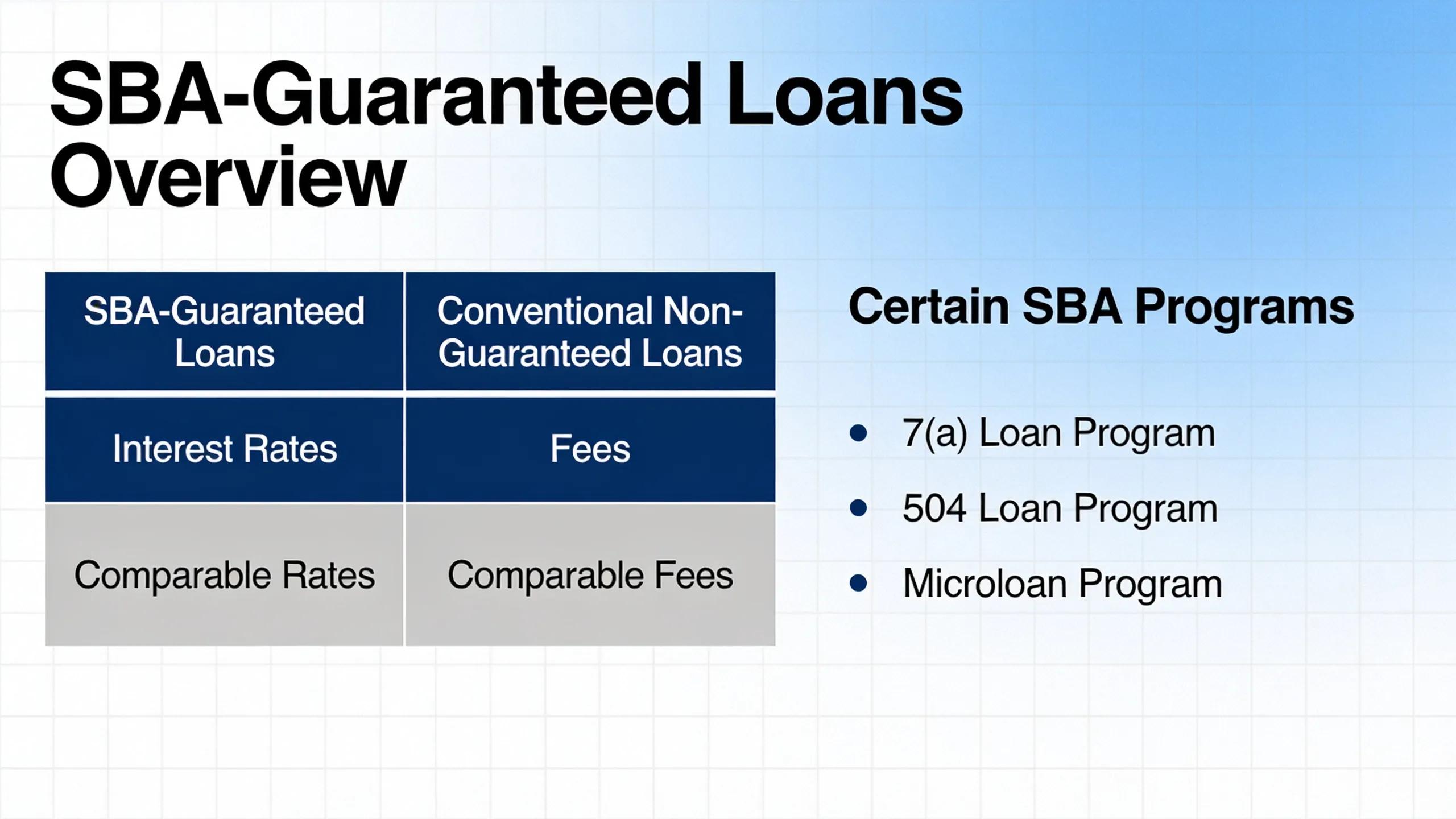
The Small Business Administration (SBA) facilitates access to capital by guaranteeing a portion of loans made through approved lenders. Common SBA programs include the 7(a) Loan Program, CDC/504 Loans, and Microloans. Benefits include lower down payments, longer repayment terms (up to 25 years for real estate), and competitive interest rates linked to prime benchmarks.
Evaluating SBA Loans:
- APR: Varies but typically competitive, often ranging from 6%-9%, inclusive of fees.
- Prepayment Penalties: Generally absent or minimal, depending on lender.
- Funding Timeline: Longer than alternative products, averaging 4-6 weeks due to approval processes.
- Qualification Criteria: Must meet SBA’s size standards, demonstrate repayment ability, and have sound business purposes.
Business Lines of Credit
Lines of credit provide flexible revolving access to capital up to a set limit, ideal for managing cash flow, inventory, or unexpected expenses. They can be secured or unsecured. Interest accrues only on the amount drawn, making them cost-effective when utilized prudently.
Key Considerations:
- APR: Typically ranges from 9%-24%, influenced by creditworthiness and secured/unsecured status.
- Prepayment Penalties: Rare, but some lenders may impose fees for early line closure.
- Funding Timeline: Often quicker than term loans—sometimes within days.
- Qualifications: Strong personal and business credit scores, minimum revenue thresholds, and time in business.
Equipment Leasing
This option allows businesses to acquire necessary equipment without upfront capital outlay, converting purchase costs into manageable periodic payments. Leasing can preserve cash flow and often includes maintenance agreements.
Evaluation Points:
- APR: Embedded in lease payments; effective APR can range from 7%-20% depending on terms.
- Prepayment: Leasing contracts are generally fixed-term; early termination may incur penalties.
- Funding Speed: Rapid, often within 1-2 weeks.
- Qualifications: Revenue proof, creditworthiness, and sometimes collateral requirements.
Revenue-Based Funding
This innovative alternative lending model links repayments directly to a percentage of future sales or revenue, making payments flexible and aligned with cash flow fluctuations.
Important Metrics:
- APR Equivalent: Can be high, sometimes exceeding 30% annualized, reflecting revenue share rather than fixed interest.
- Prepayment: Usually no penalties; early repayment depends on revenue performance.
- Funding Timeline: Fast, often under a week.
- Qualifying Factors: Consistent, predictable revenue streams; no strict credit score requirements.
Term Loans
These are lump-sum loans repaid over a fixed period with regular payments, suited for predictable capital needs such as expansion or refinancing.
Key Details:
- APR: Wide range between 6%-30%, depending on lender, credit quality, and term length.
- Prepayment Penalties: Vary; some lenders impose fees on early payoff.
- Funding Speed: Moderate, commonly 1-4 weeks.
- Qualifications: Revenue thresholds, credit scores, time in business, and collateral.
Merchant Cash Advances (MCA)
MCAs provide upfront cash in exchange for a portion of future credit card sales. Though quick to access, they often carry higher costs and complex fee structures.
Considerations:
- APR: Can exceed 50% annualized—effective cost should be scrutinized closely.
- Prepayment: Typically no penalties; repayment varies with sales.
- Funding Timeline: Extremely fast, sometimes within 24-48 hours.
- Criteria: Strong credit card sales history; less emphasis on credit score.
Evaluating Commercial Financing: What You Need to Know
Choosing the right funding option means understanding several financial and operational factors:
- APR (Annual Percentage Rate): This metric includes both interest rates and fees, reflecting the true cost of borrowing over a year. Lower APRs reduce total repayment but must be balanced against term length and other conditions.
- Prepayment Penalties: Some lenders charge fees if loans or lines are paid off early. Understanding these avoids surprises and informs refinancing decisions.
- Funding Timelines: Speed varies from same-day approvals to multi-week SBA processes. Urgency and capital needs dictate which options suit best.
- Qualification Criteria: Credit scores, revenue history, industry, time in business, and collateral impact eligibility. Using tools like VIP Business Credit’s commercial funding explorer tool can pre-screen a business for fit before lengthy applications.
What Counts As A Business Financing Option?
Business financing options refer to methods companies use to access capital, covering everything from owner contributions to formal loans and credit products. Avoiding unsuitable options saves founders time, equity dilution, and unnecessary debt cost. Clear categorization distinguishes between borrowed capital (loans, lines of credit) and self-funding (personal savings, investors). Most businesses blend approaches depending on growth stage and cash flow.
VIP Business Credit's offerings focus on three core categories:
- Business loans — lump-sum funds repaid in fixed intervals over a set term.
- Lines of credit — revolving funding access catering to recurring cash needs.
- Credit-building programs — strategies designed to strengthen a company’s creditworthiness over time.
Matching financing options to business-specific factors like industry, revenue, and risk profile outperforms chasing the largest capital amount without strategy.
Is a bank loan the only way to fund a business?
No, bank loans are just one avenue. Alternative solutions like equipment leasing, merchant cash advances, and revenue-based funding diversify financing strategies, especially when traditional credit may be limited.
How does an owner know which financing option fits their business?
A pre-qualification and small business loan matching workflow assesses which programs a business currently qualifies for, identifies preparatory steps to improve eligibility, and clarifies realistic funding timelines, reducing wasted effort and application fatigue.
How Do SBA-Guaranteed Loans Actually Work?
The SBA guarantees a portion of loans originated by partner lenders, mitigating lender risk and expanding access to capital for businesses that might otherwise be denied financing. These guarantees enable better loan terms, including competitive rates and flexible qualification criteria that accommodate startups and small businesses.
Although SBA loans offer appealing benefits, the approval process involves documentation requirements and time. By using VIP Business Credit's commercial funding explorer tool, business owners can efficiently target SBA programs that fit their financial profile.
What Do Lenders Look For in SBA Loan Eligibility?
Lenders evaluate several key factors based on SBA guidelines and bank policies:
| Factor | What Lenders Check |
|---|---|
| Size | Meets SBA size standards for the industry |
| Repayment Ability | Demonstrated cash flow sufficient to cover loan payments |
| Use of Funds | Clearly defined, legitimate business purposes |
| Ownership & Character | Evaluation of owners’ backgrounds and business structure |
Since criteria vary by lender and SBA program, leveraging a funding explorer to match a business’s profile with appropriate loans accelerates the path to approval and reduces wasted application attempts.

Can Grants Fund Your Startup?
Federal grants dedicated exclusively to startup capital are virtually nonexistent. Entrepreneurs searching tirelessly for free startup funds may delay focusing on establishing lending eligibility. Instead, federal, state, and local grants often support specialized areas such as research, exports, or specific industries.
Curated and regularly updated directories of grants, loans, and support initiatives enable targeted discovery for applicable funding opportunities. Such lists evolve regularly, requiring ongoing attention to capture openings aligned with industry, location, or business type.
Where should founders look for real grant opportunities?
State economic development departments, trade associations, local chambers of commerce, and niche nonprofits typically administer targeted grant programs. Consolidated weekly-updated directories save founders considerable research time by aggregating these programs into coherent, searchable platforms.
If grants won’t fund a startup, what will?
Building business credit associated with the company’s EIN, distinct from the owner’s personal credit, opens doors that grants do not. VIP Business Credit specializes in helping entrepreneurs across Northern Virginia and the Greater Washington, DC area establish and strengthen EIN-based credit profiles. This separation safeguards personal assets, strengthens lender confidence, and facilitates access to conventional and alternative funding.
The funding explorer paired with small business loan matching technologies surfaces viable programs—grants, loans, or credit lines—that align with the business’s stage, improving funding outcomes by focusing applications where they count.
Evaluating What Banks Look For In Applicants
For most traditional bank-funded products, the applicant’s personal credit score often weighs heavily, particularly for unsecured business lines of credit where a 700+ FICO score frequently serves as the minimum threshold. That said, newer companies without established business credit are not entirely excluded but may face more restrictive terms.
Revenue history and longevity in business further influence underwriting decisions. Lenders typically require evidence of steady income and operational track records indicating repayment capacity. VIP Business Credit’s commercial funding explorer tool presents owners with an aggregated view of lenders’ eligibility criteria, helping manage expectations prior to application.
What if my credit score isn’t strong enough yet?
Secured lines of credit can help bridge the gap by using a security deposit to support borrowing limits. This option reduces risk for lenders and provides a legitimate funding avenue for companies still building their credit profiles. Consistent, responsible use contributes to eventual access to unsecured financing.
Does a secured line ever lead to better terms later?
Yes. Demonstrated repayment history on secured lines signals creditworthiness, often enabling borrowers to graduate to unsecured credit with better rates and less collateral requirement.
Core Bank Criteria Include:
- Personal Credit Score: Often above 700 FICO for favorable unsecured terms.
- Collateral or Deposit: Required for secured loans, optional or not needed for unsecured.
- Payment History: Critical in upgrading or renewing loan products.
The use of a digitally enabled loan matching tool facilitates comparison of these diverse criteria across lenders, enhancing funding strategy effectiveness.
How Does EIN-Based Credit Protect You?
Establishing credit and debt under a business’s Employer Identification Number (EIN) rather than the owner’s Social Security number creates a fundamental separation between personal and business liabilities. This structure shields owners’ personal credit and assets from business risks, particularly crucial when scaling a company.
Consistency in business records — such as name, address, and contact information — across trade bureaus and filings strengthens a company’s credit profile and credibility with lenders. VIP Business Credit focuses on aligning these details and building strong trade credit reporting, reducing perceived risk and improving loan access.
Does EIN-based credit protect personal assets?
Yes, when administered properly. Business debts tracked under the EIN mitigate the risk of personal credit damage from business defaults, an essential risk management strategy for growth-oriented entrepreneurs.
Who guides the process of building EIN-based credit?
VIP Business Credit’s local Business Credit Advisors provide personalized, hands-on support throughout the credit-building journey, offering tailored recommendations grounded in each business’s risk profile and growth goals. Transparent pricing ensures trust and long-term partnership.
Which Tools Reveal Your Funding Readiness?
VIP Business Credit offers four integrated tools that illuminate a business’s credit and funding standing:
- Capital-Ready Score: A single figure summarizing lender perceptions of risk and creditworthiness.
- Funding Explorer: Filters and surfaces loans, lines, and financing programs compatible with the business’s profile.
- Funding Manager: Tracks active loans, lines, and repayments to maintain readiness and compliance.
- Bureau Insights: Monitors business credit bureau reports for errors, inconsistencies, or risks.
Together, these tools transform opaque underwriting criteria into actionable intelligence, identifying obstacles and strategic improvement paths.
What Does a Credit Scan Actually Show?
It identifies gaps and deficiencies impacting financing prospects, enabling advisors to create step-by-step plans for enhancing loan approval chances, improving limits, and reducing rates. Owners see and understand the same criteria lenders evaluate before applications.
How Does Lender Access Fit Into This Process?
Access to an extensive lender network ensures readiness scores translate into real financing opportunities. The coupling of diagnostic tools with a wide array of business funding options creates a smooth transition from assessment to application, empowering businesses to select and pursue appropriate funding paths confidently.
How Should You Choose Your Funding Path?
Optimal funding depends on factoring stage, financing purpose, and urgency of capital needs. Early-stage companies typically require a different approach than mature businesses seeking refinancing or capital for equipment expansion. VIP Business Credit consults closely with clients to align funding with specific use cases.
Key decision points include:
- Stage: First-time approval vs. scaling credit profile.
- Purpose: Working capital, equipment, fleet expansion, or debt refinancing.
- Terms: Identifying lenders offering conditions matching current risk profiles.
Addressing these points consecutively reduces confusion and streamlines funding acquisition.
What financing fits a growing equipment or fleet need?
Specialized credit lines for equipment or fleet acquisition allow immediate capital deployment while establishing business credit through responsible, regular payments. Interest and principal payments often qualify as tax-deductible business expenses, enhancing financial efficiency.
Does location limit which lenders a business can access?
Geographic restrictions are often less stringent than presumed. While VIP Business Credit is headquartered in Northern Virginia and focused locally, their digital platform enables nationwide access to thousands of lenders. As a result, business headquarters location rarely restricts funding availability.
FAQ
What business funding options exist for small business owners?
Beyond traditional bank loans, options span SBA-backed products, business lines of credit, equipment leasing, revenue-based funding, term loans, and merchant cash advances. VIP Business Credit’s comprehensive funding explorer connects entrepreneurs to over 1,000 lending sources, including alternative business financing solutions.
Why is comparing business financing options so difficult?
Wide variation in terms, interest rates, fees, prepayment penalties, and eligibility rules across lenders creates complexity. Proprietary software like VIP Business Credit’s pairing extensive lender access with small business loan matching tools helps clarify viable paths.
Where can entrepreneurs get reliable financing guidance?
VIP Business Credit provides digital and local advisory support nationwide, connecting clients with a broad spectrum of lenders and utilizing data-driven tools to navigate the funding landscape efficiently.
Conclusion
Securing the right business funding requires thoughtful evaluation of business funding options aligned with company goals and growth stages. Leveraging advanced tools like VIP Business Credit’s funding explorer and small business loan matching technology reveals optimal financing strategies across SBA loans, lines of credit, equipment leasing, and alternative products. Building EIN-based credit further protects personal assets and unlocks superior lending opportunities. Begin by assessing your funding readiness today — informed clarity transforms uncertainty into a well-crafted, actionable financing strategy.
About the Author
Lee Johnson is the Co-Founder and CEO of VIP Business Credit, a seasoned real estate investor, business growth strategist, and a Master Certified Professional Coach. He holds a Bachelor of Science degree from Fairleigh Dickinson University and an MBA from the University of Phoenix. With over 25 years of experience, Lee has built a real estate investment portfolio exceeding 1,700 units valued at approximately $254 million across multiple U.S. markets. His mission is to help small business owners achieve financial freedom by establishing strong business credit and accessing favorable loan terms through VIP Business Credit 12-month Fundability coaching program.
Get in Touch with VIP Business Credit:
- Phone: (571) 248-3863
- Email: [email protected]
- Schedule: Schedule A Business Financial Health Strategy Call


