Business Credit Lines in Loudoun County, VA — How to Access Flexible Capital for Small Business Growth
Business Credit Lines in Loudoun County, VA — How to Access Flexible Capital for Small Business Growth
By Lee Johnson, VIP Business Credit
Access to flexible capital through [business credit](https://vipbizfunds.com/business-credit) lines — one of the most practical business credit lines for small business options available — is a valuable tool for Loudoun County entrepreneurs who want to grow without draining personal savings. Knowing how lenders evaluate businesses, what documents to prepare, and which credit products fit your needs can change how quickly — and how well — your company scales. This guide walks through application steps, eligibility signals, funding types, and credit-building tactics like vendor tradelines and net-30 accounts so you can strengthen your fundability and pursue the right financing with confidence.
Key Takeaways
- Business credit lines in Loudoun County deliver adaptable capital that supports growth and cash flow management.
- Preparing the right documents and understanding lender criteria increases your chances of approval and better terms.
- Funding choices include traditional business lines, SBA loans, promotional 0% credit offers, and vendor tradelines that build credit history.
- Fundability — driven by credit scores, payment history, and business longevity — is central to approval and pricing.
- Forming an LLC and obtaining an EIN separates personal and business finances and reinforces lender confidence.
- Vendor tradelines and net-30 accounts establish measurable payment history to boost business credit profiles.
- Dedicated business bank accounts simplify bookkeeping and protect personal assets.
- VIP Business Credit provides hands-on coaching to improve fundability and guide credit applications.
- Using business credit strategically supports steady growth and long-term wealth creation.
Application Processes
Successful applications begin with a simple plan: define how much funding you need and why, then match that need to the right lender or product. Typical next steps include pre-qualification checks, assembling required documents (financial statements, tax returns, a concise business plan), and verifying your business identity. Working with an advisor or coach can help you prioritize documents and streamline the application so you submit a clear, lender-ready package.
In practice, an efficient application workflow looks like this: pre-qualify with several lenders to compare pricing and terms; prepare a concise executive summary that explains the use of funds and repayment plan; and gather at least two years of financial statements when available. When you present a consistent picture across documents, underwriters can more quickly validate claims and issue offers. Keep copies of recent bank statements and accounts receivable aging reports accessible — lenders often request them during underwriting.
Also consider preparing a short supporting memo that highlights any seasonal revenue patterns, one-time anomalies in financials, or upcoming contracts that materially affect cash flow. A brief FAQ page for your lender contact (answers to common questions about revenue recognition, key customers, and ownership structure) can reduce back-and-forth and shorten review time.
Eligibility Criteria
Lenders evaluate several predictable signals when deciding who qualifies. Common expectations include a minimum time in business, steady revenue, and acceptable personal and business credit scores. Demonstrating reliable payment behavior and clean business records will improve terms and approval odds. Coaching or targeted improvements to your fundability can make a meaningful difference.
Beyond basic criteria, lenders review industry risk, customer concentration (how much revenue depends on a small number of clients), and management experience. If your business has a short operating history, emphasize contracts, recurring revenue, or proven margins. When personal credit is used for underwriting, show evidence that business and personal finances are separated and that the business has consistent cash flow to support payments independently.
Available Funding Options
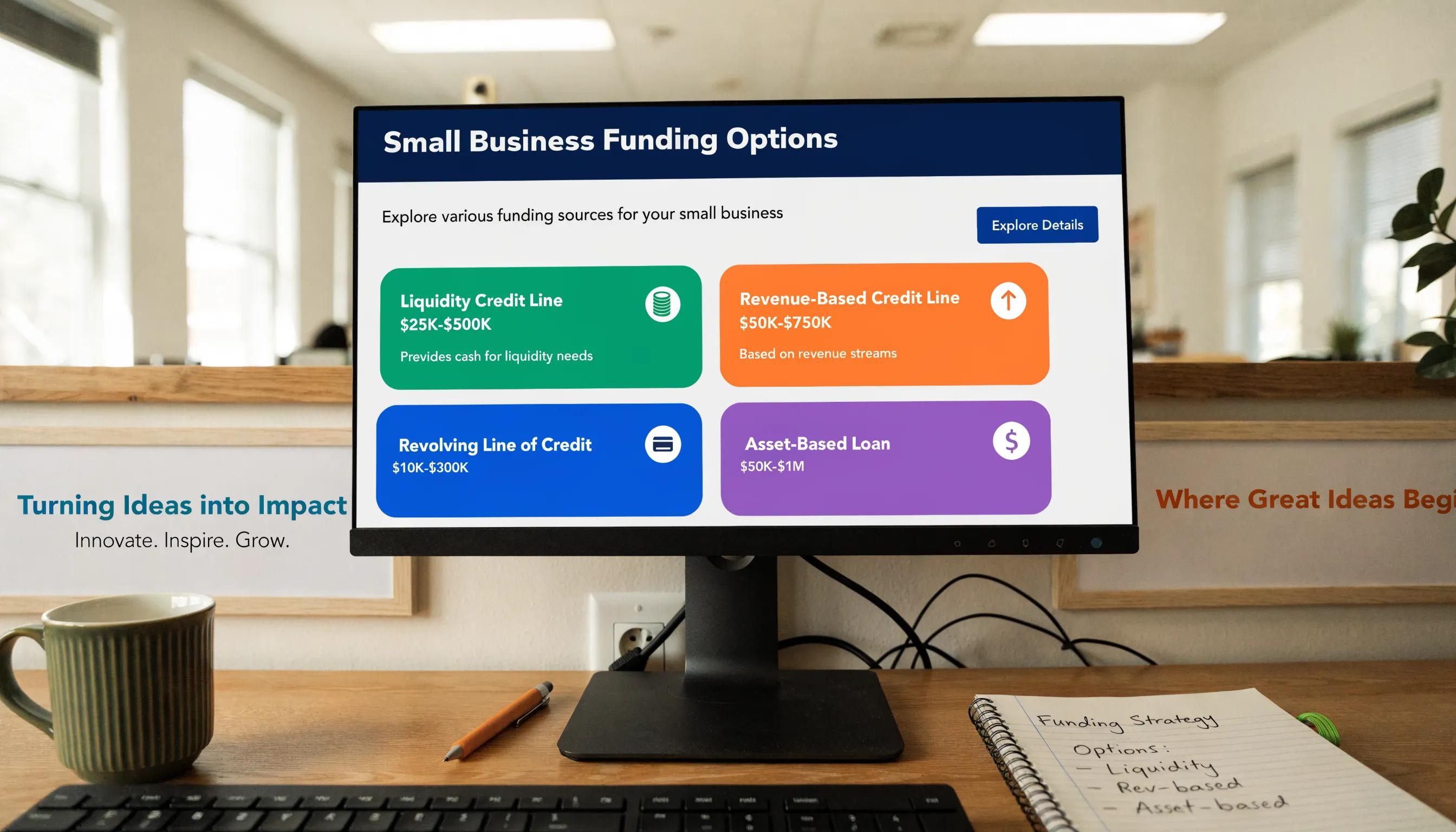
Small businesses in Loudoun County can choose from a range of financing tools. Options vary by purpose — working capital, equipment, or short-term cash flow — so match the product to your business timeline and repayment ability.
Other options not shown in the table include merchant cash advances, invoice financing, and equipment financing; each has a different cost profile and suitability depending on cash flow predictability. Before selecting a product, create a short scenario analysis: how will a draw and repayment affect monthly cash flow, and what is the break-even benefit of the funded activity (new customer acquisition, equipment productivity gains, etc.)?
Additional Support
Beyond lender products, Loudoun County business owners can tap into local economic development programs, grant opportunities, and nonprofit resources. Firms like VIP Business Credit offer coaching that walks you through credit-building, entity setup, and application preparation so you present a lender-ready profile and pursue the best available financing.
Local resources often provide complimentary or low-cost services such as one-on-one advising, workshops on financial statements, and introductions to community lenders. If you qualify for a grant or low-interest program, it can be combined strategically with a credit line to lower blended financing costs. Ask local advisors about matching or incubation grants that target business categories like technology, manufacturing, or retail.
What Is Fundability and Why Is It Crucial for Business Credit Lines in Loudoun County?
Fundability is the practical measure of how attractive your business looks to lenders. It summarizes credit scores, payment patterns, documentation, and how your business is structured. Strong fundability typically wins better interest rates and larger credit limits, while weak signals can block approval or raise costs. Improving fundability gives you access to more favorable financing options. Fundability Score
Treat fundability as an operational discipline: document processes that ensure timely invoice collection, maintain organized tax and payroll records, and keep an updated company profile showing ownership and officer information. These operational habits reduce perceived risk and often lead to faster approvals and stronger negotiating position on terms like covenant thresholds or personal guarantee requirements.
Key Factors Affecting Fundability
Fundability depends on a few core elements:
- Credit Score: Higher personal and business credit scores usually lower borrowing costs and increase access.
- Payment History: On-time payments are the clearest signal of creditworthiness.
- Business Operation Duration: Lenders favor businesses with a track record of consistent operations and revenue.
Additional influencers include legal standing (no unresolved judgments), quality of financial statements (consistent accounting methods), and the presence of professional banking relationships. Small improvements — resolving mismatches in your business name across agencies, standardizing invoices, or adding a business phone number with firm branding — can positively influence automated bureau checks and manual underwriter reviews.
Strategies for Improving Fundability
Use practical, measurable actions to boost fundability:
- Establish Tradelines: Work with vendors who report payments so your business builds a verifiable history.
- Use Business Credit Cards Responsibly: Small, managed balances that are paid on time help build credit without unnecessary cost.
- Monitor Credit Reports: Check business and personal reports regularly and correct errors quickly.
Additional steps include formalizing business operations (contracts, written supplier agreements), using a dedicated business phone and address on public filings, and consolidating financial records in standard accounting software. Setting a simple monthly checklist to reconcile bank accounts, confirm supplier payments, and review open invoices will create the discipline lenders expect.
How Does Fundability Affect Your Eligibility for 0 Percent Business Credit?
Lenders offering 0% promotions typically favor borrowers with strong fundability, since they’re more likely to repay on time. Improving fundability raises your odds of qualifying and lets you take advantage of interest-free periods for working capital or strategic investments.
When considering a 0% offer, read the fine print for promotional period length, deferred interest clauses, and fees for missed payments. Solid fundability reduces the chance you’ll trigger retroactive interest clauses or be moved to a higher rate after the promo ends. Plan repayment timelines so promotional benefits are realized without creating new high-cost obligations.
Key Factors Defining Fundability in Virginia Small Businesses
Virginia businesses face local considerations that shape fundability:
- Lender Preferences: Some regional lenders specialize in certain industries or business sizes.
- Local Economic Conditions: Regional growth or contraction can affect lender appetite and terms.
- Regulatory Landscape: State rules and licensing can add documentation or eligibility steps.
Connect with regional lenders and development partners to understand which business models they prefer. For regulated industries, ensure licenses are current and easily verifiable, and maintain a short document packet that includes any permitting or compliance records lenders may request. That preparation reduces friction during underwriting.
What Are the Step-by-Step Processes for Business Entity Formation and EIN Registration in Loudoun VA?
Forming a proper business entity and obtaining an EIN are fundamental steps to build lender-ready credibility. A straightforward process looks like this:
- Choose a Business Structure: Pick an LLC, corporation, or other entity based on liability protection and tax goals.
- File Formation Documents: Submit formation paperwork to the Virginia State Corporation Commission to legally create the entity.
- Obtain an EIN: Apply to the IRS for an EIN to use for banking, payroll, and tax filings.
After formation, open business bank accounts and request vendor credit in the business name. Keep formation paperwork and the EIN confirmation letter in a digital folder so you can quickly provide copies to lenders. Update your business registration information with state and local agencies as needed to avoid discrepancies during verification.
How to Form an LLC and Register an EIN to Build Lender-Ready Profiles
Forming an LLC and getting an EIN both improve credibility with banks and vendors:
- Advantages of LLC Structure: LLCs offer liability protection and a clearer separation between owner and business finances.
- Importance of EIN Registration: An EIN is required for business banking, payroll, and many lender applications.
Once the EIN is issued, use it consistently on invoices, bank accounts, and registrations. Avoid using personal SSNs on business paperwork where an EIN is available; consistent use of the EIN signals to lenders that the business operates independently and maintains professional records.
Why Separating Personal and Business Finances With Proper Entity Setup Matters
Separating finances protects you and simplifies accounting:
- Asset Protection: Proper entity structure limits personal exposure to business liabilities.
- Simplified Accounting: Separate accounts make bookkeeping, taxes, and lender reviews cleaner and faster.
Establish routine practices such as paying yourself a regular owner draw or payroll, documenting all owner contributions and distributions, and keeping receipts organized by category. These habits not only support tax compliance but also create a clear audit trail for lenders evaluating cash flow and debt capacity.
How Do Vendor Tradelines and Net-30 Accounts Help Build Business Credit in Loudoun County?

Vendor tradelines and net-30 accounts create documented payment histories that many lenders and credit bureaus use to assess business credit. When suppliers report on-time payments, your company builds a reliable record that supports higher credit limits and better terms.
Net-30 terms require payment within 30 days and, when honored consistently, demonstrate the cash-management discipline lenders want to see.
To maximize the benefit of tradelines, prioritize vendors that report to major business credit bureaus and include those accounts on your D&B and other profiles. Keep a schedule of upcoming due dates and set alerts in your accounting system so no net-30 invoice slips past the due date; even a single late report can diminish the positive effect.
What Are the Best Vendor Tradelines for Startups in Loudoun VA?
Startups should choose vendors that report to business credit bureaus and offer products they actually need. Popular choices include:
- Uline: Broad product selection and reporting that helps build credit.
- Grainger: Reliable supplier for industrial and maintenance needs with credit reporting.
- Quill: Office supplies and net-30 options that support early credit building.
Pick vendors you’ll use regularly so payments are consistent and meaningful to your credit history. If a vendor does not report automatically, ask if they will provide account statements or payment confirmations that you can use to support discussions with a lender or a credit bureau dispute to request reporting.
How to Establish and Manage Net-30 Accounts to Improve Your Business Credit Profile
To make net-30 accounts work for you, follow a few best practices:
- Opening Accounts: Choose vendors who report to business credit bureaus.
- Timely Payments: Pay invoices on or before the due date to build positive entries.
- Regular Monitoring: Review your business credit files to confirm accounts are reported accurately.
Maintain a simple tracking spreadsheet or use accounting software to flag net-30 invoices and document payment dates. If a vendor reports late or inaccurately, collect proof of payment (receipts, cleared checks, or bank statements) and follow the vendor’s dispute process; escalate to the bureau if necessary. Treat tradeline management as ongoing maintenance rather than a one-time activity.
How to Set Up Business Bank Accounts for Effective Separation of Personal and Business Finances?
Opening dedicated business bank accounts is straightforward and worth the effort. Follow these steps:
- Choose a Bank: Compare local and national banks, credit unions, and online options for fees and features.
- Required Documentation: Bring your EIN, formation papers, and personal ID to open accounts.
- Account Setup: Establish checking, savings, and payment accounts to manage income, expenses, and payroll.
When selecting an account, consider practical items like monthly fees, transaction limits, integration with your accounting software, and the ability to add authorized signers. Look for banks that offer small-business tools like merchant services and simple lines of credit; an established banking relationship can improve your credibility when applying for larger financing.
Which Business Banking Options Are Available for Loudoun County Entrepreneurs?
Loudoun County businesses can choose from a mix of providers:
- Local Credit Unions: Often lower fees and more personalized service for small businesses.
- National Banks: Broad product suites and branch networks for growing companies.
- Online Banks: Competitive rates and modern tools for digitally focused businesses.
When evaluating providers, request a fee schedule and ask about introductory offers, free payroll integrations, and relationships managers for business customers. These small conveniences can reduce administrative burden and make it easier to present clean financials to prospective lenders.
What Are the Benefits of Separating Business and Personal Finances?
Separating finances brings practical benefits:
- Risk Mitigation: A clean separation helps protect personal assets from business liabilities.
- Improved Financial Clarity: Distinct accounts simplify budgeting, tax preparation, and lender reviews.
Separating finances also makes it easier to measure business performance, produce accurate forecasts, and comply with tax reporting. If you ever pursue investors or a sale, clean financial separation is a strong signal of professional management and reduces due diligence friction.
How Do You Build and Optimize a Dun & Bradstreet Profile for Stronger Business Credit?
Build a D&B profile methodically to improve visibility and creditworthiness:
- Register with D&B: Create and verify your company profile with accurate contact and financial details.
- Maintain Accuracy: Keep your profile up to date with changes to your business structure or operations.
- Monitor Your D&B Score: Review your score and the factors influencing it so you can address weaknesses.
Provide consistent information across your D&B, state filings, and business bank accounts. When lenders check your profile, mismatched addresses, phone numbers, or officer names can slow the process. Consider adding trade references and documented payment history to your profile to accelerate score improvements.
What SBA Loan Options and 0 Percent Business Credit Lines Are Available to Loudoun County Small Businesses?
Loudoun County businesses can access several SBA-backed loan programs and promotional 0% credit options:
- SBA 7(a) Loans: Flexible financing for working capital, expansion, and refinancing.
- SBA 504 Loans: Designed for real estate and large-equipment purchases with favorable terms.
- 0% Business Credit Solutions: Time-limited interest-free credit that can help with short-term cash flow needs.
Each program serves different purposes: use 7(a) for general working capital or acquisition financing, 504 for larger fixed-asset investments tied to job creation or long-term growth, and promotional 0% offers for short-term operational gaps. Consult with an SBA counselor or lender to map program suitability to your project timeline and expected cash flow.
How to Qualify and Apply for SBA Loans in Virginia
SBA loan approval involves clear documentation and eligibility checks:
- Eligibility Requirements: Verify that your business meets SBA size standards and allowable uses of funds.
- Application Steps: Prepare tax returns, financial statements, and a concise business plan to demonstrate repayment ability.
- Submission and Review: Submit your application and be ready to respond to lender follow-ups and requests for clarification.
Typical timelines vary by program and lender; plan for several weeks to a few months from application to disbursement. Keep communication lines open and provide requested clarifications promptly. If your application is declined, request a clear explanation so you can address gaps before reapplying.
What Are the Benefits of Accessing 0 Percent Interest Business Credit Lines?
0% interest credit can be a strategic tool when used carefully:
- Cost-Effective Financing: Borrow without interest during the promotional period to free up cash for growth activities.
- Cash Flow Management: Use the interest-free window to manage seasonal gaps or fund short-term opportunities.
To benefit, build a repayment schedule tied to receivable cycles or expected revenue events. Avoid using introductory offers to fund ongoing operating deficits; these promotions are most effective when used for discrete investments that generate near-term returns or when timed with predictable cash inflows.
How Can Entrepreneurs in Loudoun County Use Business Credit Lines to Build Generational Wealth?
Business credit can be a lever for long-term value when used with discipline:
- Deploying Capital: Use credit to invest in scalable opportunities that grow revenue and equity.
- Revenue Generation: Smart use of capital can increase earnings and business value over time.
- Wealth Preservation: Combine sound financial practices with strategic reinvestment to build sustainable wealth.
Adopt a clear capital allocation plan that prioritizes investments with measurable return on investment, maintains conservative debt-to-equity ratios, and preserves cash buffers. Consider long-term objectives — succession planning, exit strategy, and asset protection — when structuring debt and choosing collateral, so credit decisions today support generational wealth goals tomorrow.
What Are Strategies to Use Business Credit for Long-Term Financial Growth?
Adopt strategies that keep risk manageable while accelerating growth:
- Building Strong Credit Profiles: Maintain on-time payments and conservative balances to access better terms.
- Strategic Investing: Deploy credit for revenue-generating assets and opportunities, not discretionary spending.
- Regular Financial Assessment: Review financial performance and adjust borrowing to match cash flow projections.
In practice, set periodic review cadences (monthly operating reviews and quarterly strategy reviews) to reassess borrowing needs and track the performance of financed projects. Refinance or consolidate higher-cost debt when better terms become available to lower carrying costs and free up capital for reinvestment.
How Does VIP Business Credit Support Generational Wealth Planning in Loudoun VA?
VIP Business Credit helps local entrepreneurs by offering coaching that focuses on building lender-ready credit profiles, improving fundability, and aligning financing strategies with long-term wealth goals. Their hands-on approach combines practical steps with local knowledge to help businesses access capital that supports growth and legacy planning.
Their coaching typically includes an initial diagnostic, a prioritized action plan to improve credit signals, and application support that aims to reduce errors and speed approvals. Working with a coach can also provide accountability and a timeline for fundability improvements so financing opportunities are pursued at the right moment.
Where Can Loudoun County Small Business Owners Get Expert Coaching on Business Credit Lines and Fundability?
Local owners can find coaching through organizations like VIP Business Credit, regional small business development centers, and industry associations. These resources provide tailored guidance on credit lines, application readiness, and fundability improvements so you can pursue financing with a clear plan.
When selecting a coach or advisor, ask for references and examples of typical outcomes (improved credit readiness, successful loan applications). Choose a provider that lays out clear deliverables and a timeline so you can measure progress and know when to apply for financing.
Why Choose VIP Business Credit for Local Business Credit Coaching Services?
VIP Business Credit stands out for several reasons:
- Expertise and Experience: Practical know-how in business credit and financing strategies.
- Tailored Coaching Approach: Advice customized to your business size, industry, and goals.
- Local Knowledge: Familiarity with Loudoun County’s lending environment and resources.
These strengths help business owners get focused, actionable steps toward funding success. A good coach will also help you prepare cleaner documentation, identify the best-fit lenders, and time applications so you maximize approval odds and secure favorable terms.
How to Access Personalized Coaching for Business Credit Line Acquisition
To engage personalized coaching, follow a few simple steps:
- Consultation Scheduling: Contact VIP Business Credit to arrange an initial assessment.
- Preparation for Coaching: Gather financial statements, tax returns, and formation documents to make sessions productive.
- Ongoing Support: Use follow-up sessions to track progress, refine strategies, and prepare applications.
Prepare an initial packet for your coach containing your last two years of financials, a one-page summary of funding needs and use of funds, and copies of any recent credit inquiries or offers. Clear documentation accelerates diagnosis and helps the coach recommend targeted, actionable steps.
Frequently Asked Questions
What are common mistakes to avoid when applying for business credit lines?
Common missteps include not checking credit reports for errors, submitting incomplete documentation, and assuming one lender is the only option. Avoid overborrowing, and compare offers to find the best terms. Preparing thoroughly and seeking advice can prevent costly mistakes.
How can small businesses in Loudoun County find lenders willing to work with them?
Build local connections through the chamber of commerce, industry meetups, and small business workshops. Use online lender comparison tools and ask peers for referrals. Local economic development offices can also point you to lenders that regularly work with area businesses.
What financial documents are typically required for business credit applications?
Expect to provide a business plan, recent tax returns (business and sometimes personal), profit and loss statements, and bank statements. Lenders may also request personal guarantees and balance sheet details. Having these documents organized speeds up review.
How does the local economy in Loudoun County impact loan availability for small businesses?
Local economic health influences lender confidence and available terms. In strong economic periods, lenders may offer more favorable terms; during downturns, criteria can tighten. Stay informed about local trends and plan accordingly when seeking credit.
Are there specific grants available for small businesses in Loudoun County?
Yes. Loudoun County and regional partners periodically offer grants targeting sectors like tech, green energy, and small retail. Check the Loudoun County Economic Development site and local business groups for current opportunities — grants can be a valuable, non-repayable funding source.
What are the tax implications of using business credit lines?
Interest on [business loans](https://vipbizfunds.com/business-loans) is generally tax-deductible when funds are used for legitimate business purposes. Mixing personal expenses with business credit complicates tax reporting, so keep detailed records and consult a tax professional to maximize deductions and stay compliant.
How can networking enhance access to business credit opportunities?
Networking connects you with lenders, partners, and peers who can make introductions or share firsthand experiences. Attend local events, participate in workshops, and join business groups to learn about financing options and gain referrals that smooth the path to credit.
Conclusion
Business credit lines are a practical way for Loudoun County entrepreneurs to access growth capital without tapping personal reserves. By improving fundability, choosing the right products, and leaning on coaching when needed, you can secure financing that supports sustainable growth. Start by reviewing your documents, exploring local resources, and reaching out for targeted coaching to move from planning to funding with confidence.
With disciplined credit management, clear documentation, and a proactive approach to building tradelines and banking relationships, local businesses can access more favorable financing and use credit as a tool for long-term growth. Begin with small, measurable steps — separating accounts, establishing tradelines, and monitoring credit reports — and scale your financing strategy as your business demonstrates consistent performance.
About the Author
Lee Johnson is the Co-Founder and CEO of VIP Business Credit — a seasoned Real Estate Investor, Business Growth Strategist, and Master Certified Professional Coach with more than 500 coaching hours. He holds a Bachelor of Science from Fairleigh Dickinson University and a Master of Business Administration from the University of Phoenix. Since 2005, Lee has built a personal real estate investment portfolio exceeding 1,700 units valued at approximately $254 million across multiple U.S. markets.
Lee's mission is to help small business owners — including those in home services, trucking, and real estate — achieve financial freedom by first establishing a strong business credit profile, then accessing the highest loan amounts at the best terms available. He and his team serve business owners nationwide through VIP Business Credit's signature 12-month Fundability coaching program.
Connect with Lee and VIP Business Credit:
- Phone: (571) 248-3863
- Email: [email protected]
- Book a consultation: https://vipbizfunds.com/consultation


