Master Small Business Loan Comparisons
Master Small Business Loan Comparisons
As a driven entrepreneur or small business owner, you know that securing the right financing can be the turning point your business needs to thrive. But with countless loan options out there, how do you cut through the noise and find the best fit? That’s where small business loan comparison tools come in — your secret weapon to unlocking smarter, faster, and more confident funding decisions.
At VIP Business Credit, based in Sterling, VA, we empower you to take control of your business financing journey. This comprehensive guide dives deep into why using loan comparison tools matters, the types of loans you should compare, key metrics to evaluate, how to assess lenders, and a step-by-step approach to mastering these tools. Plus, you’ll discover common pitfalls to avoid, how your business credit score impacts your options, and how VIP Business Credit can help you navigate the complex funding landscape with bold confidence.
Why Using a Small Business Loan Comparison Tool Is a Must Before You Apply

Imagine trying to find the best deal on a loan without knowing the full picture — it’s like shopping blindfolded. Loan comparison tools lift that blindfold by aggregating offers from multiple lenders, normalizing costs, and presenting side-by-side comparisons tailored to your business profile. Here’s why you can’t afford to skip this step:
- Save Time and Effort: Instead of contacting lenders one by one, comparison tools gather multiple offers instantly based on your inputs.
- See True Costs: They break down APR, fees, and repayment terms so you can compare apples to apples, not just sticker rates.
- Understand Tradeoffs: Speed of funding, collateral requirements, and repayment flexibility vary widely — tools highlight these differences clearly.
- Boost Negotiation Power: Knowing your options and their terms puts you in the driver’s seat when discussing with lenders.
- Reduce Risk of Surprises: Transparent fee disclosures and eligibility filters help you avoid hidden costs and unlikely approvals.
Using a loan comparison tool is not just smart — it’s essential for making informed, strategic funding decisions that fuel your business growth.
Types of Small Business Loans to Compare in 2025

Understanding the landscape of loan products is critical before you start comparing. Each loan type serves different business needs, comes with unique terms, and fits specific use cases. Here’s a breakdown of the major loan types you should evaluate:
1. SBA Loans (7(a), 504, Microloans)
Backed by the U.S. Small Business Administration, these loans offer longer terms, lower interest rates, and partial guarantees that reduce lender risk. SBA 7(a) loans are versatile for working capital and equipment, 504 loans focus on real estate and fixed assets, and microloans support very small businesses with modest capital needs, typically capped around $50,000 and paired with shorter repayment periods. Repayment terms on larger SBA loans often stretch from 10 to 25 years, which keeps monthly payments manageable even on sizable financing. Lenders reviewing an SBA application generally weigh three factors: whether the business falls within SBA size standards for its industry, whether cash flow supports the proposed debt load, and whether the loan funds a legitimate, documented business purpose. Expect more documentation and longer approval times, but often better rates and terms.
2. Term Loans
Term loans provide a lump sum repaid over a fixed period with either fixed or variable interest rates, typically structured over 1 to 7 years depending on the lender and loan purpose. Ideal for capital expenditures, expansion, or one-time investments, they offer predictable payments but may require collateral and have origination fees. A common real-world match: businesses financing high-cost, long-lived equipment often pair a term loan with an SBA 504 loan, since the repayment schedule can be aligned with the equipment's useful life rather than forcing a shorter, costlier payback window.
3. Lines of Credit
Lines of credit give you flexible access to funds up to a credit limit, with revolving balances and terms that vary by lender and your credit profile. Revolving lines allow you to borrow, repay, and borrow again, perfect for managing seasonal cash flow or unexpected expenses, such as covering fluctuating inventory costs without filing a new loan application every time stock levels shift. Non-revolving lines are single-use and closed after repayment. equipment credit lines are also an option for specific needs.
4. Merchant Cash Advances (MCA)
MCAs provide quick cash in exchange for a percentage of future sales, repaid daily or weekly. They offer speed but often come with high effective APRs that can strain cash flow during repayment.
5. Equipment Financing
Designed specifically for purchasing or leasing equipment, these loans are secured by the asset itself. Terms often align with the equipment’s useful life, and lenders may require appraisals.
6. Invoice Factoring
Invoice factoring converts your accounts receivable into immediate cash by selling invoices at a discount or using them as collateral. It accelerates cash flow but reduces margins compared to lines of credit.
7. Revenue-Based Financing
This alternative funding ties repayments to a percentage of your revenue, offering flexibility when cash flow fluctuates. It’s ideal for businesses with strong sales but limited collateral.
8. Community Development Financial Institution (CDFI) Loans
CDFIs focus on underserved markets, offering loans with favorable terms and personalized support. They’re a great option if traditional lenders have turned you down.
Key Metrics to Compare Across Loan Products
When comparing loans, don’t just look at the interest rate. You need to evaluate a comprehensive set of metrics to understand the true cost and fit for your business:
Beyond APR alone, it helps to see how term length and rate positioning typically line up by product:
Evaluating Lenders: Traditional Banks vs. Online Lenders vs. Alternative Lenders

Not all lenders are created equal. Your choice of lender impacts your loan terms, approval odds, and overall experience. Here’s how to evaluate the main lender types:
Traditional Banks
- Pros: Lower interest rates, longer terms, relationship-based lending, and access to SBA loans.
- Cons: Stricter credit and documentation requirements, slower approval, and less flexibility.
- Best For: Established businesses with strong credit and stable cash flow.
Online Lenders
- Pros: Faster approvals, more flexible credit criteria, and streamlined applications.
- Cons: Higher interest rates and fees, shorter terms, and less personal service.
- Best For: Startups, businesses needing quick capital, or those with less-than-perfect credit.
Alternative Lenders
- Pros: Innovative products like revenue-based financing, MCAs, and CDFI loans; often more accessible.
- Cons: Can carry higher costs and complex repayment structures.
- Best For: Businesses with unique funding needs or those underserved by traditional lenders.
Step-by-Step Guide to Using a Small Business Loan Comparison Tool
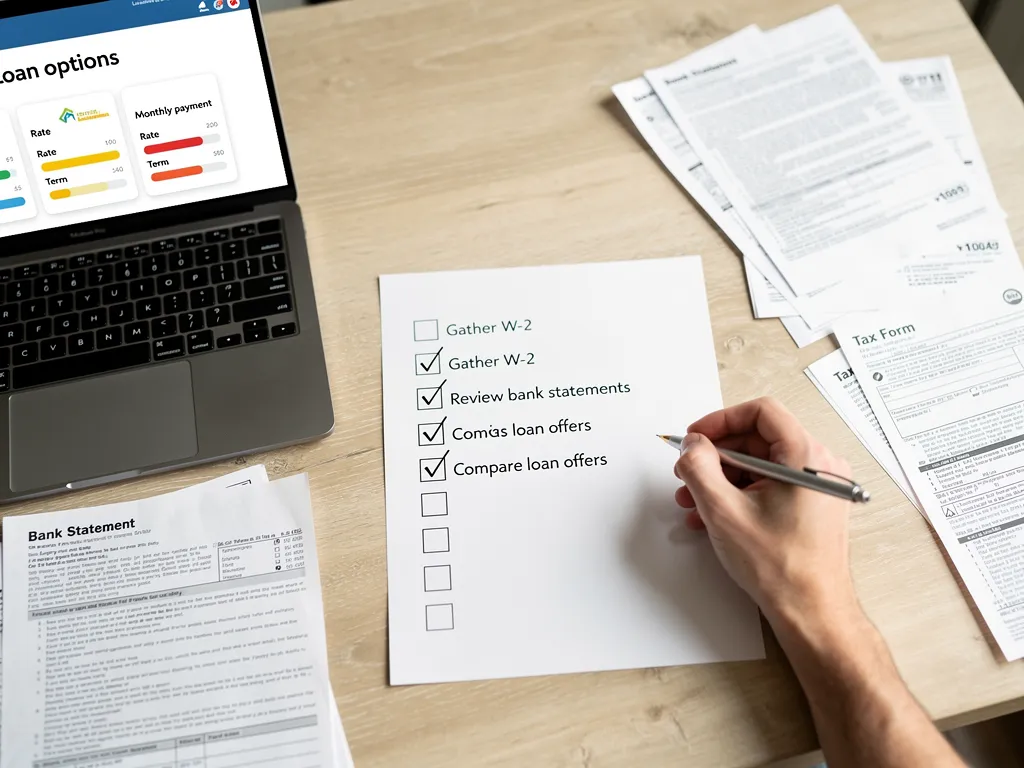
Ready to harness the power of loan comparison tools? Follow this proven process to maximize your results:
- Gather Your Financial Documents: Collect recent bank statements, tax returns, cash flow projections, and business credit reports.
- Know Your Business Profile: Accurately input your annual revenue, credit score, time in business, and loan purpose.
- Use Prequalification Features: Opt for soft credit pulls to see likely offers without impacting your credit score.
- Compare APR and Fees: Focus on APR, which includes interest and fees, to understand true cost.
- Simulate Repayment Schedules: Use tool features to visualize monthly or daily payment impacts on your cash flow.
- Evaluate Lender Credentials: Check for SBA approval, verified reviews, and transparency in fee disclosures.
- Rank Offers Using a Rubric: Weigh cost, funding speed, lender reliability, and flexibility based on your priorities.
- Make an Informed Decision: Choose the loan that aligns with your business goals and financial health.
Common Mistakes Business Owners Make When Comparing Loans
Don’t let these pitfalls derail your funding success:
- Ignoring Total Cost: Focusing only on interest rates without considering fees and APR.
- Overlooking Repayment Terms: Not matching repayment schedules to your cash flow cycles.
- Skipping Prequalification: Applying blindly and damaging your credit score unnecessarily.
- Failing to Verify Lender Legitimacy: Falling for scams or opaque offers without proper due diligence.
- Not Considering Collateral Risks: Committing assets without understanding consequences of default.
- Rushing Funding Speed Over Cost: Paying excessive fees for quick cash when alternatives exist.
How Your Business Credit Score Affects Your Loan Options

Your business credit score is a powerful gatekeeper in the lending world. Here’s how it shapes your financing landscape:
- Higher Scores (700+): Access to the best rates, longer terms, and traditional bank loans.
- Moderate Scores (600–699): Eligible for many online lenders and SBA loans but may face higher rates.
- Lower Scores (500–599): Limited options, often alternative lenders or products like MCAs and invoice factoring.
- Below 500: Financing is challenging; focus on building credit and exploring CDFI loans or revenue-based financing.
Improving your business credit profile through timely payments, reducing debt, and maintaining accurate records can open doors to better financing options.
How VIP Business Credit Helps You Navigate Funding Decisions

At VIP Business Credit, we don’t just connect you to lenders — we empower you with knowledge, strategy, and personalized coaching to secure the capital you deserve. Here’s how we stand out:
- Expert Business Credit Coaching: Build and optimize your credit profile to unlock premium loan offers.
- Access to Diverse Funding Sources: From SBA loans to alternative financing, we match you with the best fit.
- Transparent, Motivational Guidance: We break down complex terms into actionable insights so you can make bold decisions.
- Streamlined Application Support: We help you prepare documentation and navigate lender requirements efficiently.
- Ongoing Relationship: Beyond funding, we support your growth with credit monitoring and future financing strategies.
We also serve business owners throughout Ashburn, VA, Tysons, VA, Reston and Herndon, VA, Arlington, VA, and Fairfax County, VA. Contact us today at [email protected] or call (571) 248-3863 to start your journey toward smarter business financing.
Comparison Table: Major Small Business Loan Types
Key Takeaways
- Using a loan comparison tool saves time, reveals true costs, and empowers smarter funding decisions.
- Know the loan types available and match them to your business needs before comparing offers.
- Evaluate loans based on APR, term length, repayment structure, collateral, and funding speed—not just interest rates.
- Choose lenders that align with your credit profile, business stage, and urgency of funding.
- Follow a structured, step-by-step approach to using comparison tools for accurate, actionable insights.
- Avoid common mistakes like ignoring fees, skipping prequalification, and rushing into high-cost loans.
- Your business credit score heavily influences your loan options—work to improve it for better terms.
- VIP Business Credit offers expert coaching and access to diverse funding sources to help you win.
Frequently Asked Questions (FAQ)
What is the best small business loan comparison tool?
The best tool depends on your business size, industry, and credit profile. Look for platforms with broad lender coverage, transparent APR calculations, prequalification without hard credit pulls, and secure data practices. VIP Business Credit can guide you to trusted tools tailored to your needs.
How do I improve my chances of loan approval?
Maintain a strong business credit score, prepare accurate financial documents, choose loans that fit your profile, and use prequalification features to target lenders likely to approve you.
Can I compare loans if I have bad credit?
Yes. Many online and alternative lenders cater to lower credit scores. Comparison tools help you find these options and understand their costs and terms.
How long does it take to get funded?
Funding speed varies widely—from same-day for merchant cash advances and some online loans to several weeks for SBA loans. Use comparison tools to filter by funding speed based on your urgency.
Are there hidden fees I should watch for?
Always check for origination fees, prepayment penalties, maintenance fees, and other charges. APR includes many of these, so comparing APRs helps reveal hidden costs.
Ready to Take Control of Your Business Financing?
At VIP Business Credit, we're here to help you navigate the complex world of small business loans with confidence and clarity. Reach out today to start your journey toward smarter funding. We proudly serve Sterling, VA and the surrounding Greater Washington, D.C. region.
- 📞 Phone: (571) 248-3863
- ✉️ Email: [email protected]
- 📅 Consultation: Call (571) 248-3863 or schedule your free consultation
- 🌐 Website: https://vipbizfunds.com
- 🎯 FREE Business Funding Pre-Qualification Scan: Start your free scan
About The Author
[Lee Johnson](https://www.linkedin.com/in/passivereipros/) is the Co-Founder and CEO of VIP Business Credit and a powerhouse in business funding, real estate, and generational wealth building with over 25 years of experience. Based in Sterling, Virginia, Lee has helped hundreds of entrepreneurs and small business owners secure the capital they need to grow, scale, and build lasting financial legacies. He specializes in business credit coaching, alternative financing, and lender-ready credit profile development. Connect with Lee and the VIP Business Credit team at https://vipbizfunds.com or call (571) 248-3863.
Sources
- U.S. Small Business Administration - official program details, eligibility, and guarantee terms for 7(a) loans, 504 loans, and microloans.
- Consumer Financial Protection Bureau - guidance on small business lending disclosures and how APR reflects total borrowing cost.
- Federal Reserve Small Business Credit Survey - annual research on small business financing trends, including approval rates and financing sources by business profile.


