Construction Loans for Capital Projects and Equipment
Construction Loans for Capital Projects and Equipment
By *VIP Business Credit* Editorial Team Updated 2026-08-26
Construction business loans fund capital projects and equipment through options including term loans, equipment financing, and lines of credit tied to the business EIN. VIP Business Credit connects contractors to 1,000+ lenders nationwide, matching heavy equipment purchases, dozer or loader upgrades, and project cash-flow needs to lender-ready financing strategies optimized for the construction industry's unique demands.
Key Takeaways
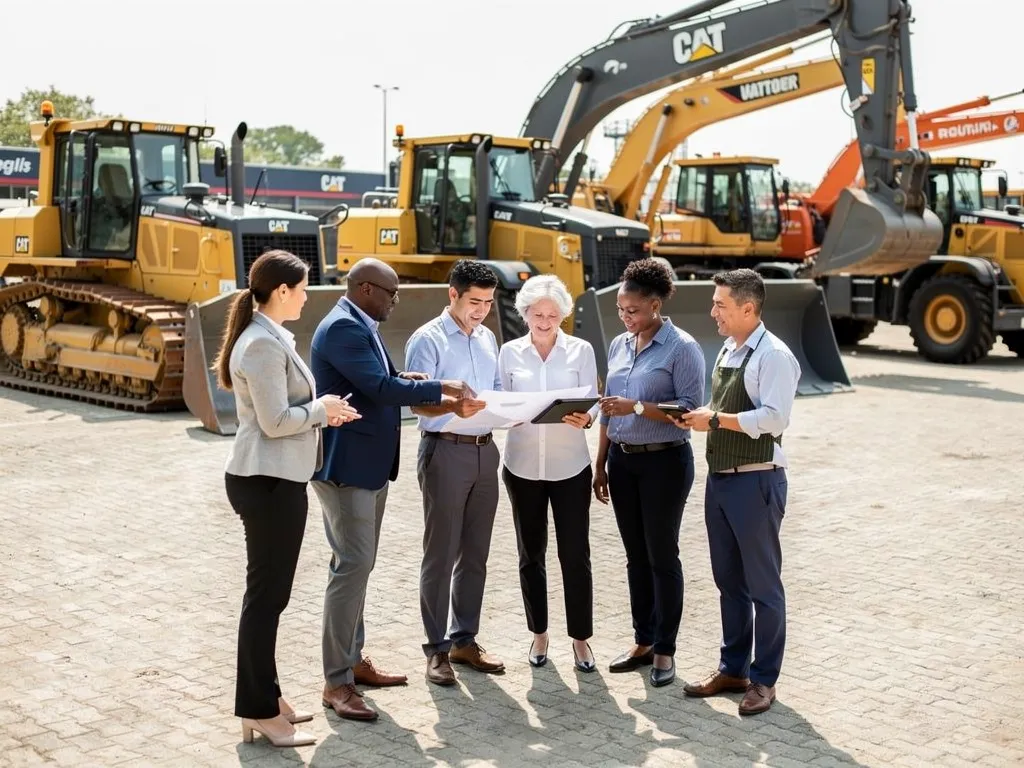
- Construction equipment financing preserves working capital for payroll, operations, and materials instead of large upfront purchases.
- VIP Business Credit connects contractors to over 1,000 national and local lenders for equipment financing solutions, including mobilization funding and capital project financing.
- Equipment loans enable contractors to bid on larger projects by upgrading to dozers, loaders, cranes, and other heavy machinery, with flexible draw schedules aligned to project milestones.
- Construction financing partners understand how change orders, retainage management, bonding, and surety requirements impact contractor cash flow and operations.
- Specialized contractor financing VA programs are available, tailored for regional compliance and industry standards.
- Commercial construction loans facilitate broader capital project financing needs with competitive terms and large lending pools.
What Do You Need Before Financing Begins?
Preparation determines whether a construction firm qualifies for strong terms or faces high rates. Contractors who enter lender conversations without building credit tied to the business EIN, rather than the owner's Social Security number, often face weaker offers or outright denial. Getting ready before applying protects personal assets and project timelines.
Four foundational steps include:
- Separate business identity from personal identity. Register the business under its own EIN and keep formation documents current, as lenders view a distinct legal entity as lower risk.
- Build a credit profile tied to the EIN. VIP Business Credit helps contractors establish credit under the company's tax ID, shielding personal liability as debt and equipment financing grow.
- Define the funding purpose clearly. Heavy equipment funding for an excavator or crane requires documentation distinct from working capital lines for payroll or material purchases.
- Match the business to the right lender pool. Through vipbizfunds.com, VIP Business Credit connects owners to a network of over 1,000 lenders, increasing chances of fit-for-purpose commercial construction financing.
What documents do lenders usually request?
Lenders typically request time in business, revenue history, existing debt obligations, and bonding or surety information before approving construction loans for capital projects and equipment. Equipment quotes and project contracts, including detailed AIA G702/G703 payment applications and project milestone schedules, help underwriters gauge repayment ability.
Why does business credit matter before seeking contractor financing?
A strong EIN-based profile signals lower risk and supports higher limits essential for contractor equipment loans and mobilization funding in construction. VIP Business Credit's core focus is guiding contractors toward high-limit loans and construction working capital lines while maintaining separation between personal and business liabilities.
How Do You Check Your Credit Position First?
A credit scan shows contractors exactly where their business stands before a lender sees an application. VIP Business Credit's scan reveals specific credit gaps tied to a construction companys profile, identifying issues that can delay approval or increase costs. This scan also lays out a clear roadmap for funding growth, including readiness for draw schedules and retainage management.
The process starts with a proprietary scoring tool that translates raw bureau data into lender-friendly insights. Contractors understand precisely why an application stalled previously and what improvements optimize future requests.
Why does credit review matter before buying equipment?
Even smaller projects often require leasing or purchasing heavy machinery like excavators or cranes. Applying for heavy equipment funding without knowing credit gaps risks denial or high-interest rates that erode profit margins. A clear credit picture upfront lets owners match the right financing product to their job scope and payment timing needs.
What steps should a contractor follow to review credit position?
- Run a detailed credit scan to identify existing credit gaps.
- Review the credit score in the context of underwriter expectations for construction loans and equipment financing.
- Compare the score and credit profile against lending program requirements, including those for commercial construction loans, construction working capital lines, and mobilization funding construction.
- Address flagged weaknesses prior to submitting any applications.
- Use the resulting roadmap to plan contractor financing in proper sequence and timing.
Following these steps sequentially helps contractors move faster through underwriting processes and secure stronger terms, aligning draw schedules with project milestones.
Which Construction Loan Options Fit Your Project?
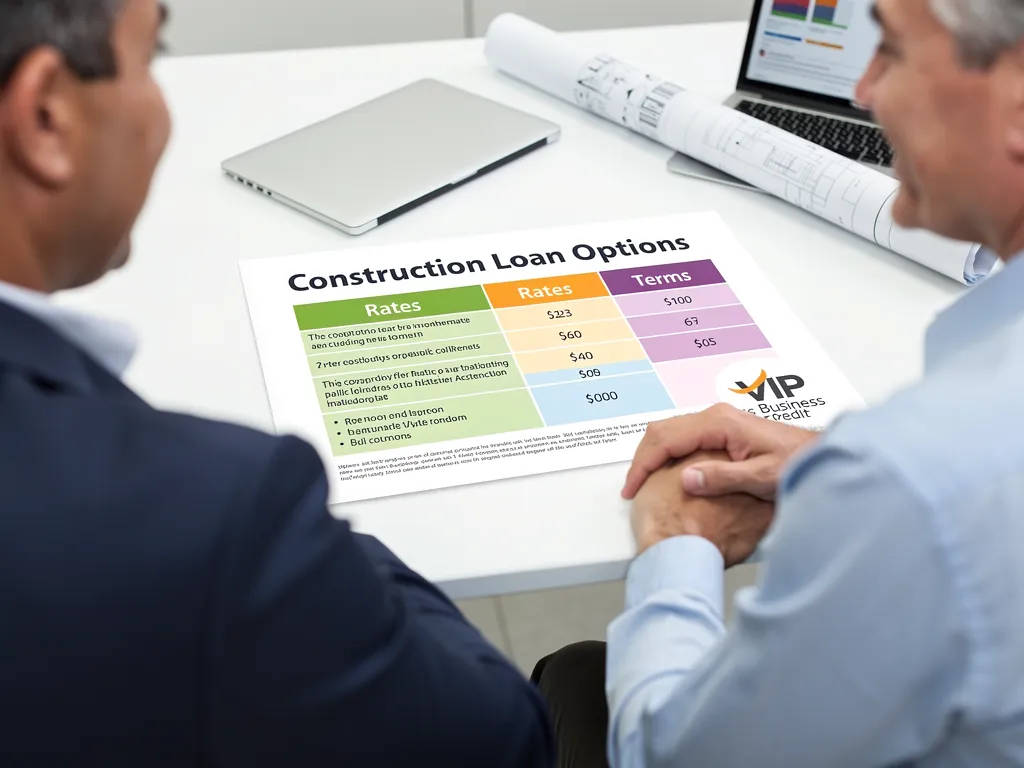
Loan size, project duration, and risk profile dictate the best financing structure. For instance, foundation-repair crews require different credit products than companies bidding on large commercial builds demanding mobilization funding construction. Commercial construction loans and capital project financing options often vary in size and feature interest rates between 4% and 12% APR, with repayment terms stretching up to 20 years to accommodate project cash flow cycles and retainage considerations.
An effective financing strategy incorporates detailed draw schedules aligned to contract milestones. Contractors frequently reference AIA G702/G703 payment applications to submit draw requests properly and ensure progress billing matches disbursed funds. Retainage management is critical; lenders recognize the common practice of withholding 5% to 10% of payments until project completion and structure financing accordingly.
Bonding and surety criteria represent another layer impacting loan eligibility. Contractors often must demonstrate bonding capacity, backed by surety companies, to secure financing, especially for large capital projects. This additional security can affect loan terms and limits.
Contractors rarely fit a single lender profile, so contractor financing VA and nationwide via VIP Business Credit connects owners to a wide lender network traditional banks, alternative providers, and specialized construction programs each matched to company stage, sector, and credit history. This ensures access to loans, equipment financing, and construction working capital lines tailored to business needs across project phases.
How do contractors know which loan programs they qualify for?
Structured pre-qualification processes categorize programs into immediate options, those requiring enhanced documentation, and longer-term eligibility expansion steps, guiding preparation and application strategy.
What loan terms should contractors compare before signing?
Carefully matching these terms with project billing cycles and milestone completions ensures payment obligations are met without cash flow interruptions.
Research & Industry Benchmarks
Research & Industry Benchmarks
The figures contractors use to evaluate financing offers come from standard industry practice rather than any single lender's marketing:
- Interest rates. Commercial construction loans and capital project financing typically carry rates between 4% and 12% APR, with the exact rate driven by credit profile, collateral, and loan structure rather than a flat industry number.
- Retainage. Owners and general contractors commonly withhold 5% to 10% of each payment until project completion, a standard practice that lenders factor into draw schedules and cash-flow planning.
- Payment applications. AIA G702/G703 forms are the industry-standard documentation contractors use to request draws and reconcile progress billing against disbursed funds, and lenders rely on them to verify milestone completion.
- Bonding and surety. Demonstrated bonding capacity, backed by a surety company, remains a common prerequisite for larger capital projects, since it signals a contractor's ability to complete the scope of work.
These benchmarks are why preparation matters: contractors who document bonding capacity, retainage impact, and draw schedules up front are positioned to compare offers accurately instead of guessing at what "competitive" terms look like.
Should You Finance, Lease, or Buy Equipment?
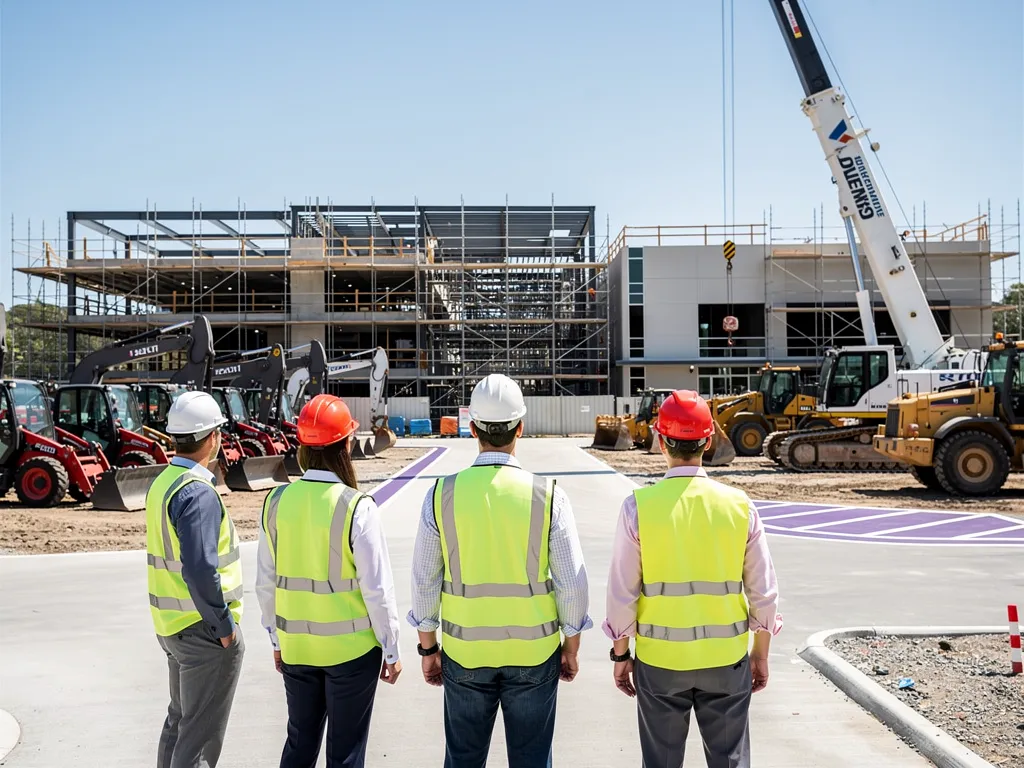
The best approach depends on project timelines, financial strength, and long-term objectives. Contractors bidding on short-term projects may prefer rental or leasing options, while firms expecting multi-year use of equipment benefit from ownership funded by capital project financing and heavy equipment funding loans.
Heavy machinery equipment leasing options, including excavators and cranes, offer flexible alternatives with predictable monthly payments and reduced maintenance responsibilities. Contractor equipment loans, on the other hand, provide asset acquisition with ownership benefits and potential tax advantages.
Is leasing or buying equipment better for a construction business?
Leasing is ideal for defined project windows, mitigating depreciation risk and capital outlay. Purchasing via construction loans builds equity useful for future projects and may improve collateral base. Combining leasing specialized attachments with purchased core fleet equipment often optimizes operational flexibility.
What role does equipment credit play in this decision?
Equipment credit lines serve as a hybrid method, enabling immediate acquisition with ongoing credit building and tax advantages. These lines deliver flexibility, letting contractors scale equipment usage with demand while managing cash flow effectively.
Key considerations include:
- Project length: Leasing favors short-term jobs; ownership suits long-term utilization.
- Cash reserves: Financing options that spread costs maintain working capital for other needs.
- Credit-building goals: Business credit tied to equipment credit lines strengthens company profiles and shields personal assets.
- Equipment lifespan: Long-use machinery justifies purchase; rapidly advancing technologies suggest leasing.
No single path suits all contractors. Optimal strategies blend various financing and leasing options to align with project milestones, cash flow, and growth.
How Do You Finance Fleets and Heavy Machinery?
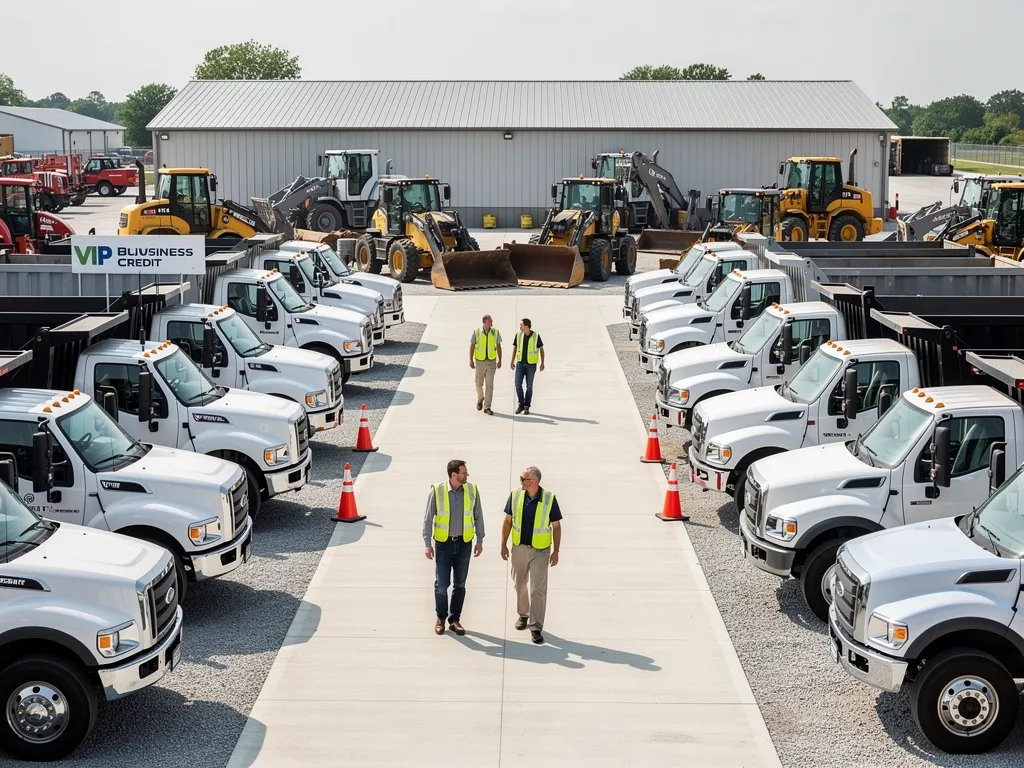
Financing strategies split between fleet credit lines for vehicles and dedicated heavy equipment funding for major machinery. Fleet credit lines finance trucks, vans, and cars essential for daily operations, while heavy equipment funding covers dozers, loaders, cranes, and similar assets integral to project execution.
Fleet credit lines enable multi-vehicle financing, building business credit and securing tax deductions on vehicle expenses. These programs account for construction-specific vehicle uses rather than generic consumer loan terms.
What's the process for financing a construction fleet?
- Identify fleet gaps. Determine which vehicles need replacement or addition this fiscal year.
- Match financing to vehicle types. Engage specialists who understand construction fleet needs versus generic auto lenders.
- Confirm credit-building provisions. Ensure payments contribute to business credit files, not solely personal credit.
- Document vehicle use for deductions. Maintain logs to substantiate tax treatments.
How does heavy equipment financing differ from fleet financing?
Heavy machinery financing targets larger, project-specific assets integral to bid capacity and site productivity. Financing dozers, loaders, and cranes typically correlates with new project mobilization funding and may involve milestone financing aligned with project cash flows. Refinancing existing equipment can also release working capital for operational expenses. Unlike fleet financing, heavy equipment funding often involves payment schedules synchronized with project phases and progress payments.
Choosing between fleet and heavy equipment financing depends on contract demands: more transportation or heavier on-site machinery.
How Do You Apply and Get Approved Fast?

Speedy approval requires complete documentation and access to a lender network aligned with construction financing timelines. VIP Business Credit connects contractors to 1,000+ national and local lenders, matching projects with lenders skilled in mobilization funding construction, contractor equipment loans, heavy equipment funding, and construction working capital lines.
Successful applicants follow a methodical sequence:
- Gather core documents. Tax returns, bank statements, up-to-date bonding profiles, project contracts (including AIA G702/G703 forms), and equipment purchase quotes.
- Consult a local Business Credit Advisor. Advisors provide concierge service, identify documentation gaps, and ensure project funding strategies align with lender expectations.
- Match project needs to lender programs. Advisors narrow lender selection based on business size, equipment needs, creditworthiness, and fit within commercial construction loans or contractor financing VA options.
- Submit a complete application package. Avoid delays caused by incomplete files.
- Confirm loan terms. Review interest rates, repayment terms, retainage schedules, and draw payment timelines to ensure alignment with project milestones.
How long does approval actually take?
Some loan programs approve within two business days after complete document submission. Preparation quality highly influences timeline complete, well-organized packages accelerate funding needed for timely mobilization.
Why work with an advisor instead of applying directly?
Direct applications risk mismatches with lender programs, wasting time and increasing credit inquiries. Advisors streamline options, protecting credit profiles and guiding contractors toward suitable commercial construction financing products.
How Do You Manage Cash Flow After Funding?

Effective cash flow management is crucial after securing construction loans or contractor financing. Project payment timing, retainage releases, change orders, and mobilization funding impacts affect working capital, payroll, and material procurement.
Pay-when-paid clauses often cause payment delays, linking contractor payments to owner or general contractor receipts. Lenders and advisors emphasize planning to mitigate these risks through careful cash reserves and milestone-based draw coordination.
What steps keep cash flow stable after financing closes?
- Map payment triggers. Understand contract clauses and retainage that might delay payments.
- Coordinate equipment delivery with project phases. Align heavy equipment funding draw schedules and delivery dates to avoid idle assets or crews.
- Maintain a working capital reserve. Set aside funds for labor, fuel, and materials that fall outside billing cycles.
- Track draws and progress. Regularly reconcile loan disbursements to completed milestones and AIA payment applications.
- Review lender terms periodically. Ensure repayment schedules and retainage releases align with current project realities.
Why does equipment timing matter so much for cash flow?
Equipment delays cause idle crews, increasing labor costs without revenue. Proper scheduling converts equipment financing from a reactive cost into a strategic cash flow tool.
What Mistakes Should You Avoid Along the Way?

Common errors include rushing financing without strategy, building credit under personal SSNs instead of EINs, skipping pre-qualification, and confusing loan types. These mistakes inflate costs and prolong project timelines.
Building credit under the business EIN separates personal and business liabilities and improves lender confidence for construction loans and equipment financing.
Why does skipping pre-qualification cause problems?
Blind applications often target unsuitable programs, result in denials, and generate unnecessary credit inquiries. Pre-qualification identifies eligible options and preparation steps, streamlining approvals.
Is a construction business loan the same as a commercial real estate loan?
No. Construction business loans finance equipment, payroll, and operational costs. Commercial real estate loans finance property acquisition, rehabilitation, or construction. Misunderstanding this delays mobilization funding construction and equipment procurement.
Other pitfalls to avoid include:
- Building credit on personal SSN instead of company EIN
- Applying for financing without pre-qualification
- Confusing construction business loans with commercial real estate loans
- Overlooking loan repayment schedules and fund use restrictions
FAQ
What documents do lenders request for construction business loans?
Lenders require time in business, revenue history, existing debt, bonding and surety documentation, equipment quotes, and project contracts often including detailed AIA G702/G703 payment applications to assess repayment capability.
Why does EIN-based business credit matter for contractor financing?
A strong EIN-based credit profile lowers perceived risk and enables higher loan limits for construction loans for capital projects and equipment, contractor equipment loans, and construction working capital lines.
How does VIP Business Credit connect contractors with financing options?
VIP Business Credit serves contractors in Northern Virginia and the Greater Washington, DC area, connecting them to over 1,000 lenders. The proprietary scoring tool identifies credit gaps and produces a strategic funding roadmap tuned to mobilization funding construction. Find more about our services at VIP Business Credit Services.
How much does construction equipment financing typically cost?
Rates generally fall between 4% and 12% APR, depending on the contractor's credit profile, the loan structure, and whether the financing is secured by the equipment itself. Contractors who review their credit position before applying tend to qualify for terms toward the lower end of that range.
Can a newer construction business qualify for equipment or capital project financing?
Newer contractors can qualify, though lenders weigh time in business, revenue history, and bonding capacity more heavily when the company is young. Building credit under the business EIN early and working with an advisor to match the right lender program improves approval odds even for firms with limited track records.
Conclusion
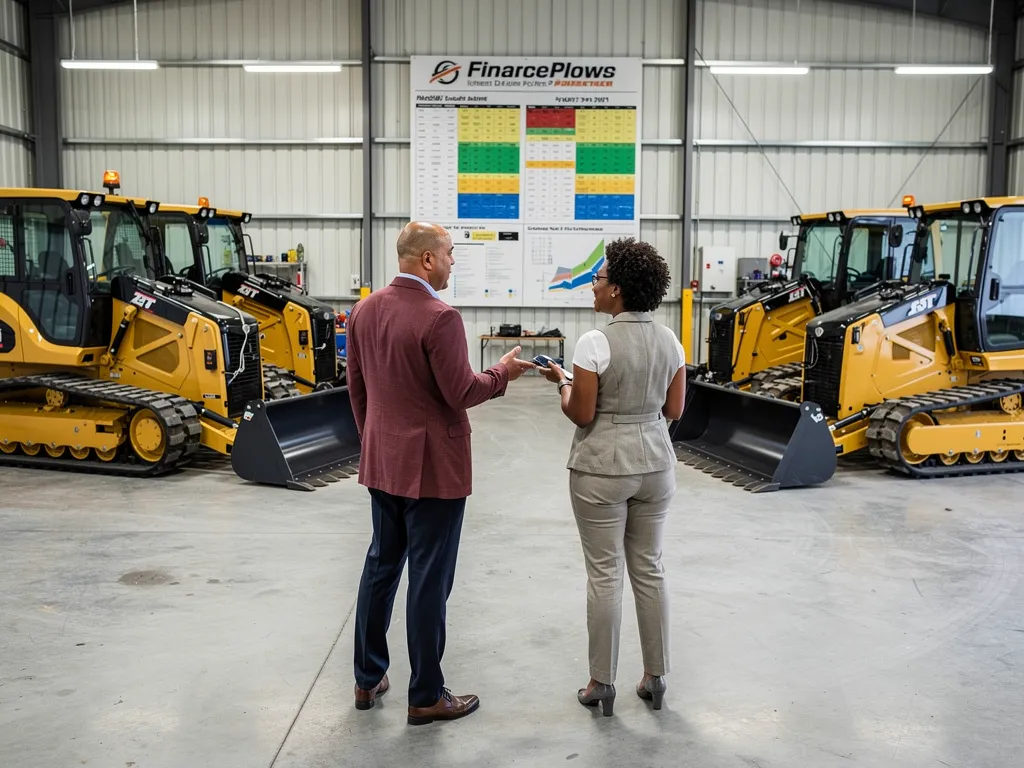
Securing the right construction loan requires aligning capital needsequipment acquisition, labor funding, or project mobilizationwith lenders who understand construction cash flow, bonding, and equipment scheduling. Building a strong, EIN-based credit profile and working with advisors linked to an extensive lender network enhances ability to access competitive terms and sizable financing. By integrating draw schedules, retainage management, and project milestone financing into funding strategies, contractors position themselves for sustainable growth and operational success. A strong business credit profile is what makes tailored construction loans for capital projects and equipment accessible in the first place.
For detailed information on costs and options, explore our commercial funding program pricing to choose the best fit for your construction financing needs.
About the Author
Lee Johnson is the Co-Founder and CEO of VIP Business Credit, a seasoned real estate investor, business growth strategist, and a Master Certified Professional Coach. He holds a Bachelor of Science degree from Fairleigh Dickinson University and an MBA from the University of Phoenix. With over 25 years of experience, Lee has built a real estate investment portfolio exceeding 1,700 units valued at approximately $254 million across multiple U.S. markets. His mission is to help small business owners achieve financial freedom by establishing strong business credit and accessing favorable loan terms through VIP Business Credits 12-month Fundability coaching program, focusing on commercial construction loans and contractor financing VA opportunities.
Get in Touch with VIP Business Credit
VIP Business Credit proudly serves Sterling, VA and the surrounding Northern Virginia and Greater Washington, DC area, including contractors and construction businesses in Ashburn, Tysons, Reston and Herndon, Arlington, and Fairfax County.
- 📞 Phone: (571) 248-3863
- ✉️ Email: [email protected]
- 📅 Booking: Business Financial Health Strategy Call
- 🌐 Website: vipbizfunds.com


