Construction Loans: Financing Equipment and Capital
Construction Loans: Financing Equipment and Capital
Construction business loans, equipment financing, and working capital solutions connect contractors to funding for machinery, materials, and payroll gaps between milestones. VIP Business Credit's pre-qualification scan matches contractors to funding options, drawing from 1,000+ national and local lenders while protecting owners' personal credit through EIN-based funding.
Key Takeaways
- VIP Business Credit connects entrepreneurs to over 1,000 national and local lenders for equipment financing solutions.
- Equipment loans fund machinery, vehicles, and software upgrades ranging from $10,000 to $500,000 for Northern Virginia businesses.
- Same-day financing decisions accelerate equipment purchases without requiring extensive financial statements for qualifying businesses.
Why Do Construction Businesses Need Flexible Capital?
Construction businesses need flexible capital because payroll, materials, and equipment repairs rarely wait for a client's payment schedule. A single delayed draw can freeze a crew mid-project, and machinery breakdowns don't pause on their own timeline. Contractors who lack reserves between project milestones face a familiar squeeze: bills come due while invoices sit unpaid.
Cash flow gaps hit construction harder than most industries because projects are lumpy by nature. One month brings a surge of income after a milestone payment; the next month brings none. Managing that cycle well is what separates a business that scales from one that stalls. Controlling cash flow puts working capital in hand exactly when it's needed, not weeks later when a missed payroll or a stalled job site has already caused damage.
Equipment adds another layer of pressure. A cracked hydraulic line or a worn-out transmission doesn't schedule itself around a project timeline, and running with outdated machinery slows every crew relying on it. Heavy equipment funding addresses that gap directly, giving contractors access to newer, more reliable machines without draining cash reserves meant for materials or wages.
How Does Contractor Financing Fit Into Project Timelines?
Contractor financing bridges the space between winning a bid and collecting the first milestone payment. It covers upfront costs — permits, materials, subcontractor deposits — so work can start before revenue arrives. Structured well, it keeps a project moving instead of waiting on the client's payment cycle.
Are Construction Loans Only for Large Projects?
No. Construction loans serve businesses of every size, from a single crew replacing a fleet vehicle to a firm scaling across multiple job sites. VIP Business Credit connects contractors to a network exceeding 1,000 national. Local lenders, matching financing structures to the scope and stage of the project at hand. That range means smaller trades and growing firms alike find options built for their actual capital needs, not a one-size formula.

What Is Construction Equipment Financing, Exactly?
A loan or lease covering excavators, bulldozers, cranes, and other job-site machinery defines heavy equipment funding at its core. Contractors avoid a single cash purchase and instead access the tools their crews need through structured payments. This arrangement matters most between project milestones, when cash reserves run thin but payroll and material costs keep arriving.
The mechanics stay straightforward. A financing company or lender covers the cost of the equipment. The contracting business repays that amount over an agreed schedule. Contractors get to run the machine, complete the job, and generate revenue while paying it off gradually rather than draining working capital in one shot.
VIP Business Credit structures equipment credit lines around this same logic, but with added benefits built for growing contracting businesses. Equipment gets deployed immediately, credit builds with every on-time payment, and the payments themselves typically count as deductible business expenses. That combination helps a specialty trade or general contracting firm strengthen its financial standing while the equipment is already earning money on active sites.
How does equipment financing differ from a standard business loan?
Standard construction loans often fund broader operating needs, project costs, or working capital gaps. Equipment financing, by contrast, ties directly to a specific asset — the machine itself frequently serves as collateral. This structure tends to simplify approval, since the equipment's value backs the financing.
Who provides construction equipment financing?
Options range widely. VIP Business Credit connects contractors to a network spanning traditional banks, alternative finance providers, and specialized programs, giving each business access to terms matched to its equipment type and risk profile. This breadth matters because a paving company's needs look nothing like a plumbing contractor's. Contractor financing should reflect that difference rather than force a one-size-fits-all product onto every trade.
How Do Construction Loans Differ From Equipment Loans?
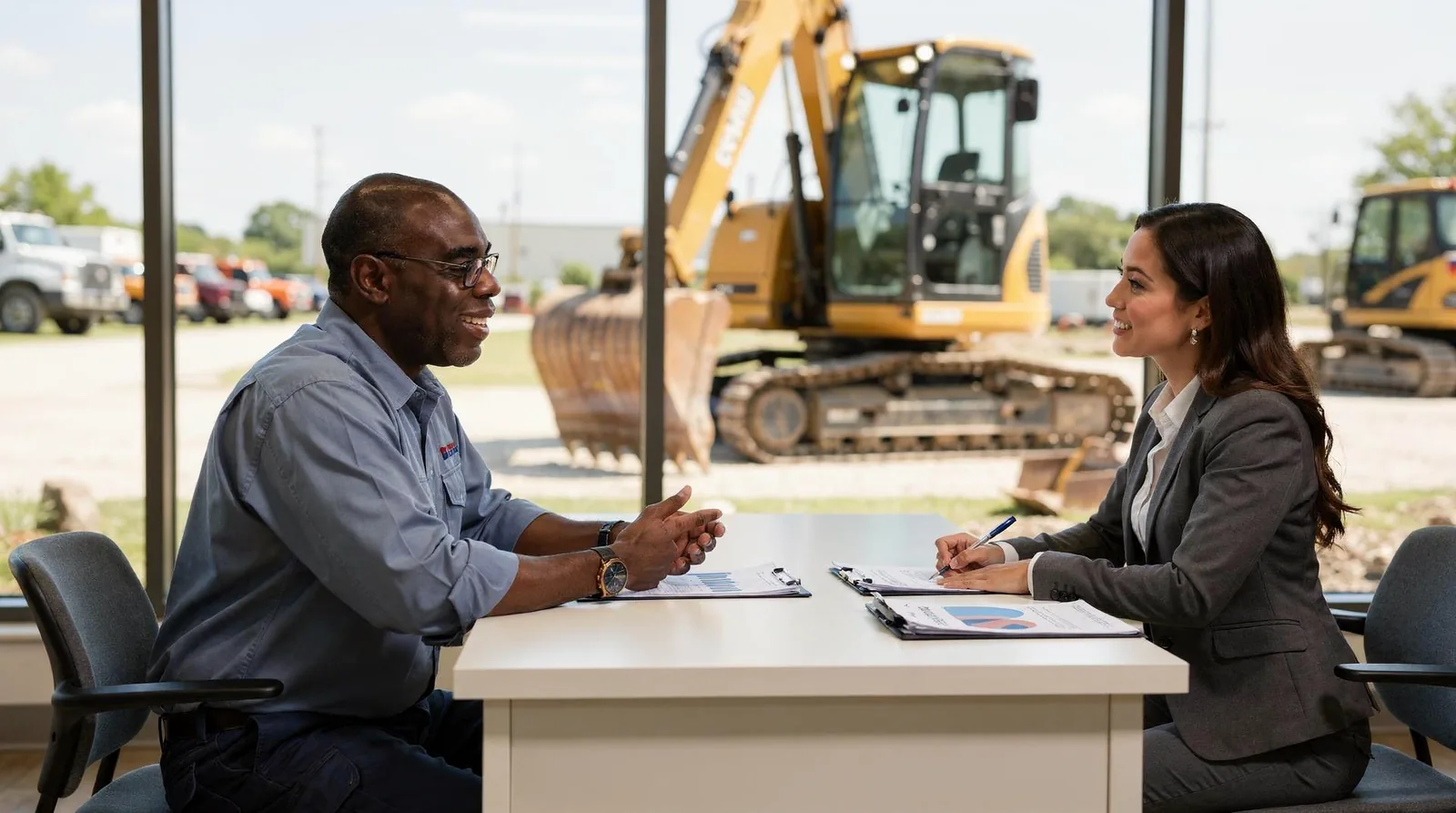
Construction loans and equipment loans solve two different cash flow problems on a jobsite. A construction loan typically funds material purchases, payroll between project milestones, and general working capital needs. Equipment loans, by contrast, exist to put specific machinery into a contractor's hands without draining cash reserves for a large one-time payment.
The distinction matters most at the moment of purchase. Heavy equipment funding replaces a lump-sum outlay with a structured payment plan. A contractor bidding on a new job doesn't have to drain the bank account to buy an excavator or a skid steer. Monthly payments stay predictable and are built to match a business's budget. The machinery itself starts generating revenue right away.
Which One Fits a Growing Contracting Business?
Most contractors need both tools working together, not one instead of the other. A construction loan covers the operational gap between finishing one phase and getting paid for it. Equipment financing handles the capital equipment that makes the work possible in the first place.
Does Contractor Financing Affect Personal Credit?
Contractor financing structured correctly protects personal assets by building credit under the company's own identity. VIP Business Credit guides construction business owners toward credit tied to the company's EIN rather than the owner's Social Security number, separating personal liability from business obligations. For contractors across Northern Virginia and the Greater Washington, DC region, this EIN-based approach strengthens future loan applications and keeps personal finances out of the equation when a project runs long or a payment gets delayed.
What Types of Heavy Equipment Funding Exist?
Heavy equipment funding covers several distinct paths, each suited to a different stage of a construction business. A single financing application can cover amounts from $10,000 to an unspecified maximum, giving contractors flexibility whether they need one excavator or a full yard of machinery. Understanding the differences between these options helps a business owner choose the right fit instead of settling for whatever a single lender offers.
What's the difference between equipment loans and fleet credit lines?
Equipment loans typically fund a specific purchase, like a skid steer or crane, with fixed payments tied to that asset. Fleet credit lines work differently. They finance multiple vehicles at once, help a contractor build business credit over time, and lock in tax deductions tied to fleet ownership. Fleet specialists structure these deals around trucks, vans, and cars, which makes this option better suited to businesses scaling their transportation or hauling capacity rather than buying a single machine.
Which lenders offer heavy equipment funding programs?
Contractors are not limited to one bank or one type of lender. VIP Business Credit connects businesses to a network spanning traditional banks, alternative finance providers, and specialized programs built specifically for equipment purchases. That range matters because a startup contractor and an established excavation firm rarely qualify for the same products.
Access to over 1,000 national and local lenders means more paths to approval, not fewer hurdles. Common categories include:
- Term equipment loans for a single, defined machinery purchase
- Fleet credit lines for multiple vehicles under one structured agreement
- Alternative financing programs designed for newer or higher-risk contracting businesses
- Specialized bank programs offering lower rates for established operations with stronger credit files
Matching the right lender to the right project stage protects working capital and keeps payroll funded between milestones.
How Does Contractor Financing Support Cash Flow?
Contractor financing closes the gap between project costs and client payments, keeping payroll and material purchases funded on schedule. Construction businesses often wait weeks or months between milestone payments, and covering wages, supplies, and equipment repairs during that gap strains even a profitable company. Structured funding gives contractors working capital exactly when a job demands it, not after a cash shortfall has already stalled the crew.
Cash flow control shapes whether a construction business can take on new work or turns it away. A steady capital position lets a contractor bid on larger projects, hire additional crews, and purchase materials in bulk without draining reserves. Strong cash flow management supports growth directly. A business without accessible working capital can't act on opportunities the moment they appear.
What Happens When Equipment Breaks Down Mid-Project?
Equipment failure on an active job site creates an immediate cost problem. An equipment loan can fund new machinery, quick repairs, or full replacements, giving a contractor the resources needed to stay competitive rather than losing days to downtime.
Can Contractors Cover Repair Costs Without Draining Reserves?
Many contractors can't pay for major machinery repairs out of pocket without disrupting other obligations. Businesses approved for heavy equipment funding or repair-specific loans can cover those costs while preserving cash for payroll and materials.
Financing options that support construction cash flow typically address:
- Payroll gaps between milestone payments and project completion
- Material purchasing for upcoming phases of work
- Equipment repairs or replacement when machinery fails mid-project
- Working capital reserves for slow-payment periods
Together, these tools reduce the risk that a single delayed payment or equipment breakdown derails an entire project timeline, keeping contractors focused on the work in front of them.
How Can a Capital-Ready Score Improve Approval Odds?
A capital-ready score raises approval odds by showing a lender exactly where a contracting business stands before that lender ever opens the file. VIP Business Credit's proprietary scoring tool tells contractors how underwriters actually view their business. Pinpoints the credit gaps working against them. Skip this step, and a contractor risks applying for construction loans or heavy equipment funding with weaknesses nobody flagged in advance. The kind of oversight that turns a promising application into a quiet denial.
The scoring process behind this tool does more than assign a number. It reveals specific credit gaps and hands the contractor a roadmap for closing them before the next funding request goes out. That roadmap typically points to issues such as:
- Thin or missing trade credit history tied to the business's EIN
- Inconsistent business identity data across bureaus and directories
- Utilization patterns on existing revolving accounts
- Missing vendor accounts that build reporting history over time
What Does a Credit Gap Analysis Actually Show a Contractor?
A gap analysis shows a contractor which weaknesses lenders see first — before the contractor ever submits paperwork. It compares the business's current credit profile against what underwriters expect to see for approval on equipment and working-capital products. This gives a specialty trade or general contractor a chance to fix problems ahead of time rather than react to a denial.
Who Reviews the Score Results?
VIP Business Credit runs on a lean team of three employees, which keeps every contractor's file under close, personal review rather than passed between departments. That structure supports concierge-level attention from the firm's Sterling, Virginia office at 21000 Southbank St Ste 106-380. Local advisors translate the score into a practical funding strategy for contractor financing.
Which Construction Business Situations Fit Best?
Certain business situations call for outside capital more urgently than others. General contractors bidding on larger jobs, specialty trade firms scaling their crews, and construction businesses facing a payroll gap between project milestones all face a common problem: access to the right equipment. Without it, projects stall before they start.
Timing matters as much as funding amount. Access to proper machinery helps a contractor start work promptly, manage a job to its exact specifications, and finish on schedule. Missing any one of these steps risks late penalties, damaged client relationships, or lost future bids.
When Does a Contractor Need Financing Most?
Financing becomes most useful when a business wins a contract that exceeds its current equipment capacity. It also matters when payroll comes due before a client's milestone payment arrives. Seasonal trades often need working capital heading into a busy quarter, before revenue from that quarter has landed.
Several situations tend to call for outside capital:
- Winning a project that requires equipment the business doesn't currently own
- Bridging payroll between milestone payments on a long-term job
- Replacing aging machinery before it causes downtime
- Expanding into a new service line or geographic market
- Covering material costs upfront on fixed-price contracts
Construction loans, contractor financing, and heavy equipment funding each address a different piece of this puzzle, and matching the right tool to the right situation is where strategy matters most.
How Should a Business Choose the Right Financing Fit?
No two construction companies carry the same risk profile, so no single loan product fits every business. VIP Business Credit connects contractors with financing strategies matched to their stage, sector, and risk profile through a broad lender network. Local Business Credit Advisors work directly with owners, offering concierge-level guidance to weigh options before committing to a specific path.
What Should Contractors Do Next?
Three moves separate contractors who get funded from those stuck waiting on bank paperwork: matching the financing type to the actual need, building a lender relationship before cash gets tight, and separating personal credit from business credit as early as possible. Delaying any of these steps costs contractors options later, when a payroll deadline or a broken excavator leaves no room to shop rates.
Start with the purpose of the funds. Construction loans suit large-scale project costs and phased draws tied to milestones. Contractor financing covers the gap between material purchases, payroll, and client payments. Heavy equipment funding applies when a business needs to acquire or replace machinery without draining working capital in one lump sum. Breaking new ground on a project costs less when a business avoids a single large payment and instead spreads it through structured financing built for equipment purchases.
How does a contractor choose the right funding partner?
A strong partner offers more than one product and more than one lender. VIP Business Credit connects contractors to over 1,000 national and local lenders, spanning traditional banks, alternative finance providers, and specialized construction programs. That range matters because a startup crew. An established contractor with 15 years of jobs behind them qualify for very different terms.
Where can Northern Virginia contractors get hands-on guidance?
VIP Business Credit works with entrepreneurs across Northern Virginia. The Greater Washington, DC region, helping them build credit tied to the business's EIN rather than the owner's Social Security number. The Sterling, Virginia office at 21000 Southbank St Ste 106-380 anchors that regional advisory work. Digital service reaches contractors nationwide.
FAQ
How fast can contractors get a financing decision?
VIP Business Credit's pre-qualification scan matches contractors to funding options quickly, drawing from over 1,000 national and local lenders for equipment and working capital needs.
What can equipment financing actually cover?
Equipment loans fund machinery, vehicles, and software upgrades starting at $10,000, helping Northern Virginia contractors replace worn-out tools without draining cash reserves.
Does financing protect a contractor's personal credit?
Yes, VIP Business Credit structures funding through EIN-based options, connecting contractors to 1,000+ lenders while keeping the owner's personal credit separate from business financing.
Conclusion
In closing, securing the right construction equipment financing requires matching your business's growth stage and cash flow needs with lenders who understand your industry's demands. By building a strong EIN-based business credit profile and understanding how underwriters evaluate construction ventures, you position your company to access capital on better terms and protect your personal assets. The path forward combines strategic credit development with access to the right lending partners—a combination that transforms equipment acquisition from a financial burden into a competitive advantage for your business.
About The Author
Lee Johnson is the Founder of VIP Business Credit, a seasoned Real Estate Investor, Business Growth Strategist, and Master Certified Professional Coach. Bringing over 25 years of experience in business finance and credit strategy, Lee specializes in guiding entrepreneurs to build fundable, lender-ready business credit profiles tied to an EIN rather than personal SSNs, separating business and personal liabilities.
Contact VIP Business Credit
- Phone: (571) 248-3863
- Email: [email protected]
- Strategy Session: Schedule A Business Financial Health Strategy Call


