Capital Ready Foundations: How to Get Loan Ready In Business
Capital Ready Foundations: How to Get Loan Ready In Business
Becoming loan ready requires establishing EIN-based business credit separate from personal credit. VIP Business Credit helps entrepreneurs improve Capital-Ready Scores across 125 lender-reviewed factors. Consistent business identity data, active trade credit lines, and strong bureau reporting habits signal lower risk to underwriters. The process protects personal assets while unlocking access to 1,000+ lending options.
Key Takeaways
- Separating business credit from personal credit protects personal assets while unlocking access to over 1,000 lending options.
- Consistent business identity data, active trade credit lines, and strong bureau reporting signal lower risk to underwriters.
- A pre-qualification checklist reveals credit gaps before a formal application triggers unnecessary credit inquiries.
- Building EIN-based credit requires obtaining an EIN, registering with Dun & Bradstreet, and opening vendor accounts that report.
What does it mean to be capital ready?
Being capital ready means a business can qualify for funding using its EIN rather than the owner's SSN. This separation protects personal assets while positioning the company for lender approval. VIP Business Credit helps entrepreneurs across Northern Virginia and the Greater Washington, DC region build EIN-based business credit, protect personal assets, and access funding to grow faster.
The Capital-Ready Framework is a step-by-step process to improve a company's readiness for lender review. Business owners who skip this preparation lose access to programs they could otherwise qualify for immediately.
How does a business know if it is capital-ready?
A pre-qualification checklist helps owners understand which programs they may be eligible for immediately. The workflow reveals gaps before a formal application wastes time and triggers unnecessary credit inquiries. Follow these steps to assess readiness:
- Confirm the business has a verifiable EIN and consistent identity data across all registrations.
- Review existing trade credit lines and bureau reporting history.
- Run a pre-qualification workflow to identify eligible programs without impacting personal credit.
- Address any gaps in business credit before submitting a full lender application.
What happens when a business is not capital-ready?
Owners who apply without preparation face denials that damage future approval odds. Lenders review the business entity, not the individual, so weak EIN-based credit signals create immediate rejection risk. The capital-ready standard requires consistent identity data, established trade lines, and clean bureau reporting before any application moves forward.
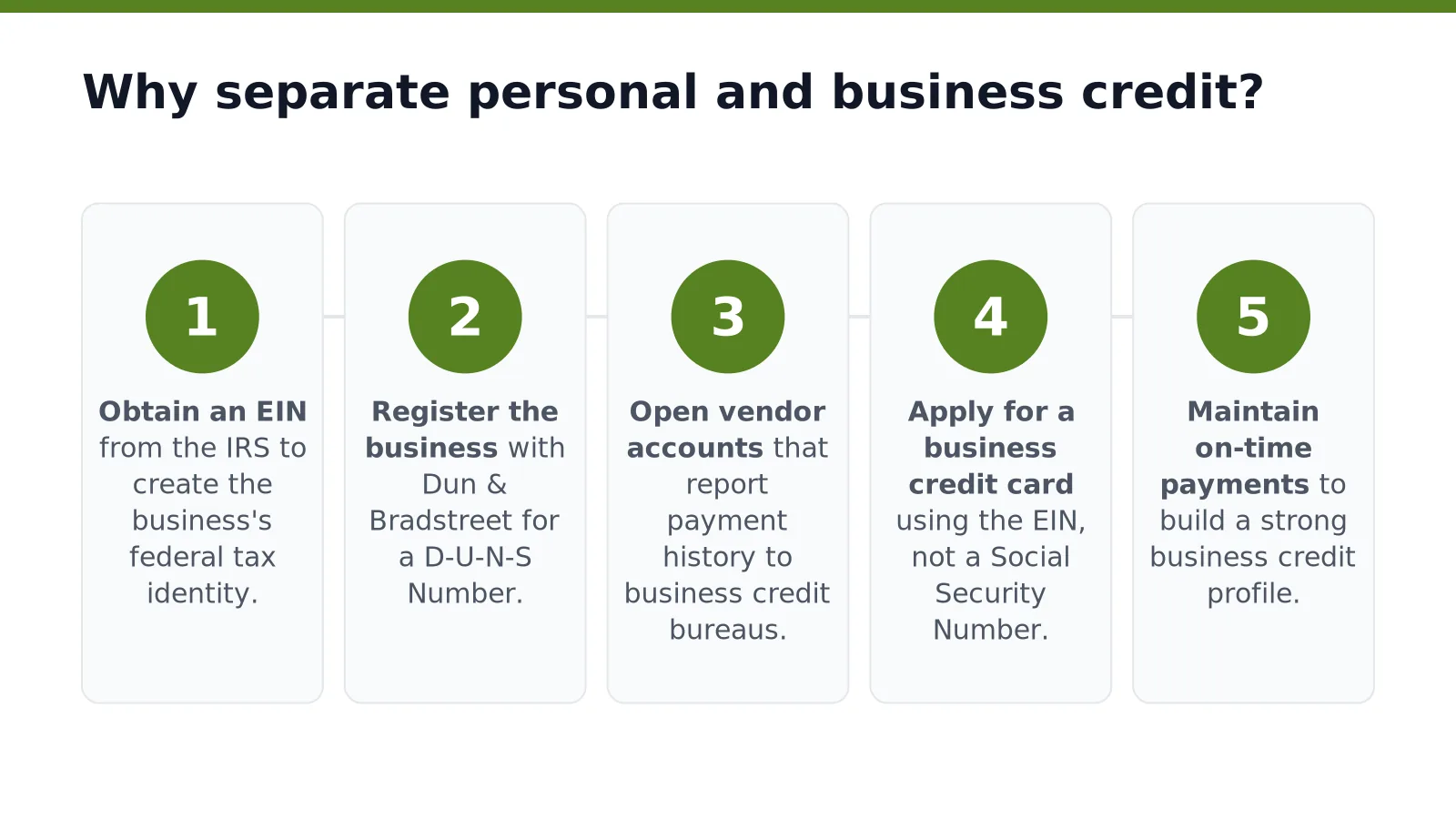
Why separate personal and business credit?
Separating personal and business credit shields an owner's personal assets from company liabilities. Business credit built under an IRS EIN application (EIN) creates a firewall that keeps business debt off personal credit reports.
How does EIN-based credit protect personal assets?
When a business borrows using its EIN, the obligation belongs to the company. Personal savings, home equity, and individual credit scores remain untouched if the business faces financial difficulty. VIP Business Credit helps entrepreneurs across Northern Virginia and the Greater Washington, DC region build EIN-based business credit, protect personal assets, and access funding to grow faster. The separation means a business setback does not become a personal financial crisis.
Why do lenders prefer businesses with separate credit profiles?
Lenders, card issuers, and vendors view businesses with established EIN-based credit as lower risk. A company that stands on its own credit history demonstrates operational maturity. This perception opens doors to larger credit lines and better terms. The company's core focus includes establishing credit tied to the company's EIN rather than the owner's SSN, a strategy that positions the business as a distinct borrowing entity. Building separate credit follows a clear sequence:
- Obtain an EIN from the IRS to create the business's federal tax identity.
- Register the business with Dun & Bradstreet for a D-U-N-S Number.
- Open vendor accounts that report payment history to business credit bureaus.
- Apply for a business credit card using the EIN, not a Social Security Number.
- Maintain on-time payments to build a strong business credit profile.
The result is a capital-ready business that qualifies for financing on its own merits. Owners preserve personal borrowing capacity for mortgages and other individual needs while the company accesses the capital required for growth.

What is your pre-qualification checklist?
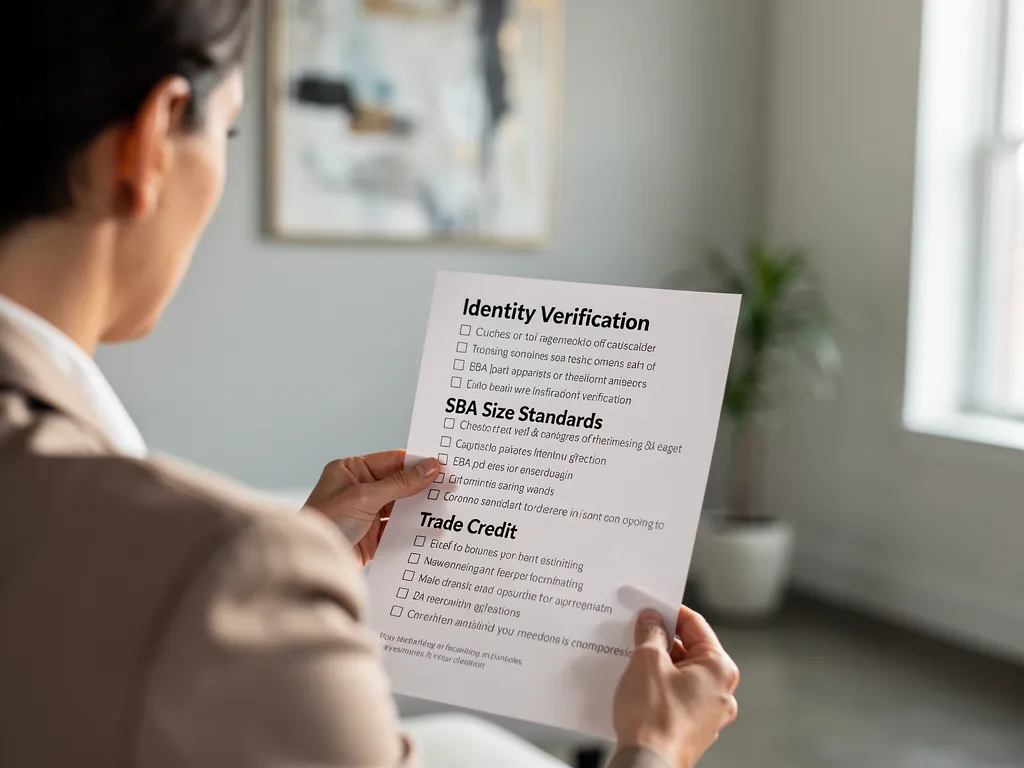
A pre-qualification checklist is a structured review of the business data points lenders evaluate before approving financing. The checklist confirms the business presents as a lower-risk borrower across identity, eligibility, and credit history.
What belongs on a capital-ready checklist?
A pre-qualification checklist for business owners covers three core areas. Each area addresses a specific underwriting concern.
- Verify consistent business identity data across all bureaus. Lenders, card issuers, and vendors view a business as lower risk when its name, address, and entity details match across every reporting source. Inconsistent identity data triggers manual reviews and delays.
- Confirm SBA size standards and a sound business purpose. The Small Business Administration requires businesses to meet size standards, demonstrate repayment ability, and show a sound business purpose. Owners should document these elements before applying.
- Review trade credit reporting and bureau habits. Established trade credit lines and strong bureau reporting habits improve business credit scores. A checklist should confirm that vendor accounts report payment history to the appropriate bureaus.
How does a scan support the checklist?
A Capital-Ready scan identifies credit gaps across 125 factors affecting lender decisions. The scan then delivers a step-by-step roadmap to address those gaps. This turns the checklist from a static list into an actionable sequence.
What happens when owners skip the checklist?
Skipping the checklist leaves credit gaps undetected. Lenders see inconsistent identity data or missing trade lines as elevated risk. The result is slower approvals, higher rates, or outright declines. A capital-ready business removes those obstacles before the application reaches underwriting.
How do you build capital ready foundations?

Building capital ready foundations requires establishing trade credit lines that report to business credit bureaus. Consistent business identity data forms the bedrock of lender credibility. Without these elements, a business remains invisible to underwriters and locked out of competitive financing terms.
What trade credit lines matter most for capital readiness?
Trade credit relationships with vendors who report payment history to business bureaus create a documented track record. These accounts demonstrate that the business meets obligations on time. Lenders, card issuers, and vendors view consistent trade credit reporting as a signal of lower risk. A business with established trade lines builds a profile that underwriters can evaluate objectively.
How does business identity data affect lender decisions?
Inconsistent business identity data triggers automatic red flags during underwriting. Phone numbers, addresses, and legal entity details must match across every registration, application, and bureau record. VIP Business Credit's proprietary tools reveal how underwriters view a business and identify eligibility gaps before an application is submitted. The company's pre-qualification checklist addresses these discrepancies systematically.
The Capital-Ready Score replaces earlier readiness metrics as the primary gauge of lender preparedness. This score evaluates the full spectrum of credibility signals that determine whether a business qualifies as capital-ready. Owners who correct identity inconsistencies and activate trade credit reporting move from invisible to fundable. The process transforms an unverifiable entity into one that lenders recognize and trust.
What common mistakes block loan approval?
Loan applications fail most often when owners skip the lender's specific eligibility review. Proactively learning approval requirements prevents wasted time and energy during the application process, according to the University of Houston's Small Business Development Center. Three recurring mistakes derail otherwise strong applications:
- Applying without understanding lender requirements. Each lender and loan program sets unique eligibility criteria based on income activity, ownership character, and operating location. Owners who submit applications before confirming these standards lose weeks to avoidable rejections.
- Skipping trade credit reporting. Business credit scores improve through consistent business identity data, established trade credit lines, and strong bureau reporting habits. Without these capital ready foundations, larger loan applications lack the credit history underwriters expect.
- Mixing personal and business credit. Relying on a Social Security Number instead of an EIN limits funding options and exposes personal assets to business liability. Separating the two credit profiles is a core step toward becoming capital-ready.
What should owners check before applying?
Owners should confirm the lender's size standards, industry restrictions, and documentation requirements. A pre-qualification checklist covering these items prevents applications that fail on technical grounds.
Why does trade credit matter for loan approval?
Trade credit lines reported to business bureaus create a payment history lenders can verify. Strong bureau reporting habits signal reliability before the first major loan request.
FAQ
What does it mean to be capital ready?
Being capital ready means a business qualifies for funding using its EIN rather than the owner's SSN, protecting personal assets and positioning the company for lender approval.
How does a business know if it is capital-ready?
A pre-qualification checklist reveals gaps before a formal application triggers unnecessary credit inquiries. Confirm a verifiable EIN, consistent identity data, and existing trade credit lines.
Why separate personal and business credit?
Business credit built under an EIN creates a firewall keeping business debt off personal credit reports.
What is a pre-qualification checklist?
It's a structured review of the business data points lenders evaluate before approving financing, covering identity consistency across bureaus, SBA size standards and business purpose, and trade credit reporting habits. Running this check first catches gaps before they trigger declines or wasted credit inquiries.
What common mistakes block loan approval?

Most applications fail because owners skip the lender's specific eligibility review, skip trade credit reporting, or mix personal and business credit by relying on an SSN instead of an EIN. Confirming eligibility requirements and building EIN-based credit first prevents these avoidable rejections.
Conclusion
Becoming capital-ready requires working through a pre-qualification checklist before submitting a single application. Correcting identity inconsistencies, activating trade credit reporting, and separating personal from business credit transforms an invisible entity into one lenders recognize and trust. Owners who complete these steps remove the obstacles that trigger declines, slow approvals, and higher rates. The next step is running a scan to identify remaining gaps and following the roadmap to close them.
About The Author
Lee Johnson is the Co-Founder & CEO of VIP Business Credit and a Master Certified Professional Coach with over 500+ coaching hours and 25+ years of experience in business funding, credit building, and generational wealth strategies. He holds a BS from Fairleigh Dickinson University and an MBA from the University of Phoenix. Since 2005, Lee has built a real estate portfolio exceeding 1,700 units valued at over $254 million across multiple U.S. markets. He is dedicated to helping entrepreneurs and small-to-midsize business owners build strong, lender-ready credit profiles, access capital under their company's EIN without personal liability, and achieve sustainable financial growth.
Contact
- 📞 Phone: +1 (571) 248-3863
- ✉️ Email: [email protected]
- 📅 Consultation: Schedule a Consultation
- 🌐 Website: vipbizfunds.com
- 🎯 FREE Business Funding Pre-Qualification Scan: Start Your Scan
Serving Sterling, VA and the Greater Washington, DC region.


