Business Loans With No Personal Guarantee
Business Loans With No Personal Guarantee
Business owners qualify for loans without personal guarantees by building strong business credit tied to the company's EIN rather than personal SSN. VIP Business Credit's business credit scan identifies eligibility gaps in minutes, matching companies to revenue-based financing, equipment loans, or invoice financing options from its network of 1,000+ lenders offering reduced personal exposure.
Key Takeaways
Strong business credit and established operating history eliminate personal guarantee requirements for most lenders.
Revenue-based financing and equipment loans reduce or remove personal guarantee obligations for qualifying businesses.
VIP Business Credit connects entrepreneurs to over 1,000 national and local lenders offering flexible terms.
What Do You Need Before Applying For No-PG Funding?
Business owners need three things in place before pursuing financing without a personal guarantee: an established business credit profile, consistent revenue, and access to lenders that actually offer this structure. Skipping these steps wastes application cycles on lenders unlikely to approve a request without a guarantee. Most small-business loans still default to requiring one signature backing the debt personally. The Federal Reserve Banks' Small Business Credit Survey found that 59% of business debt holders secured their debt with a personal guarantee. That default makes preparation the deciding factor between approval and another rejection letter.
How does business credit separation help with approval odds?
Business credit separation means building a credit profile tied to the company's EIN rather than the owner's Social Security number. Lenders view a business with its own established credit file as a lower-risk borrower, since the company's track record speaks for itself. This foundation is often the single biggest factor in whether a lender will waive a personal guarantee requirement at all. Before submitting any application, business owners should complete these steps in order:
Build a credit file under the company's EIN, separate from the owner's personal credit history.
Document at least one to two years of consistent, verifiable revenue.
Confirm the business has an established operating history, not just a registration date.
Identify lenders within a broad network, since not every institution offers no personal guarantee loans.
Match the business profile to lenders known to consider asset protection loans that limit personal exposure.
A business owner working with a network connected to over 1,000 national and local lenders has far more pathways to locate a no-PG option than one relying on a single bank relationship. Strong credit, steady cash flow, and the right lender match turn a difficult search into an achievable approval.

What Does A Personal Guarantee Actually Require?
A personal guarantee turns a business debt into a personal obligation. Signing one means the owner commits to repaying the loan out of personal funds if the company cannot make payments. Many business owners search for no personal guarantee loans precisely because this single signature erases the line between what the business owes and what the owner owes.
The guarantee itself is simple on paper but heavy in consequence. A lender can pursue personal bank accounts, personal credit, and in some cases personal property once a company defaults and a guarantee is in place. That risk is exactly what structured business credit separation is designed to prevent.
What happens if a business owner signs a personal guarantee and the company defaults?
Default triggers personal liability under the guarantee's terms. The lender can collect from the owner directly, treating the unpaid business debt as the owner's own debt. This is why genuine separation matters: building credit under the company's own EIN, rather than the owner's Social Security number, is the mechanism that keeps business obligations tied to the business.
Why do some lenders require a personal guarantee while others don't?
Risk tolerance varies by lender, product, and the strength of a company's credit file. Some financing products function more like asset protection loans, limiting exposure to business assets or revenue rather than personal wealth. Because requirements differ so widely, having access to a broad lender network increases the odds of finding terms that skip the guarantee altogether:
National banks with strict underwriting standards
Alternative finance providers with flexible structures
Specialized programs built around EIN-based credit profiles
More lender options mean more paths around personal exposure.
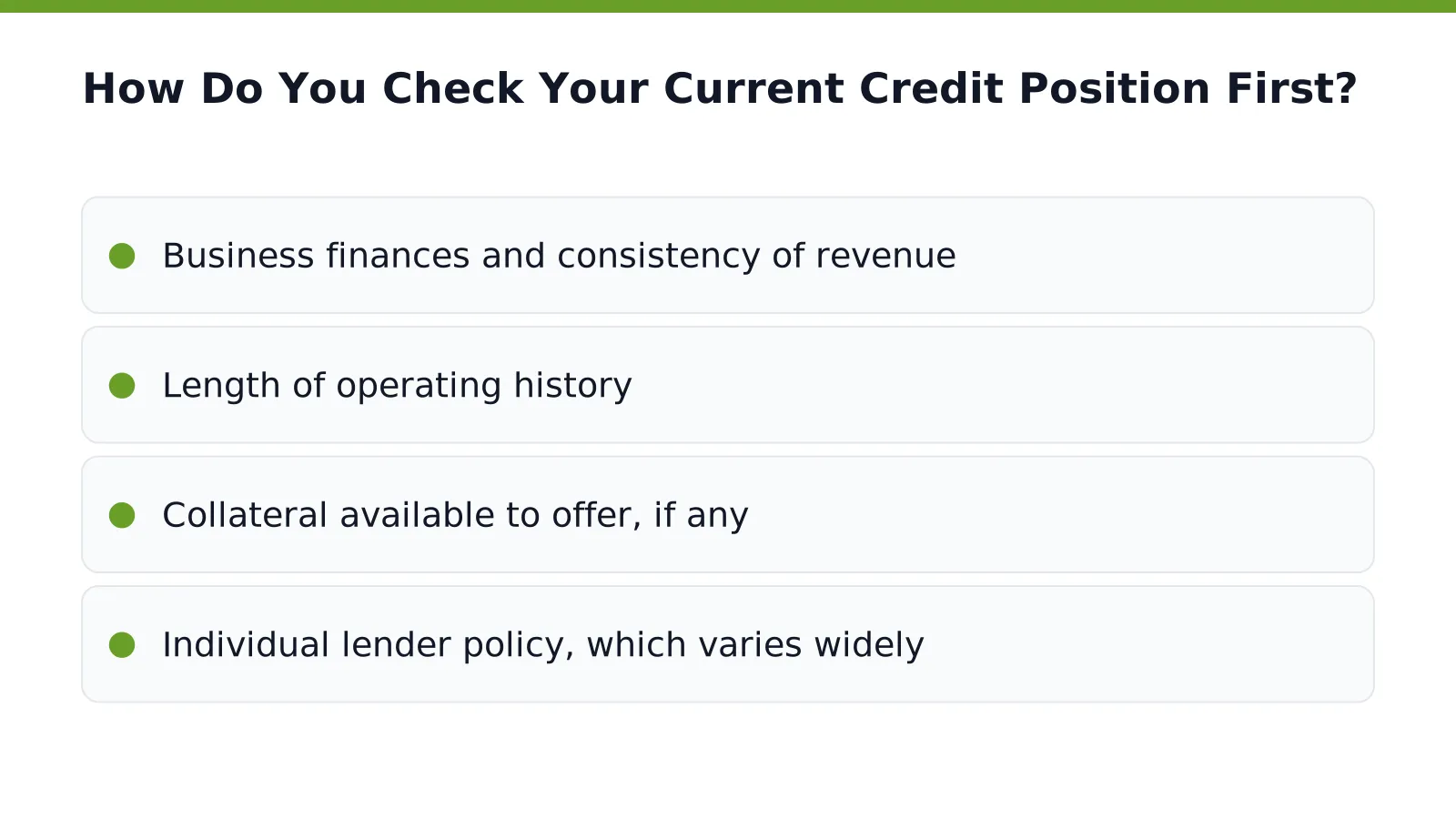
How Do You Check Your Current Credit Position First?

A business owner finds out where the company stands with lenders before submitting a single application. That starting point determines whether no personal guarantee loans are realistic right now or whether the business needs groundwork first. Skipping this step means applying blind, and blind applications waste time and generate hard inquiries that do little good.
VIP Business Credit's review reveals specific credit gaps and maps out a clear path toward funding. Rather than guessing, owners see exactly which weaknesses are holding the business back, from thin trade history to missing bureau data. That roadmap becomes the foundation for every decision that follows, including whether business credit separation from a personal SSN is achievable in the near term.
What does a credit position review actually show?
A review matches a business to pre-qualified options across more than 1,000 national and local lenders at once. That matters because different lenders weigh different factors. A single review surfaces options a business owner would otherwise have to hunt for one lender at a time.
Owners reviewing their position get support from local advisors working out of VIP Business Credit's Sterling, Virginia office. This isn't a call-center transaction; it's guidance from someone grounded in a physical location, available to walk through results in detail.
Does a strong review guarantee a no-personal-guarantee loan?
No review guarantees approval without a personal guarantee. Qualification depends on checkable factors:
Business finances and consistency of revenue
Length of operating history
Collateral available to offer, if any
Individual lender policy, which varies widely
A thorough credit position check identifies where the business stands on each factor, making asset protection loans a realistic goal rather than a guess.
How Do You Separate Business And Personal Credit?

Business credit separation begins with building a credit history under the company's EIN instead of continuing to borrow against the owner's Social Security number. That shift moves financial risk off personal records and onto the business entity itself, where it belongs. Skipping this step leaves personal assets exposed every time the company takes on debt. The process works best as a sequence, not a single transaction.
Register the business for an EIN and use it consistently on credit applications, instead of defaulting to a personal SSN.
Open trade lines and vendor accounts that report payment history to business credit bureaus.
Add equipment financing where it fits; this type of funding lets a company acquire needed equipment immediately, build credit under the business name while using it, and deduct the payments as a business expense.
Monitor how lenders view the resulting profile and correct any inconsistencies in business identity data.
Does working with a local advisor help this process?
A consistent point of contact matters when a business is untangling personal and company credit. VIP Business Credit's Sterling, Virginia office gives owners in that process a local advisor to guide each step rather than a rotating call center.
Are asset protection loans more expensive?
Often, yes. Asset protection loans, structured as unsecured financing without a personal guarantee, give lenders nothing to seize if the business defaults. Because the lender carries that added risk, the cost of this type of unsecured financing typically runs higher than secured borrowing. Owners weighing no personal guarantee loans should expect that tradeoff: stronger personal asset protection paired with a higher price for capital. Building verifiable EIN-based history first often improves the terms available later.
Which Loan Types Skip The Personal Guarantee Requirement?

Equipment loans, invoice financing, and revenue-based financing reduce or eliminate personal guarantee requirements more often than a standard term loan. Repayment on these products ties to a specific asset or receivable rather than the owner's personal credit file. Lenders evaluate business performance first, which opens the door to asset protection loans that keep personal liability out of the equation.
Fleet credit lines show this principle in action. Vehicle financing arranged under the company's own profile lets a business finance multiple vehicles, build a credit history tied to the EIN, and still capture available tax deductions. That structure supports business credit separation, since the debt obligation lives with the business rather than the owner.
Is An Unsecured Loan The Same As A No Personal Guarantee Loan?
No. An unsecured loan removes the collateral requirement; approval rests entirely on creditworthiness rather than pledged assets. A no personal guarantee loans structure removes something different: personal liability for repayment. A product can be unsecured and still require a personal guarantee, so owners need to confirm both terms before signing.
What Happens If No-PG Financing Isn't Available Yet?
Newer businesses without the credit history for a no-PG approval still have options. Cash flow and working-capital tools exist to supply funds when the business needs them, not after a shortfall hits. These strategies keep capital flexible while the business builds toward stronger, more protective financing later.
How Do You Find And Apply To The Right Lenders?

Finding the right lender for no personal guarantee loans starts with casting a wide net rather than relying on a single bank relationship. Owners who compare offers across many lenders stand a far better chance of matching a company's credit profile to a program built for lower-risk financing. VIP Business Credit connects applicants to a network of more than 1,000 national and local lenders, widening that search well beyond what one banking relationship could ever provide. That reach spans the region, supporting business loans in Ashburn, VA, business funding across Fairfax County, and business funding throughout the DC Metro area, so owners anywhere in Northern Virginia have multiple paths toward a no-PG approval.
Before submitting a single application, an owner needs a clear picture of where the business already stands with lenders. Applying blindly wastes time and can generate unnecessary credit inquiries. The following steps outline a more deliberate path:
Run a scan of the business's current credit standing to reveal gaps before approaching any lender.
Use the roadmap that scan produces to prioritize programs built around business credit separation, where financing ties to the company's EIN rather than the owner's SSN.
Work with a dedicated advisor to shortlist lenders that fit the business's stage, sector, and risk profile.
Submit applications only to lenders matched through that review, rather than applying broadly.
Compare final offers, paying close attention to pricing and terms tied to asset protection loans.
Does A Smaller Advisory Team Matter During The Application Process?
Yes, a compact team often delivers more direct attention than a large call-center operation. VIP Business Credit operates with a small, dedicated staff of three employees, which allows for consistent, hands-on guidance rather than rotating representatives.
Why Do No-PG Loans Still Cost More?
Lenders rarely remove risk entirely just because a personal guarantee disappears. Even where a loan or line skips the personal guarantee, lenders typically compensate through pricing, fees, or stricter terms elsewhere in the deal.
How Do You Structure Funding To Protect Personal Assets?

Protecting personal assets starts with separating the business's financial identity from the owner's own credit file. That separation happens through business credit separation, built by establishing credit under the company's EIN rather than the owner's Social Security number. Done correctly, lenders evaluate the business on its own merits, not the owner's personal credit history.
Building that protection takes a deliberate sequence, not a single application. Owners who want asset protection loans in place should follow these steps in order:
Register the business and begin establishing credit activity tied strictly to the EIN, not the owner's SSN.
Review every financing offer for personal guarantee language before signing anything.
Prioritize no personal guarantee loans when the business profile qualifies, since these structures remove personal liability for repayment if the business itself cannot pay.
Work with a small, specialized advisory team that can map financing options against the owner's asset protection goals, rather than defaulting to whatever one lender happens to offer.
Why does avoiding a personal guarantee matter so much?
Signing a personal guarantee ties an owner's personal finances directly to the business debt. If the business defaults afterward, the lender can pursue personal assets, including a home, a car, or investment accounts, to recover what's owed. Skipping that guarantee keeps the business's obligations with the business.
Why use an advisor instead of applying directly with one lender?
A compact, focused advisory team reviews financing structures across multiple options before recommending one. That kind of hands-on guidance helps owners avoid locking into a loan that technically works but quietly exposes personal assets anyway.
What Mistakes Sink A No-PG Loan Application?

Four recurring errors sink most no-personal-guarantee applications before underwriting even begins. Business owners lose approval odds and leave personal assets exposed when these mistakes go unchecked. The most damaging error starts with a single word: unsecured.
Does "unsecured" mean no personal guarantee?
No, not automatically. Many lenders market unsecured financing while still requiring a signature on a personal guarantee or a UCC lien filed against business assets. Confusing the two terms leads applicants to sign away the exact protection they set out to secure, undermining any real attempt at business credit separation between owner and company.
A second mistake is treating a personal guarantee as rare or negotiable in every deal. Federal Reserve Banks' Small Business Credit Survey, cited in reporting on no-PG lending, found that 59% of business debt holders have already secured their debt with a personal guarantee. Walking into negotiations assuming otherwise wastes time and invites disappointment.
Why does limiting lender options hurt approval chances?
Working with only one bank or one broker narrows the field dramatically. Lenders differ widely in how they underwrite risk, and a no-PG structure that one lender rejects may fit another's criteria perfectly. Access to a network spanning more than 1,000 national and local lenders raises the odds of matching a business to no personal guarantee loans suited to its stage and sector, rather than forcing a fit that doesn't exist.
Skipping local advisory guidance compounds every other mistake on this list. A business owner working without a dedicated advisor, such as the team based out of Sterling, Virginia, often submits applications with structuring errors that a second set of eyes would catch before submission. That review matters most when the goal involves asset protection loans designed to shield personal assets from business liability, and avoiding these four pitfalls protects both approval odds and personal exposure.
FAQ
What do business owners need before applying for a loan without a personal guarantee?
Business owners need an established business credit profile tied to the EIN, one to two years of consistent revenue, and access to a broad lender network like VIP Business Credit's 1,000+ national and local lenders.
How does business credit separation improve approval odds?
Building a credit profile under the company's EIN, separate from personal credit, lets lenders evaluate the business's own track record, making them more likely to waive personal guarantee requirements.
What does signing a personal guarantee actually require?
A personal guarantee converts business debt into a personal obligation, letting lenders pursue the owner's personal bank accounts, credit, and property if the company defaults.
Conclusion
In closing, securing a business loan without a personal guarantee starts with building a strong, lender-ready credit profile tied to your EIN rather than your personal finances. By establishing consistent business identity data, developing trade credit history, and demonstrating reliable cash flow, you shift how underwriters perceive risk, moving the focus from you personally to your company's actual financial strength. This separation protects your personal assets while positioning your business as a credible borrower, opening doors to better terms and higher loan amounts as you grow.
Contact
📞 Phone: +1 (571) 248-3863
✉️ Email: [email protected]
📅 Consultation: Schedule your consultation
🌐 Website: vipbizfunds.com
🎯 FREE Business Funding Pre-Qualification Scan: Start your scan
📍 Location: Sterling, VA and surrounding areas
Sources
Federal Reserve Banks, Small Business Credit Survey, cited for the finding that 59% of business debt holders have secured their debt with a personal guarantee.


