Equipment Credit Lines vs Equipment Leasing for Small Businesses: Complete Financing & Tax Strategy Guide
Equipment Credit Lines vs Equipment Leasing for Small Businesses: Complete Financing & Tax Strategy Guide
Executive Summary: Managing the complex landscape of small business equipment financing requires strategic capital allocation that preserves operational cash flow while balancing debt service obligations and tax advantages. Small business owners often weigh options between credit lines and leasing when considering how best to fund their operational needs. This guide provides an authoritative comparison of equipment leasing for small business owners, focusing on commercial equipment financing including revolving credit lines, as well as the nuances of leasing arrangements. It also highlights commercial vehicle financing alternatives where relevant. Understanding how to match the asset lifecycle to appropriate funding structures—whether revolving credit lines, fixed-term loans, capital leases, or operating leases—is essential for maximizing financial efficiency and operational agility. This guide offers detailed insights into these four key financing vehicles along with a comprehensive equipment financing tax strategy blueprint, helping small business owners make informed decisions that optimize their equipment acquisition and financing approaches.
Key Takeaways
- Match the financing structure to the equipment's lifecycle: credit lines, fixed-term loans, and capital leases build ownership and equity, while operating leases keep fast-depreciating assets like IT hardware off the balance sheet.
- Section 179 and bonus depreciation can let a business write off up to $1,160,000 of qualifying equipment in the first year (2024), creating substantial immediate tax savings.
- Capital leases and equipment credit lines qualify for Section 179 expensing plus interest deductions, while operating leases instead let 100% of lease payments be expensed under ASC 842.
- Lease-end buyout structures ($1 buyout, 10% purchase option, fair market value option) determine whether ownership transfers and how much flexibility a business keeps at renewal.
- Strong business credit scores (PAYDEX, Intelliscore Plus) and application-only funding programs can speed approval for equipment financing in the $150,000-$250,000 range.
- Pairing equipment credit lines with working capital loans helps a business preserve liquidity while still funding scheduled equipment purchases.
Comprehensive Comparison of Four Equipment Financing Vehicles
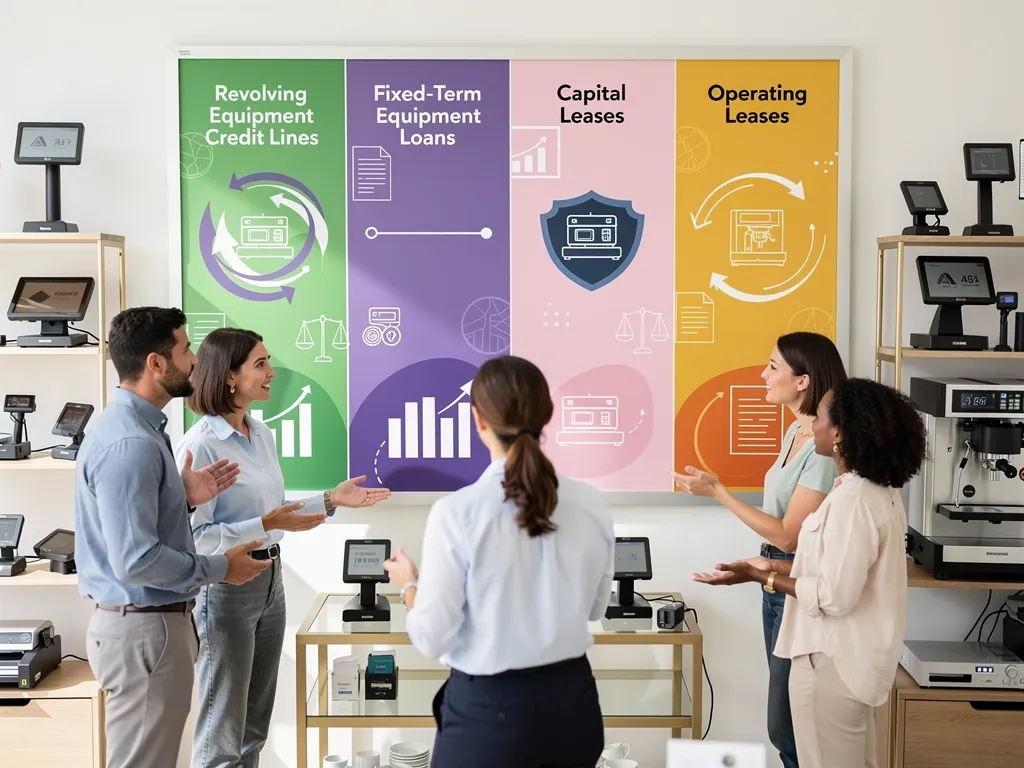
Small businesses seeking to finance equipment must consider various financing options, each with unique characteristics around ownership, balance sheet treatment, tax implications, and capital requirements. Below is a detailed comparison of Revolving Equipment Credit Lines, Fixed-Term Equipment Loans, Capital Leases, and Operating Leases.
In-Depth IRS Section 179 & Bonus Depreciation Tax Blueprint

Effective tax planning is a vital component of equipment financing decisions. The Internal Revenue Service (IRS) provides mechanisms to accelerate depreciation, particularly through Section 179 expensing and bonus depreciation, enabling businesses to reduce taxable income significantly in the year of purchase. equipment credit lines For official rules and guidelines, business owners can refer directly to the Internal Revenue Service (IRS).
Key Section 179 Expensing Rules
- First-Year Write-Off Limits: For tax year 2024, businesses may expense up to $1,160,000 of qualifying equipment purchase costs, subject to a phase-out starting at $2,890,000 of total equipment purchased.
- Qualifying Equipment: Tangible personal property, machinery, vehicles used more than 50% in a business setting.
- Phase-Out Caps: Deductions begin reducing dollar-for-dollar beyond the threshold, eliminating the benefit on purchases above $3,550,000.
- Bonus Depreciation: Allows 100% first-year deduction on qualifying property placed in service, including new and used equipment, without dollar limits but phased down in future years.
Mathematical Case Study & Tax Savings Calculation
Consider a small business purchasing commercial machinery.
- 100% First-Year Section 179 Deduction = $150,000
- Corporate Tax Bracket (Federal + State combined) = 25%
- Cash Tax Savings = $150,000 x 25% = $37,500
- Net Effective Equipment Cost = $150,000 - $37,500 = $112,500
This immediate write-off dramatically improves cash flow in the first year compared to capitalizing and depreciating the asset over multiple years.
Tax Treatment Comparison: Capital Leases / Equipment Credit Lines vs Operating Leases
- Capital Leases and Equipment Credit Lines: Eligible for Section 179 expensing plus interest expense deduction, providing significant upfront tax savings and ownership benefits.
- Operating Leases: Lease payments treated as operational expenses under ASC 842, granting 100% deduction of lease payments within the year paid, beneficial for preserving capital but without ownership or asset equity buildup.
End-of-Term Lease Buyout Structures Explained
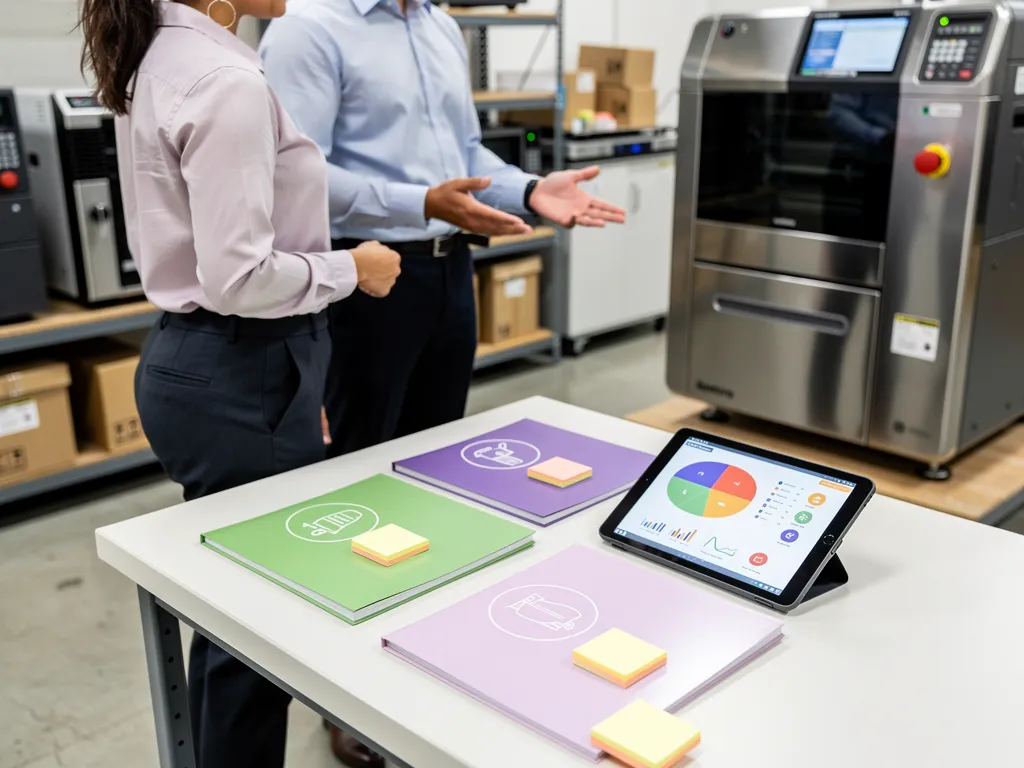
Understanding lease-end purchase options allows businesses to tailor financing to asset longevity and replacement plans, an important consideration when weighing equipment loans vs leasing.
$1 Buyout Lease
This structure entails a nominal $1 purchase price at lease end, effectively transferring ownership. Ideal for long-lasting, low-obsolescence assets such as heavy construction machinery or manufacturing tooling.
10% Purchase Option / Purchase Upon Termination (PUT)
A fixed, pre-negotiated residual value purchase option allowing the lessee to acquire the equipment at lease end for a set percentage of original cost, providing predictable buyout costs.
Fair Market Value (FMV) Option
The lessee may return the equipment, renew the lease, or purchase it at an appraised fair market value. This option suits rapidly depreciating technology such as IT hardware, where flexibility and upgrade potential are paramount.
Sector-Specific Equipment Applications & Case Examples
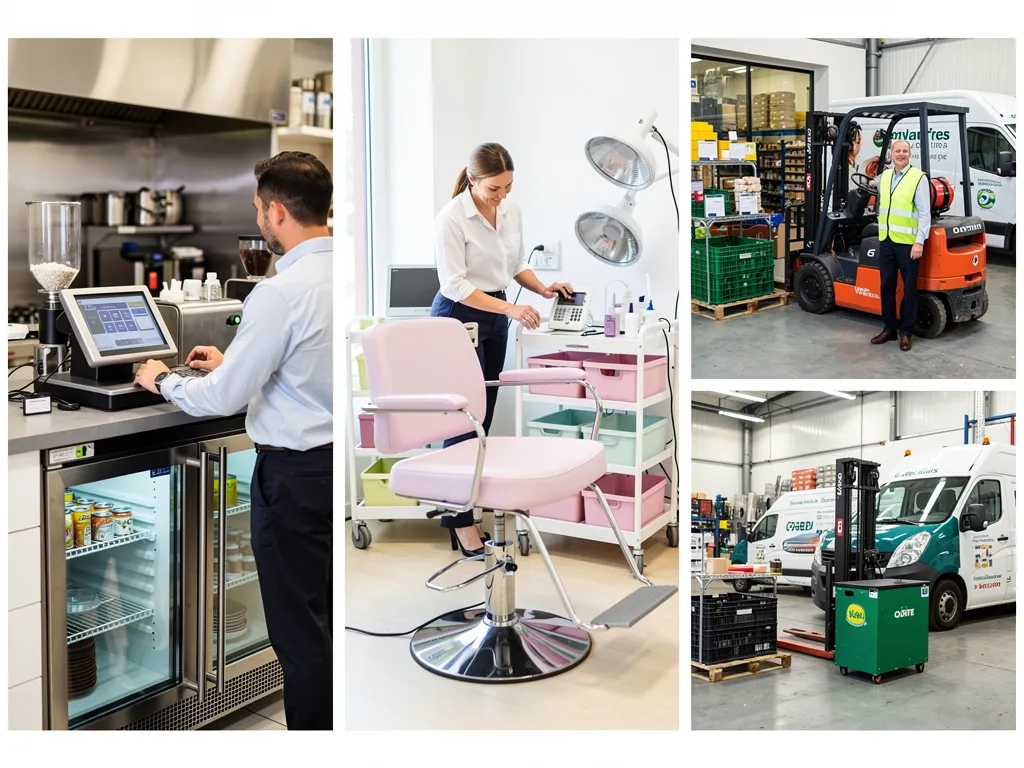
Construction & Heavy Machinery
Equipment such as excavators, loaders, skid steers, and tooling benefit from capital leases and fixed-term loans due to their durability and long service life. Financing options can be explored at Ashburn Equipment Financing.
Commercial Transportation & Logistics
Box trucks, semi-tractors, and delivery vans often utilize fixed-term loans or capital leases to combine asset ownership with predictable payments. Industry-specific vehicle financing solutions are available at Vehicle Financing.
Healthcare, Medical & Dental Practices
Diagnostic imaging machines, dental chairs, and surgical lasers often favor capital leases for favorable tax advantages while maintaining ownership after the lease term.
IT, Data Centers & Telecommunications
High-density servers, network switches, and enterprise cooling equipment benefit from operating leases, providing technology refresh flexibility and off-balance sheet treatment.
Industrial & Trade Supplies Procurement
Businesses sourcing from industrial suppliers such as Grainger often combine credit lines with fixed-term loans to optimize purchasing patterns and cash flow management.
Serving Equipment Financing Clients Across the DC Metro
VIP Business Credit works with equipment buyers throughout the Washington, D.C. region, matching each business to the financing vehicle that fits its asset type and growth stage. Local resources are available for business owners in Sterling, VA, Tysons, VA, Reston and Herndon, VA, Arlington, VA, and Fairfax County, VA, as well as businesses across the broader DC Metro area.
Industry benchmarks from the Equipment Leasing and Finance Association (ELFA) support the financing patterns outlined above, reinforcing why matching equipment type to the right credit line, loan, or lease structure remains a core strategy for regional small businesses.
Commercial Underwriting & Qualification Blueprint

Application-Only Funding Programs
Many lenders offer approvals up to $150,000-$250,000 with simplified application processes requiring only a one-page application and vendor quote. No tax returns or financial statements needed streamline funding approval for qualifying business loans.
Commercial vs Personal Credit Scoring
Strong business credit profiles with favorable scores such as Dun & Bradstreet PAYDEX or Experian Commercial Intelliscore Plus significantly improve financing prospects, while personal FICO scores maintain relevance for smaller loan amounts or personal guarantees.
Government Backing Options
The Small Business Administration (SBA) offers equipment loans with government guarantees that support competitive interest rates and longer terms valuable for capital-intensive equipment purchases.
Pre-Underwriting Readiness Check
VIP Business Credit provides a Business Fundability Scan to assess creditworthiness and readiness for financing applications, increasing approval likelihood.
Complementary Cash Management Solutions
Combining Equipment Credit Lines with Working Capital Loans allows businesses to maintain liquidity while managing scheduled equipment purchases efficiently.
Ready to Optimize Your Equipment Financing Strategy?

Book a personalized consultation with VIP Biz Funds' expert equipment financing advisors. Receive tailored advice on financing structures, tax strategies, and application readiness to maximize your capital efficiency and business growth potential.
Frequently Asked Questions About Equipment Credit Lines and Equipment Leasing Options
1. Can Newly Established Businesses Qualify for Equipment Credit Lines or Leasing Options?
Yes, startups with solid business plans and credible revenue projections can secure equipment financing. Leasing often requires less upfront capital and is a preferred option for minimizing initial expenditures.
2. What Are the Tax Advantages of Equipment Leasing Compared to Equipment Purchases?
Leasing allows businesses to deduct full lease payments as operating expenses annually, preserving cash flow without capitalizing the asset. Purchases allow depreciation under Section 179 and bonus depreciation, providing substantial first-year write-offs but requiring asset capitalization.
3. How Does Equipment Credit Line Interest Compare to Lease Payments?
Interest on credit lines is generally variable and charged only on funds drawn, offering flexibility. Lease payments are fixed and predictable but may aggregate to higher total costs over time.
4. What Equipment Types Are Best Suited for Operating Leases?
Rapidly depreciating assets such as IT hardware, office technology, and telecommunications equipment fit operating leases well due to upgrade flexibility and off-balance sheet treatment.
5. Are There Restrictions on Using Section 179 with Leased Equipment?
Section 179 generally applies only to owned equipment or finance leases where ownership transfers. Operating leases do not qualify since the lessee does not hold title.
6. How Does Business Credit Impact Financing Options and Terms?
Strong business credit enhances access to competitive rates, higher credit limits, and simplified application processes. Conversely, poor credit can limit options or increase costs. business credit
Executive Conclusion & Equipment Acquisition Decision Flowchart

Selecting the optimal equipment financing vehicle depends on multiple factors including asset type, desired ownership, cash flow flexibility, and tax strategy, often coming down to a capital lease vs operating lease decision. The decision matrix below guides small business owners through a systematic evaluation.
By following this structured approach, small business owners can align equipment financing choices with operational needs, financial goals, and tax strategy objectives, ensuring optimal capital utilization and sustainable growth.
About The Author
Lee Johnson, Master Certified Professional Coach, is an authority in business credit building and commercial finance at VIP Business Credit. He specializes in helping small business owners establish strong business credit profiles and secure funding without personal liability.
Contact VIP Business Credit
- 📞 Phone: (571) 248-3863
- ✉️ Email: [email protected]
- 📅 Consultation: Schedule a Consultation
- 🌐 Website: vipbizfunds.com
- 🎯 FREE Business Funding Pre-Qualification Scan: Start Your Scan
- 📍 Location: Sterling, VA, serving the Greater Washington D.C. region
Upgrade Your Equipment Without Draining Cash Reserves
Acquire the machinery, technology, or fleet vehicles your business needs today. Explore competitive commercial equipment financing and specialized commercial vehicle financing programs.


